Arroz de Marisco — Portuguese Seafood Rice
Portugal's exuberant seafood rice — soupy, saffron-less but vivid, and piled with shellfish. Unlike a dry paella, arroz de marisco is 'caldoso' (brothy), the rice cooked in a deeply flavoured tomato, onion, garlic and coriander base enriched with shellfish stock until loose and spoonable, then crowded with prawns, clams, mussels and often crab. A shake of piri-piri brings gentle heat. Served straight from the pot with the seafood spilling over, it's the taste of the Portuguese coast and a generous dish made for sharing.
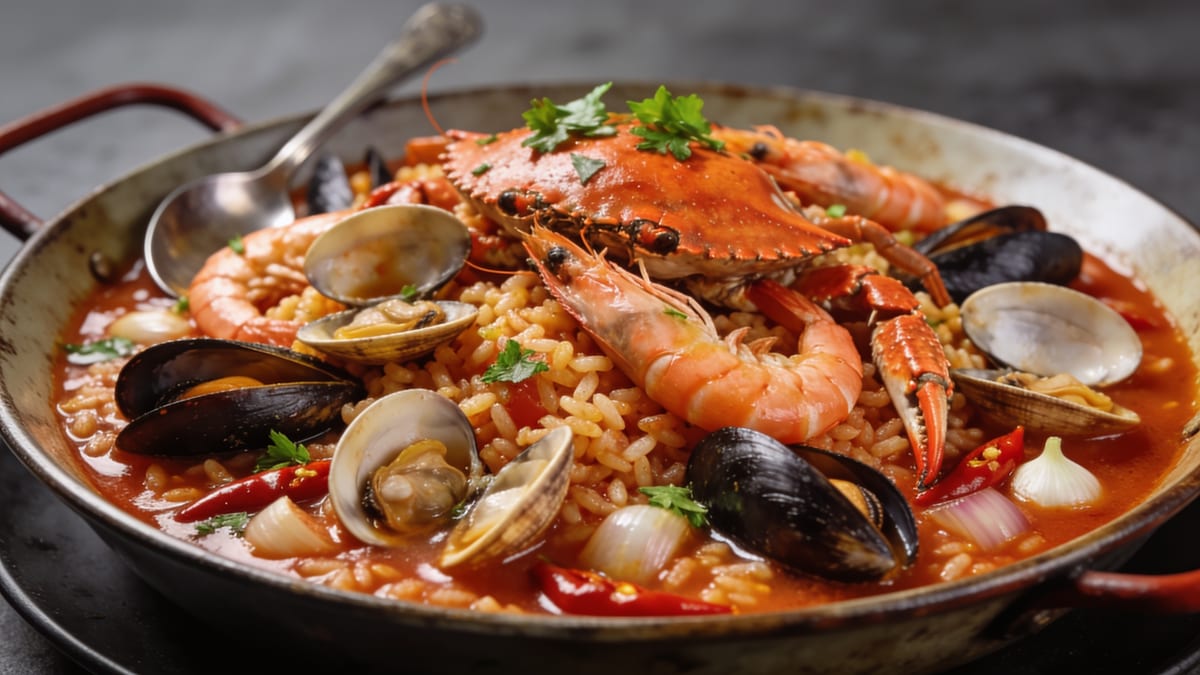
Make a quick shellfish stock from the prawn heads and shells (this is where the flavour lives). Build a refogado base by slowly cooking lots of onion, garlic and tomato in olive oil with a bay leaf and plenty of fresh coriander, then add a little tomato paste and let it jammy. Stir in short-grain rice to coat, pour in the hot shellfish stock generously (more than for a dry rice — it should stay soupy), and simmer until the rice is just cooked but the dish is still brothy. In the last few minutes add the clams, mussels and prawns to cook just until they open and turn pink. Finish with piri-piri and more coriander, and serve immediately, loose and steaming.
- Make a stock from the prawn shells and heads — it's the backbone of the flavour; don't use plain water.
- Keep it caldoso (soupy): use more liquid than a dry rice and serve it loose and spoonable, not dry like paella.
- Add the shellfish at the very end, just until they open/turn pink, so they stay tender; finish with coriander and piri-piri.
Equipment
- Large pot or cataplana
- Sieve (for stock)
المكونات
Shellfish stock & seafood
- 400 g whole prawns/shrimp (shells & heads reserved for stock)
- 400 g clams, cleaned; 400 g mussels, cleaned
- Optional: crab pieces or langoustines
Base & rice
- 250 g short/medium-grain rice (e.g. carolino)
- 2 onions, chopped; 4 garlic cloves
- 2 ripe tomatoes (or chopped tomatoes); 1 tbsp tomato paste; bay leaf
- Olive oil; lots of fresh coriander; piri-piri/chilli; white wine (optional)
الطريقة
- خطوة01
Peel the prawns, reserving the shells and heads. Fry the shells and heads in a little olive oil, then cover with water, add a bay leaf and simmer 20 minutes. Strain, pressing the shells, to get a deeply flavoured stock. Keep it hot.
- خطوة02
In a large pot, slowly cook the chopped onion and garlic in olive oil until soft and sweet. Add the chopped tomato, tomato paste and a splash of white wine, and cook to a jammy base. Stir in a good handful of chopped coriander stalks.
- خطوة03
Add the rice and stir for a minute to coat it in the base.
- خطوة04
Pour in the hot shellfish stock generously — more than you would for a dry rice, as this should stay soupy. Season and simmer until the rice is almost cooked but the dish is still loose and brothy, about 12–15 minutes, adding more stock or water as it drinks it up.
- خطوة05
Stir in the clams and mussels, then the peeled prawns (and crab if using), cover, and cook just until the shells open and the prawns turn pink, a few minutes — discard any that stay shut. Stir in piri-piri to taste and lots more chopped coriander. Serve immediately, loose and steaming, straight from the pot.
Make ahead
The flavour base can be made ahead: prepare the shellfish stock and the tomato refogado in advance (both keep a day or two, or freeze the stock), which leaves only the quick rice-and-seafood cooking to do at the last minute. But the rice and shellfish themselves must be cooked fresh and served straight away to stay brothy and tender — this isn't a dish to cook fully ahead. Clean the clams and mussels ahead too.
Storage
Arroz de marisco is really best eaten immediately, while it's brothy and the seafood is just-cooked — the rice keeps absorbing liquid and softening, and reheated shellfish toughens. If you must keep leftovers, refrigerate up to a day and reheat gently with extra stock or water to loosen it back to a soupy consistency, accepting that the texture won't be quite as fresh. It doesn't freeze well. Make only what you'll serve.
Variations
Cataplana
Cook it in a cataplana (the hinged copper Algarve pan) for a beautiful steamed, aromatic version.
Arroz de tamboril
The monkfish-and-rice cousin (arroz de tamboril) uses chunks of firm fish in the same brothy style.
Lobster
Arroz de lavagante uses lobster for a luxurious special-occasion version.
Serve with
Nutrition per serving
Nutrition values are estimates based on the metric measurements. Adjust as needed.
الأسئلة الشائعة
What is arroz de marisco?
Arroz de marisco is the classic Portuguese seafood rice — a brothy ('caldoso'), tomato-based rice cooked in shellfish stock and loaded with prawns, clams, mussels and often crab, finished with fresh coriander and a hit of piri-piri. Unlike Spanish paella, it's deliberately soupy and spoonable rather than dry, and it's typically served straight from the pot for sharing. It's one of Portugal's most beloved dishes, especially along the coast, and a generous centrepiece for a gathering.
How is it different from paella?
Both are seafood rice dishes, but the texture and method differ. Paella (Spanish) is cooked in a wide shallow pan and is dry, with the rice spread thin and even a prized crust (socarrat) on the bottom. Arroz de marisco (Portuguese) is caldoso — brothy and loose, almost like a very thick soup — cooked in a deep pot, with much more liquid, and flavoured with coriander and piri-piri rather than saffron. So it's wetter, soupier and herb-forward compared to paella.
Why make a stock from the shells?
The prawn shells and heads are packed with flavour, and simmering them into a quick stock is what gives arroz de marisco its deep, unmistakably seafood taste — using plain water instead leaves the dish tasting flat. Fry the shells first to develop flavour, then simmer and strain. This is the single most important step for a great seafood rice, so don't discard those shells. The same goes for any mussel/clam cooking liquid, which you can add too.
What rice should I use?
A short- or medium-grain rice that absorbs liquid and stays a little creamy is best — in Portugal, carolino rice is traditional. Spanish bomba or other paella/risotto-style short-grain rices work well too. Avoid long-grain rice like basmati, which stays separate and won't give the right brothy, slightly starchy consistency. Because the dish is caldoso, you want a rice that drinks up the flavourful stock while keeping the whole thing loose and spoonable.
How do I avoid overcooking the seafood?
Add the shellfish only in the last few minutes, once the rice is nearly cooked. Put in the clams and mussels first (they need to steam open), then the peeled prawns, cover, and cook just until the shells open and the prawns turn pink — then stop. Discard any clams or mussels that don't open. Overcooked prawns turn rubbery and shellfish toughens, so timing it to the end, and serving immediately, keeps everything tender and juicy.
Cooked this? Rate it.
Real ratings from real cooks. We only show a score once enough of you have weighed in — no fabricated stars.