Gemista — griechisch gefülltes Ofengemüse
Eines der großen Gerichte der griechischen Sommertafel: reife Tomaten und Paprika werden ausgehöhlt und mit einer duftenden Reisfüllung aus Zwiebel, Kräutern (Dill, Minze, Petersilie) und dem herausgelösten Tomatenfleisch gefüllt, dann in reichlich Olivenöl mit Kartoffelspalten langsam gebacken, bis alles weich, süß und leicht karamellisiert ist. Gemista ist ein „Ladero“ – in Olivenöl gegart – und meist vegan (nistisimo), warm oder bei Zimmertemperatur mit Feta und Brot gegessen. Es ist bescheidenes, sonniges Essen zum Vorbereiten, das nach einem griechischen Garten schmeckt.
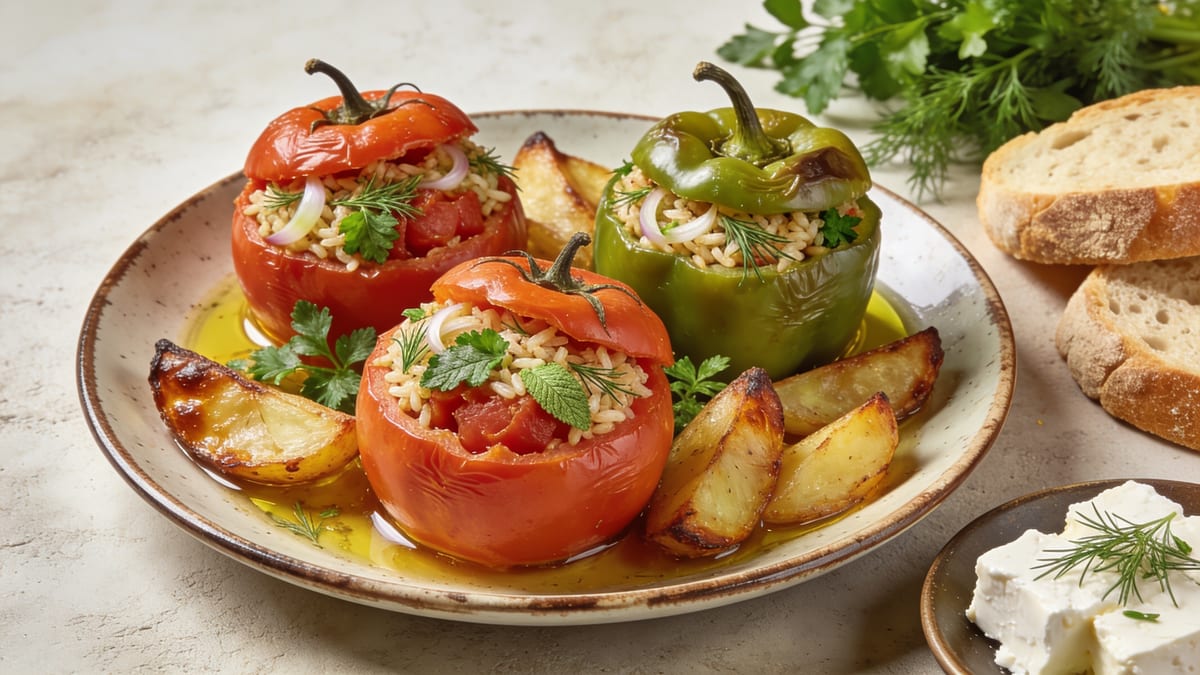
Schneide die Deckel von Tomaten und Paprika ab und hebe sie als Deckel auf. Höhle das Tomatenfleisch aus (nicht wegwerfen – es gibt der Füllung Geschmack) und entkerne die Paprika. Bereite eine Füllung zu, indem du reichlich Zwiebel und Knoblauch in Olivenöl weich dünstest, dann rohen Rundkornreis, das gehackte Tomatenfleisch, Kräuter (Dill, Minze, Petersilie), Salz und einen guten Schuss Öl untermischst – der Reis muss nur teilweise ummantelt sein, da er im Gemüse gart. Fülle jedes Gemüse locker (der Reis quillt auf), setze die Deckel wieder auf, stecke Kartoffelspalten dazwischen, gieße Olivenöl und etwas Wasser dazu und backe, bis alles weich, der Reis gar und die Deckel karamellisiert sind.
- Hebe das ausgehöhlte Tomatenfleisch auf – püriert in die Füllung gerührt kommt daher ein Großteil des Geschmacks.
- Nur locker füllen: Der rohe Reis quillt beim Garen im Gemüse auf, also lass Platz.
- Sei großzügig mit dem Olivenöl und backe langsam – Gemista ist ein „Ladero“ (Olivenöl-Gericht); stecke Kartoffelspalten in die Zwischenräume.
Equipment
- Große Auflaufform
- Löffel (zum Aushöhlen)
- Pfanne
Zutaten
Gemüse
- 6 large Tomaten und/oder Paprika (gemischt)
- 2 Kartoffeln, in Spalten geschnitten
Füllung
- 200 g Rund-/Mittelkornreis, roh
- 2 Zwiebeln, fein gehackt; 2 Knoblauchzehen
- Aufgehobenes Tomatenfleisch; gehackter Dill, Minze und Petersilie
- Olivenöl (großzügig); Salz, Pfeffer, Prise Zucker
Zubereitung
- SCHRITT01
Schneide die Deckel von Tomaten und Paprika ab und hebe sie als Deckel auf. Löffle das Fruchtfleisch der Tomaten in eine Schüssel (aufheben) und entferne die Paprikakerne. Salze die Innenseiten leicht und setze das Gemüse in eine Auflaufform.
- SCHRITT02
Dünste Zwiebel und Knoblauch in reichlich Olivenöl weich und süß. Hacke oder püriere das aufgehobene Tomatenfleisch grob und gib es dazu, rühre dann den rohen Reis, die gehackten Kräuter, Salz, Pfeffer und eine Prise Zucker unter und lass alles ein paar Minuten garen. Es sollte locker und gut geölt sein.
- SCHRITT03
Fülle die Masse in jede Tomate und Paprika, aber nur etwa zu drei Vierteln, da der Reis aufquillt. Setze die aufgehobenen Deckel wieder auf.
- SCHRITT04
Stecke Kartoffelspalten in die Zwischenräume zwischen dem Gemüse (sie rösten mit und verhindern, dass die Gemista umkippt). Würze die Kartoffeln, beträufle alles großzügig mit Olivenöl und gieße etwas Wasser auf den Boden der Form.
- SCHRITT05
Backe bei 180 °C, die ersten 45 Minuten mit Alufolie abgedeckt, danach ohne Abdeckung, bis der Reis durchgegart, das Gemüse ganz weich und die Deckel karamellisiert sind, insgesamt etwa 1¼ Stunden. Gib einen Schuss Wasser dazu, falls es zu trocken wird. 20 Minuten ruhen lassen und warm oder bei Zimmertemperatur servieren.
Make ahead
Gemista ist ideal zum Vorbereiten – Griechen kochen es oft morgens (oder am Tag zuvor), um es später warm oder bei Zimmertemperatur zu essen, und es schmeckt nach dem Ruhen tatsächlich besser. Bereite es einen Tag im Voraus komplett zu und bewahre es im Kühlschrank auf; zum Servieren auf Zimmertemperatur bringen oder sanft erwärmen. Perfekt für Gäste und Picknicks, da es keine Arbeit in letzter Minute erfordert.
Storage
Gemista hält sich im Kühlschrank wunderbar 3–4 Tage und schmeckt bekanntlich am nächsten Tag sogar noch besser, sobald sich die Aromen gesetzt haben – ein klassisches Gericht zum Vorbereiten. Iss es kalt, bei Zimmertemperatur oder sanft aufgewärmt. Es lässt sich nicht besonders gut einfrieren (das Gemüse wird noch weicher), daher genießt du es am besten innerhalb weniger Tage. Das Olivenöl, in dem es gart, hilft, es zu konservieren und würzt es.
Variations
Mit Hackfleisch
Füge Rinder- oder Lammhackfleisch zur Reisfüllung hinzu für eine nicht-vegane Version (Gemista me kima).
Pinienkerne & Korinthen
Rühre Pinienkerne und Korinthen/Rosinen unter den Reis für Süße und Textur (Hinweis: fügt Schalenfrucht-Allergen hinzu).
Mehr Gemüse
Fülle auch Zucchini, Auberginen oder Zwiebeln – jedes Sommergemüse, das sich aushöhlen lässt, funktioniert.
Serve with
Nutrition per serving
Nutrition values are estimates based on the metric measurements. Adjust as needed.
Häufige Fragen
Was ist Gemista?
Gemista (γεμιστά, „gefüllte Dinge“) ist ein griechisches Gericht aus Gemüse – klassischerweise Tomaten und Paprika, manchmal Zucchini, Auberginen oder Zwiebeln – das ausgehöhlt und mit einer kräuterigen Reisfüllung gefüllt und dann in Olivenöl mit Kartoffelspalten gebacken wird. Es ist ein „Ladero“ (Olivenöl-Gericht) und meist vegan (nistisimo), warm oder bei Zimmertemperatur gegessen. Ein Grundnahrungsmittel des griechischen Sommers, bescheiden, aromatisch und bekannt dafür, am nächsten Tag noch besser zu schmecken.
Warum das Tomatenfleisch aufheben?
Das aus den Tomaten gelöste Fruchtfleisch steckt voller Geschmack und Saft und wird (gehackt oder püriert) wieder unter die Reisfüllung gerührt – es macht einen großen Teil dessen aus, was Gemista so gut schmecken lässt, und gibt dem Reis die Flüssigkeit, die er zum Garen braucht. Es wegzuwerfen würde den Geschmack der Tomaten verschwenden und die Füllung trocken machen. Manche Köche geben sogar noch geriebene Tomate zusätzlich in die Füllung.
Warum ist mein Reis noch hart / warum ist er übergequollen?
Zwei häufige Probleme. Harter Reis bedeutet meist, dass nicht genug Flüssigkeit oder Öl da war oder es zu schnell/trocken gebacken wurde – decke es anfangs ab, sei großzügig mit dem Olivenöl und gib etwas Wasser in die Form. Überlaufen bedeutet, dass das Gemüse zu voll gefüllt war: Der rohe Reis quillt beim Garen stark auf, fülle also nur etwa zu drei Vierteln und lass Platz. Langsames, feuchtes Backen ist der Schlüssel zu gleichmäßig gegartem Reis.
Ist Gemista vegan?
Traditionell ja – die klassische Version (Gemista nistisima) ist vegan, nur aus Gemüse, Reis, Kräutern und Olivenöl, weshalb es ein Grundnahrungsmittel während der griechisch-orthodoxen Fastenzeiten ist. Es ist von Natur aus auch milchfrei und glutenfrei. Es gibt auch eine beliebte nicht-vegane Version mit Hackfleisch im Reis (Gemista me kima). Die vegane Version ist der alltägliche Sommerklassiker, oft mit Feta dazu für alle, die möchten.
Sollte man Gemista heiß oder kalt servieren?
Beides – und diese Flexibilität ist Teil seines Reizes. Gemista wird meist warm (nicht kochend heiß) oder bei Zimmertemperatur gegessen, was die olivenölreichen Aromen zur Geltung bringt. Viele Griechen halten es einige Stunden nach dem Garen oder am nächsten Tag bei Zimmertemperatur für am besten. Bereite es also vor, lass es ruhen und serviere es warm oder kühl mit Feta und Brot – es muss nicht direkt aus dem Ofen kommen.
Cooked this? Rate it.
Real ratings from real cooks. We only show a score once enough of you have weighed in — no fabricated stars.