Injera — äthiopisches Sauerteig-Fladenbrot
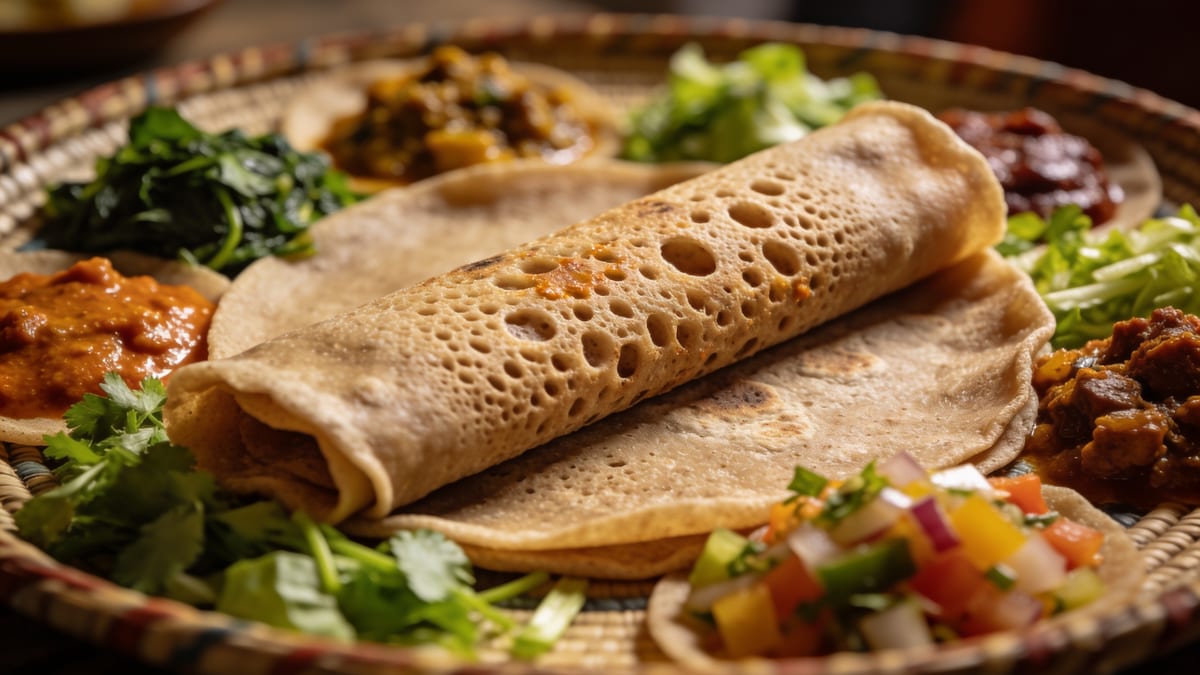
Das weiche, schwammige Sauerteig-Fladenbrot im Herzen jeder äthiopischen und eritreischen Mahlzeit: ein natürlich fermentierter Teffteig, der auf eine heiße Platte gegossen und nur auf einer Seite gegart wird, bis er zu einem säuerlichen, geschmeidigen, löchrigen Pfannkuchen fest wird. Injera ist Teller, Besteck und Brot in einem – man reißt Stücke ab, um Eintöpfe (wot) und Gemüse aufzunehmen, die über eine gemeinsame Platte verteilt sind. Die leichte Säure und die luftigen „Augen“ kommen von tagelanger wilder Fermentation.
Teffmehl mit Wasser zu einem Teig verrühren und bei Zimmertemperatur 2–4 Tage fermentieren lassen, dabei umrühren, bis er blasig, aufgegangen und angenehm säuerlich ist (diese wilde Fermentation ist es, die Injera ausmacht). Den fermentierten Teig umrühren, manchmal etwas davon zu einem heißen „absit“-Ansatz kochen und wieder unterrühren, bis er dünn und gießfähig ist. Ihn spiralförmig auf eine heiße, trockene Platte (mitad) gießen, abdecken und nur auf einer Seite garen – niemals wenden – bis die Oberfläche fest, matt und mit winzigen „Augen“ (Löchern) bedeckt ist. Die weiche, schwammige Injera abheben und abkühlen lassen.
- Den Teffteig tagelang fermentieren, bis er blasig und säuerlich ist – diese Säure und die löchrigen „Augen“ machen Injera aus.
- Nur auf einer Seite garen, abgedeckt, auf einer heißen Platte – Injera wird nie gewendet.
- Die Bläschen („Augen“) über die Oberfläche zeigen, dass sie fermentiert und richtig gegossen ist.
Equipment
- Große Schüssel (zum Fermentieren)
- Breite beschichtete Pfanne oder Mitad-Platte mit Deckel
- Schöpfkelle
Zutaten
Teig
- 400 g Teffmehl (idealerweise, für authentische Injera)
- 750 ml Wasser (plus mehr zum Anpassen)
- 1 Prise Salz
Zubereitung
- SCHRITT01
Das Teffmehl mit Wasser zu einem glatten, dünnen Teig verrühren. Locker abdecken und bei Zimmertemperatur 2–4 Tage fermentieren lassen, einmal täglich umrühren, bis er blasig, aufgegangen ist und angenehm säuerlich riecht. (Oben bildet sich eine Flüssigkeit – das meiste davon abgießen.)
- SCHRITT02
Den fermentierten Teig umrühren und bei Bedarf Wasser zugeben, bis er dünn und gießfähig ist. (Traditionell wird eine kleine Menge mit Wasser zu einer dicken „absit“-Paste gekocht und wieder untergerührt, um die Textur zu verbessern.) Eine Prise Salz zugeben.
- SCHRITT03
Eine breite beschichtete Pfanne oder eine Mitad bei mittlerer Hitze erhitzen, bis sie heiß ist. Sie sollte trocken sein (kein Öl) – bei Bedarf leicht abwischen.
- SCHRITT04
Den Teig in einer dünnen Spirale von außen nach innen (oder innen nach außen) auf die heiße Platte gießen und die Oberfläche bedecken. Nicht mit einem Werkzeug verstreichen.
- SCHRITT05
Mit einem Deckel abdecken und – ohne zu wenden – garen, bis die Oberfläche von glänzend zu matt wechselt und mit winzigen Löchern („Augen“) bedeckt ist und die Ränder sich lösen, 2–3 Minuten. Die weiche Injera zum Abkühlen auf ein Tuch gleiten lassen. Wiederholen. Injera niemals wenden.
Make ahead
Die Fermentation ist selbst ein mehrtägiger Vorbereitungsprozess – planen Sie 2–4 Tage im Voraus. Sie können einen fermentierenden Teig am Laufen halten und Injera nach Bedarf backen. Gebackene Injera ist frisch am besten, hält aber ein bis zwei Tage; viele Köche machen eine große Portion für ein Festmahl. Halten Sie den Teig als fortlaufende Sauerteigkultur, wenn Sie oft Injera machen.
Storage
Am besten am Tag der Zubereitung, weich und geschmeidig. Abgekühlte Injera mit Tuch oder Backpapier dazwischen stapeln und abgedeckt halten; sie hält ein bis zwei Tage bei Zimmertemperatur und wird mit der Zeit fester (festere Injera zum Auslegen von Platten oder für Ful verwenden). Der fermentierte Teig hält im Kühlschrank und kann aufgefüllt werden. Fertige Injera nicht unbedeckt kühlen, da sie austrocknet.
Variations
Teff-Mischung
Außerhalb Äthiopiens wird Teff manchmal mit Weizen-, Gersten- oder Reismehl gemischt (Hinweis: Mischungen mit Weizen sind nicht glutenfrei).
Schnelle (Hefe-)Variante
Manche schnelleren Rezepte verwenden etwas Hefe oder einen Sauerteigansatz, um die Fermentation zu beschleunigen, obwohl traditionelle Injera über Tage wild fermentiert wird.
Reiner Teff (glutenfrei)
Aus 100 % Teff gemacht ist Injera von Natur aus glutenfrei – verwenden Sie nur Teffmehl, um sie so zu halten.
Serve with
Nutrition per serving
Nutrition values are estimates based on the metric measurements. Adjust as needed.
Häufige Fragen
Was ist Teff, und muss ich es verwenden?
Teff ist ein winziges, nahrhaftes altes Getreide, heimisch in Äthiopien und Eritrea, und authentische Injera wird aus Teffmehl gemacht, das den charakteristischen Geschmack, die Farbe und die Fermentation gibt. Es ist von Natur aus glutenfrei. Außerhalb der Region kann Teff mit Weizen oder anderen Mehlen gemischt werden (dann ist es nicht glutenfrei), aber 100 % Teff gibt die authentischste – und glutenfreie – Injera.
Warum muss Injera tagelang fermentieren?
Die lange wilde Fermentation (typischerweise 2–4 Tage) ist es, die Injera ihren typischen säuerlichen Geschmack und die blasige Struktur gibt, die die „Augen“ (Löcher) über die Oberfläche bildet. Natürlich vorkommende Hefen und Bakterien treiben und säuern den Teig mit der Zeit. Eine kürzere Fermentation gibt ein faderes, dichteres Ergebnis; Geduld bringt die richtige schwammige, säuerliche Injera hervor.
Warum wird Injera nur auf einer Seite gegart?
Injera wird dünn gegossen und abgedeckt nur auf einer Seite gegart – niemals gewendet. Der unter dem Deckel eingeschlossene Dampf gart die Oberseite durch, während die aus dem fermentierten Teig aufsteigenden Bläschen die charakteristischen löchrigen „Augen“ an der Oberfläche bilden. Wenden würde diese Augen plattdrücken und die weiche, schwammige Textur ruinieren. Die gegarte Seite bleibt glatt; die Augen-Seite zeigt nach oben.
Wie isst man Injera?
Sie ist Teller, Brot und Besteck in einem. Injera wird über eine große gemeinsame Platte verteilt, und Eintöpfe (wot) wie Doro Wat, Linsen, Shiro und Gemüse werden darauf gelöffelt. Jeder reißt mit der rechten Hand Stücke Injera ab und nimmt damit das Essen auf – kein Besteck nötig. Zusätzliche gerollte Injera wird dazu gereicht.
Was sind die „Augen“ auf Injera?
Die „Augen“ sind die kleinen Löcher, die sich über die Oberseite bilden, während der fermentierte Teig gart und seine Bläschen aufsteigen und platzen. Sie sind das Zeichen eines gut fermentierten Teigs und richtigen Garens und geben Injera ihre schwammige Textur und ihre Fähigkeit, Saucen aufzusaugen. Eine gute Injera ist gleichmäßig mit feinen Augen bedeckt.
Cooked this? Rate it.
Real ratings from real cooks. We only show a score once enough of you have weighed in — no fabricated stars.