Pozole Rojo — mexikanische Maissuppe mit Schwein
Mexikos große Festtagssuppe: eine tiefrote, chilireiche Schweinebrühe voller körniger Hominy-Maiskörner, stundenlang geköchelt und am Tisch mit einer Fülle knuspriger Beilagen zum Leben erweckt — geraspelter Kohl, Radieschen, Zwiebel, Limette, Oregano und knusprige Tostadas. Pozole rojo ist Festessen, serviert zu Geburtstagen, Feiertagen und dem mexikanischen Unabhängigkeitstag, wobei die selbst zusammengestellte Schale die halbe Freude ausmacht.
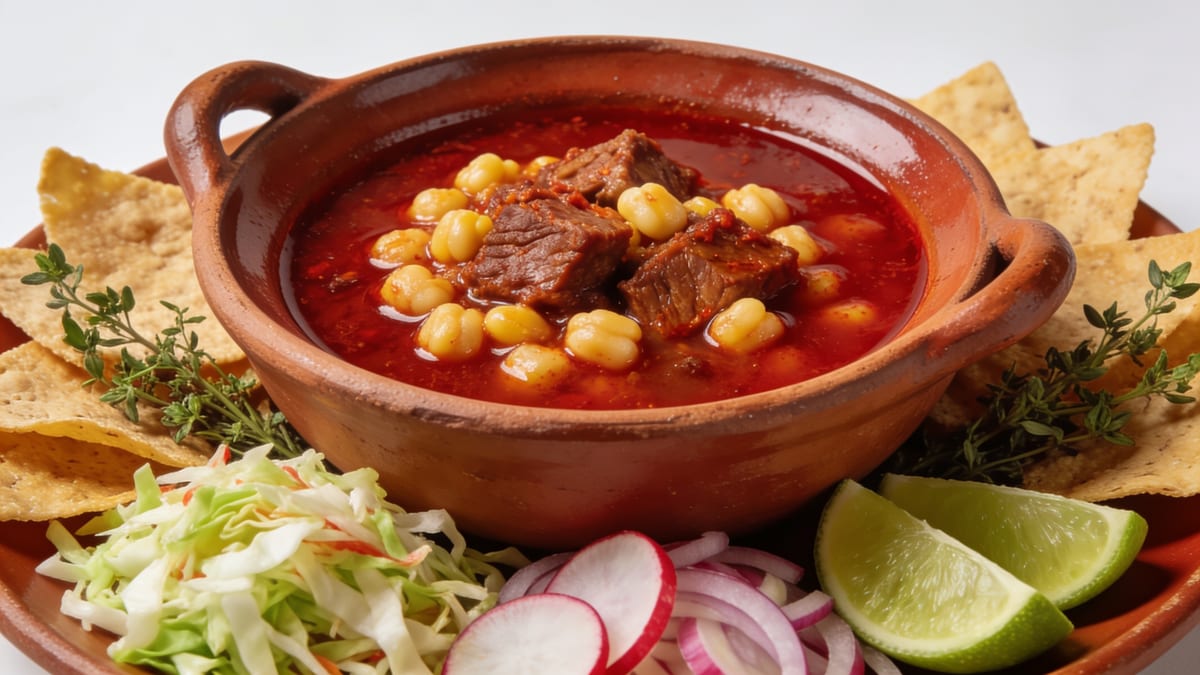
Schweinefleisch (Schulter und etwas mit Knochen) mit Zwiebel, Knoblauch und Lorbeer weich köcheln und so eine kräftige Brühe gewinnen. Währenddessen getrocknete Guajillo- und Ancho-Chilis rösten, weich einweichen und mit Knoblauch und etwas Brühe zu einer glatten roten Chilisauce pürieren; durch ein Sieb in den Topf passieren. Gekochte oder Hominy aus der Dose und das zerzupfte Schweinefleisch zugeben und köcheln, bis sich die Aromen verbinden. In Schalen servieren, dazu eine große Auswahl an Beilagen — geraspelter Kohl oder Salat, Radieschen, Zwiebel, Oregano, Limette und Tostadas — für jeden zum Selbstzugeben.
- Das Rot kommt von getrockneten Chilis (Guajillo + Ancho), die geröstet, eingeweicht und zu einer passierten Sauce püriert werden — nicht von Chilipulver.
- Hominy (nixtamalisierter Mais) ist unverzichtbar für die bissfeste, unverwechselbare Textur — die Dosenvariante ist eine gute Abkürzung.
- Die Beilagen sind nicht optional — Kohl, Radieschen, Zwiebel, Oregano, Limette und Tostadas machen die Schale aus.
Equipment
- Großer Topf
- Standmixer
- Sieb
Zutaten
Brühe & Schweinefleisch
- 1 kg Schweineschulter (dazu etwas mit Knochen)
- ½ Zwiebel, 1 Knolle Knoblauch, Lorbeerblätter, Salz
- 2 cans weiße Hominy, abgetropft (oder getrocknet, gekocht)
Rote Chilisauce
- 4 Guajillo-Chilis, entstielt und entkernt
- 2 Ancho-Chilis, entstielt und entkernt
- 2 Knoblauchzehen; 1 Prise Kreuzkümmel und Oregano
Beilagen
- Geraspelter Kohl oder Salat; Radieschen in Scheiben
- Gewürfelte Zwiebel; getrockneter Oregano; Limettenspalten
- Tostadas; Chili in Scheiben; (nach Belieben) Avocado
Zubereitung
- SCHRITT01
Das Schweinefleisch mit Zwiebel, Knoblauch, Lorbeer und Salz in reichlich Wasser sehr weich köcheln, 1,5–2 Stunden, dabei abschäumen. Das Fleisch herausnehmen, zerzupfen und die Brühe aufbewahren.
- SCHRITT02
Die getrockneten Chilis in einer trockenen Pfanne rösten, bis sie duften (nicht verbrennen), dann in heißem Wasser weich einweichen. Mit Knoblauch, Kreuzkümmel, Oregano und etwas Brühe sehr glatt pürieren.
- SCHRITT03
Die pürierte Chilisauce durch ein Sieb in die Schweinebrühe passieren, dabei andrücken, um die gesamte glatte Sauce zu gewinnen und die Häute zurückzulassen. Das ergibt eine seidige rote Brühe.
- SCHRITT04
Die Hominy und das zerzupfte Schweinefleisch in die rote Brühe geben. 20–30 Minuten köcheln, damit sich die Aromen verbinden und die Hominy die Brühe aufsaugt. Kräftig würzen.
- SCHRITT05
In Schalen schöpfen und die Beilagen auf den Tisch stellen — geraspelter Kohl, Radieschen, Zwiebel, Oregano, Limette und Tostadas — damit jeder seine eigene Schale bestücken kann.
Make ahead
Ideal zum Vorbereiten — die Brühe und die Chili-Aromen vertiefen sich über Nacht. Die Pozole-Basis ein bis zwei Tage vorher zubereiten und zum Servieren aufwärmen, die frischen Beilagen erst kurz vor dem Essen vorbereiten. Ein Selbstläufer, um eine große Runde auf einer Party zu bewirten.
Storage
Hält sich im Kühlschrank 3–4 Tage und schmeckt, wie die meisten chilireichen Eintöpfe, am nächsten Tag sogar noch besser. Sanft aufwärmen. Er lässt sich gut einfrieren (Brühe und Hominy getrennt von den Beilagen aufbewahren, die stets frisch sind). Die Beilagen separat halten und erst beim Servieren zugeben.
Variations
Pozole verde
Eine grüne Variante auf Basis von Tomatillos, grünen Chilis und Kräutern statt roter Chilis, oft mit Hähnchen.
Pozole blanco
Die schlichte weiße Variante ohne Chilisauce in der Brühe — die Schärfe kommt ganz von den Beilagen.
Hähnchen-Pozole
Statt Schwein Hähnchen verwenden für eine leichtere (und schnellere) Schale.
Serve with
Nutrition per serving
Nutrition values are estimates based on the metric measurements. Adjust as needed.
Häufige Fragen
Was ist Hominy?
Hominy sind getrocknete Maiskörner, die nixtamalisiert wurden — mit einer alkalischen Lösung (gelöschtem Kalk) behandelt, die sie aufquellen lässt, die Schalen löst und die unverwechselbare bissfeste Textur und das typische Aroma verleiht. Sie sind die prägende Zutat von Pozole. Du kannst getrocknete Hominy kochen (lange einweichen und köcheln) oder Hominy aus der Dose verwenden, was eine großartige, bequeme Abkürzung ist.
Welche Chilis machen Pozole rojo rot?
Getrocknete rote Chilis — am häufigsten Guajillo (leuchtend, mild) und Ancho (dunkel, fruchtig), manchmal mit einem schärferen Chili wie Árbol. Sie werden geröstet, eingeweicht, mit Knoblauch und Gewürzen püriert und in die Brühe passiert. Das ergibt die tiefrote Farbe und den komplexen Geschmack; Chilipulver ist hier kein Ersatz für ganze getrocknete Chilis.
Was ist der Unterschied zwischen Pozole rojo, verde und blanco?
Sie teilen dieselbe Basis aus Schweinefleisch und Hominy, unterscheiden sich aber in der Sauce: Rojo (rot) verwendet getrocknete rote Chilis; Verde (grün) setzt auf Tomatillos, grüne Chilis und Kräuter (oft mit Hähnchen); und Blanco (weiß) hat gar keine Chilisauce in der Brühe, wobei die Schärfe allein von den Beilagen kommt. Alle drei sind regionale Lieblinge.
Warum sind die Beilagen so wichtig?
Pozole wird als selbst zusammengestellte Schale serviert, und die Beilagen liefern den Kontrast, der ihn glänzen lässt: knackiger geraspelter Kohl oder Salat und Radieschen, scharfe rohe Zwiebel, eine Prise Oregano, ein kräftiger Spritzer Limette, Chili in Scheiben für die Schärfe und knusprige Tostadas dazu. Sie bringen Frische, Biss und Helligkeit in die gehaltvolle Brühe.
Kann ich Pozole für eine Party vorbereiten?
Unbedingt — es ist klassisches Festessen für große Runden, und die Brühe gewinnt über Nacht an Aroma, sodass es ideal ist, ihn ein bis zwei Tage vorher zuzubereiten. Den Pozole sanft aufwärmen und alle frischen Beilagen in Schälchen bereitstellen, damit sich die Gäste ihre eigene Schale zusammenstellen können. Er ist deftig, festlich und sättigt viele Leute.
Cooked this? Rate it.
Real ratings from real cooks. We only show a score once enough of you have weighed in — no fabricated stars.