Calabaza bellota asada
Deeply caramelized acorn squash halves brushed with maple-cinnamon butter that pools in the cavity as it finishes roasting. Starting the halves cut side down against a hot sheet pan browns the natural sugars while steaming the flesh creamy-tender, so you get mahogany edges and a silky center without peeling a single ridge. It is the low-effort fall side that looks like far more work than it is.
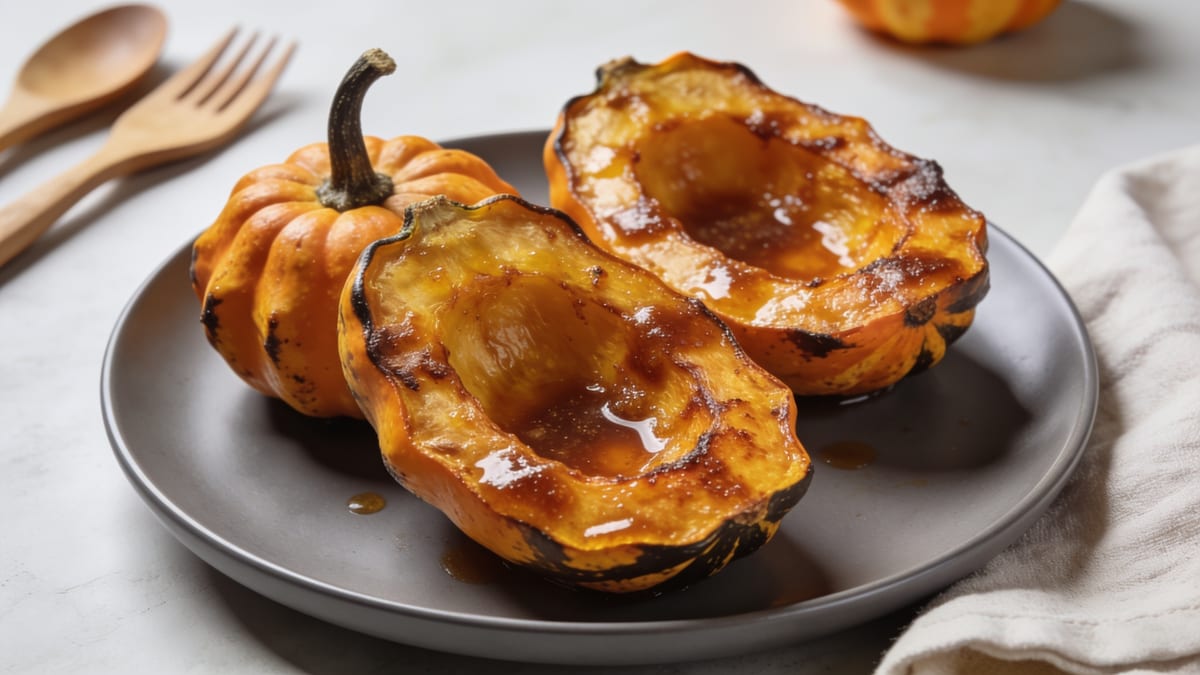
Halve two acorn squash from stem to tip, scrape out the seeds, rub the cut surfaces with olive oil, salt, and pepper, and roast them cut side down on a parchment-lined rimmed sheet at 425°F (220°C) for 30 minutes. Flip the halves, brush them with melted butter whisked with maple syrup and a pinch of cinnamon, pour the rest into the cavities, and roast 12-15 minutes more until the edges are deeply caramelized and a knife tip slides through the thickest part with no resistance. Rest 5 minutes, spoon the glaze pooled in the cavities back over the flesh, and serve warm — no peeling needed, the skin turns tender and edible.
- Roast cut side down first: direct pan contact caramelizes the sugars while trapped steam cooks the flesh through evenly.
- Add the maple glaze only after flipping — syrup brushed on at the start scorches long before the squash is tender.
- Trust the knife test over the clock; the tip should slide into the thickest part near the stem with zero resistance.
Equipment
- Rimmed baking sheet
- Parchment paper
- Chef's knife
- Cutting board
- Sturdy metal spoon
- Small saucepan
- Pastry brush
Ingredientes
Squash
- medium acorn squash, about 700 g / 1½ lb each; choose squash that feel heavy for their size with dull, matte skin
- 30 ml olive oil
- 5 g kosher salt, plus a pinch for the glaze
- 1 g black pepper, freshly ground
Maple butter glaze
- 28 g unsalted butter
- 45 ml pure maple syrup, the real thing, not pancake syrup
- 1 g ground cinnamon, optional; swap in smoked paprika to lean savory
- flaky sea salt, for serving; optional
Elaboración
- PASO01
Set a rack in the middle of the oven and heat it to 425°F (220°C). Line a rimmed baking sheet with parchment paper — the maple glaze that drips later will burn onto a bare pan.
- PASO02
Lay each squash on its side and rock a sharp chef's knife through it from stem to tip, following one of the grooves. If the skin fights back, microwave the whole squash for 2-3 minutes to soften it first. Scrape out the seeds and strings with a sturdy metal spoon; save the seeds for toasting if you like.
- PASO03
Rub the cut surfaces and cavities with the olive oil, then season them evenly with the kosher salt and pepper. Place the halves cut side down on the lined sheet, spaced so they are not touching.
- PASO04
Roast for 30 minutes, until the cut edges peeking out from under each half are deep golden brown and the shells give slightly when pressed with tongs.
- PASO05
While the squash roasts, melt the butter in a small saucepan over low heat. Stir in the maple syrup, cinnamon, and a small pinch of salt, then pull it off the heat and keep it near the stove so it stays pourable.
- PASO06
Flip the halves cut side up. Brush the glaze generously over the flesh and cut rims, then pour whatever remains into the cavities. Roast 12-15 minutes more, until the surface is glossy, the edges are deeply caramelized, and a paring knife slides through the thickest part with no resistance.
- PASO07
Let the halves rest on the sheet for 5 minutes — the glaze in the cavities thickens as it cools. Spoon it back over the flesh, finish with flaky salt or a few thyme leaves, and serve warm.
Make ahead
You can halve and seed the squash up to 2 days ahead; wrap the halves tightly and refrigerate. The glaze keeps refrigerated for 3 days — rewarm it gently before brushing. For entertaining, roast the squash fully earlier in the day, hold it at room temperature up to 4 hours, then brush with a little reserved glaze and reheat at 400°F (200°C) for about 10 minutes before serving.
Storage
Refrigerate cooled halves in an airtight container for up to 4 days. Reheat cut side up in a 375°F (190°C) oven or air fryer for 8-10 minutes to revive the caramelized edges; the microwave works but leaves them soft. Freezing whole halves turns the texture watery — if you want to freeze, scoop and mash the flesh first and freeze it up to 3 months for soups or purees.
Variations
Vegan maple-chili
Swap the butter for 2 tbsp (30 ml) olive oil or vegan butter and add 1/4 tsp cayenne or a spoonful of chili crisp to the glaze. The dish becomes fully vegan and dairy-free, and the heat plays beautifully against the maple.
Savory brown butter and sage
Skip the maple and cinnamon. Brown the butter with 6-8 fresh sage leaves and a smashed garlic clove, spoon it over the flipped halves, and finish the roast as written. Shower with grated Parmesan in the last 5 minutes if you like.
Caramelized wedges
Instead of halves, cut the seeded squash into 1-inch (2.5 cm) wedges, toss with the oil and seasonings, and roast at 425°F (220°C) for 25-30 minutes, flipping once and brushing with glaze in the final 10. More browned surface area, faster cook, great for sheet-pan dinners.
Serve with
Nutrition per serving
Nutrition values are estimates based on the metric measurements. Adjust as needed.
Preguntas frecuentes
Do you have to peel acorn squash before roasting?
No, and you shouldn't try. The deep ridges make peeling a raw acorn squash slow and genuinely risky with a knife, and after 45 minutes in a hot oven the skin turns thin and tender enough to eat. Anyone who prefers not to eat it can simply scoop the flesh off the shell with a spoon at the table.
What's the safest way to cut an acorn squash?
Steady it on a damp towel, lay it on its side, and rock the heel of a sharp chef's knife through one of the grooves from stem to tip — never force the tip straight down. If the squash is very hard, microwave it whole for 2-3 minutes; that brief softening makes the cut dramatically easier and is a trick worth using across all your winter squash cooking.
How do I know when roasted acorn squash is done?
Use the knife test rather than the timer: a paring knife should slide into the thickest flesh near the stem with no resistance, and the cut edges should be deeply browned. Many acorn squash recipes give a fixed time, but squash vary a lot in size and density — underdone squash tastes starchy instead of sweet, so give it 5 more minutes whenever you're unsure.
Can I roast the seeds like pumpkin seeds?
Absolutely — they're a bonus snack most acorn squash recipes throw away. Rinse the seeds free of strings, dry them well, toss with a little oil and salt, and toast at 300°F (150°C) for 20-25 minutes, stirring once, until golden and crisp. Scatter them over the finished squash for crunch.
Why did my squash come out bland or watery?
Usually one of three things: the squash was old or picked underripe (look for heavy, matte-skinned squash with a dry, corky stem), the oven ran cool so the flesh steamed instead of caramelized, or it was pulled before the edges browned. High heat, cut side down contact with the pan, and roasting until genuinely deep golden are what concentrate flavor.
Cooked this? Rate it.
Real ratings from real cooks. We only show a score once enough of you have weighed in — no fabricated stars.