Masa Madre
A sourdough starter is a living culture of wild yeast and lactic acid bacteria that you raise from nothing more than flour, water, and about a week of once-a-day stirring. This method kicks off with whole wheat flour — its bran carries a dense population of wild microbes — then switches to unbleached all-purpose flour for clean, predictable feedings. The payoff is a jar of bubbly, tangy, yogurt-scented leavening that can raise bread for years if you keep it fed.
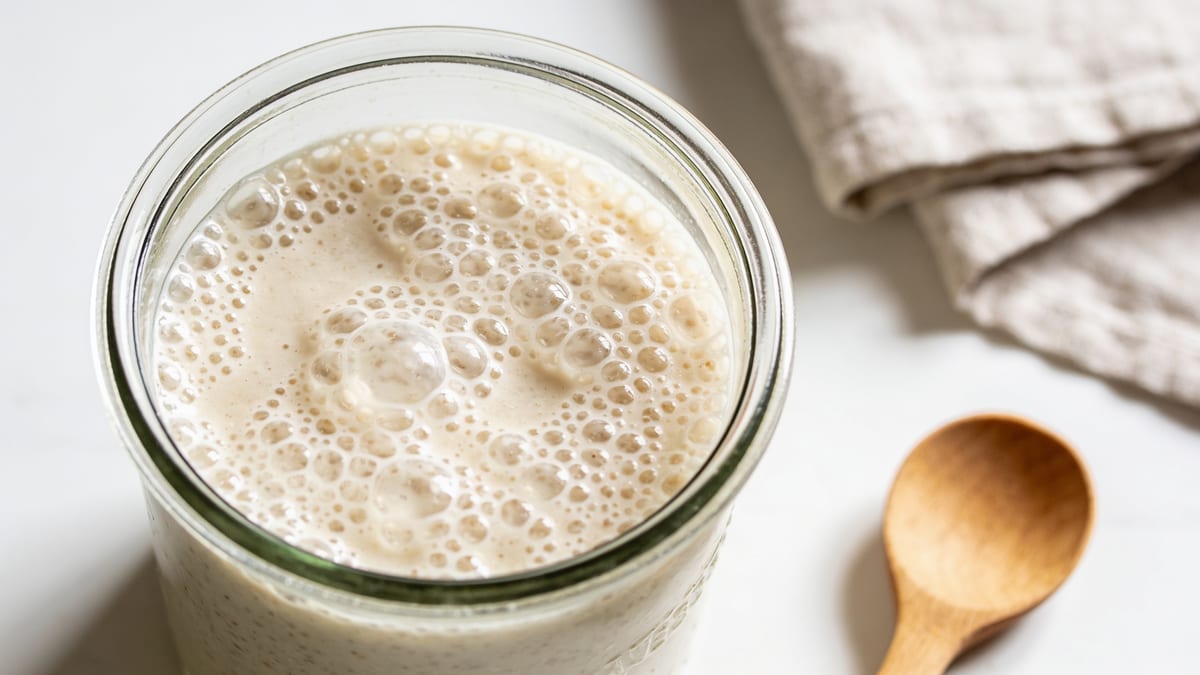
Stir 60 g whole wheat flour into 60 ml lukewarm water in a clean quart glass jar, cover loosely, mark the level with a rubber band, and hold it at 21-24 C (70-75 F) for 48 hours; starting on day 3, once every 24 hours, discard all but 60 g and feed it 60 g unbleached all-purpose flour plus 60 ml lukewarm water, moving to feedings every 12 hours once it starts doubling fast; within roughly 7 days (up to 14 in a cool kitchen) you will have a starter that reliably doubles within 4-6 hours of a feed, smells like tangy yogurt and ripe apples, and is ready to raise bread.
- Weigh everything on a scale - equal grams of starter, flour, and water (1:1:1) is the entire recipe; cup measures drift too much.
- Warmth is the accelerator: keep the jar at 21-27 C (70-80 F); a turned-off oven with just the light on is a perfect incubator.
- Do not panic at the day 3-4 slump - the dramatic early bubbles are bacterial, not yeast; steady daily feeds bring real, lasting activity back.
Equipment
- Digital kitchen scale
- Wide-mouth 1-quart (1-liter) glass jar
- Second clean jar for transfer days
- Flexible silicone spatula or wooden spoon
- Rubber band or tape to mark growth
- Loose-fitting lid, cloth, or coffee filter cover
Ingredientes
Day 1 - establish the culture
- 60 g whole wheat flour, stone-ground if available; the bran carries the wild yeast
- 60 ml lukewarm water, filtered or dechlorinated, about 27 C / 80 F
Days 3-7 - daily feedings
- 360 g unbleached all-purpose flour, about 60 g per feeding; unbleached only, bleaching hinders the microbes
- 360 ml lukewarm water, about 60 ml per feeding; if your tap water is chlorinated, let it sit out overnight
Elaboración
- PASO01
In a clean 1-quart glass jar, stir 60 g whole wheat flour into 60 ml lukewarm water until no dry pockets remain - it should look like thick pancake batter. Scrape down the sides, stretch a rubber band around the jar at the surface level, cover loosely (lid resting on top, not sealed), and leave it at 21-24 C (70-75 F) for 24 hours.
- PASO02
Peek but resist feeding. You may see a few scattered bubbles or nothing at all - both are normal. If a dry crust forms, stir once to fold it back in, re-cover, and wait another 24 hours in the same warm spot.
- PASO03
Discard all but 60 g of the mixture (a second jar and the scale make this quick), then stir in 60 g all-purpose flour and 60 ml lukewarm water. Move the rubber band to the new level. If it bubbled wildly on day 2 and now looks flat, that is expected: those first bubbles come from bacteria, not yeast, and activity often crashes around now. Keep going.
- PASO04
Once every 24 hours, discard down to 60 g and feed with 60 g all-purpose flour plus 60 ml water. Over these two days the smell should shift from funky - gym socks and overripe fruit are common - toward a cleaner, tangy-yogurt sourness, with finer, more even bubbles throughout.
- PASO05
Keep the same 1:1:1 feeds, but the moment the starter doubles in volume within about 6 hours of a feeding, switch to feeding every 12 hours so the young yeast never runs out of food. In a cool kitchen this stage can stretch to day 10-14; that is patience, not failure.
- PASO06
The starter is ready when it predictably doubles within 4-6 hours of a feed at room temperature, the surface is domed and pocked with bubbles, and it smells pleasantly sour, like yogurt and ripe apple. As a secondary check, drop a spoonful into a glass of water: a ripe starter usually floats. Judge by the doubling first - the float test can mislead.
- PASO07
Use the starter at its peak (domed, just before it starts sinking) in any sourdough recipe. Always keep at least 60 g behind in the jar and continue the feed cycle. If you bake less than a few times a week, refrigerate the jar right after a fresh feed and maintain it with the weekly routine under Storage.
Make ahead
The whole project is make-ahead by design: start the jar 1-2 weeks before you want to bake your first loaf. For insurance, smear a thin layer of ripe starter on parchment, let it dry completely at room temperature for 2-3 days, break it into flakes, and store airtight for months; revive the flakes in lukewarm water with a few daily feeds. A neglected refrigerated starter can usually be brought back with 2-4 consecutive feeds, even after several weeks.
Storage
On the counter, an active starter needs a 1:1:1 feed every 12-24 hours depending on room temperature. For occasional baking, feed it, let it sit out for about an hour, then refrigerate with the lid loosely closed; feed it once a week (discard to 60 g, add 60 g flour and 60 ml water) and return it to the fridge. Before baking, take it out and give it 2-3 room-temperature feeds over 24 hours until it doubles reliably. A gray liquid layer (hooch) on top just means it is hungry - stir it in or pour it off and feed.
Variations
Whole rye starter
Feed with 100% whole rye flour instead of all-purpose. Rye's enzymes and mineral-rich bran make the culture noticeably faster and more vigorous - often bake-ready in 5-6 days - with a deeper, earthier sourness. Keep the same 60 g / 60 ml ratio; rye starters look denser and rise less dramatically, so judge by bubbles and aroma.
Gluten-free starter
Use 60 g brown rice flour (or half brown rice, half buckwheat) and 70 ml water per feed - gluten-free flours drink a little more. The schedule is identical, though it may take 2-3 extra days to strengthen. The result leavens gluten-free breads and pancakes and keeps the project safe for celiac households.
Stiff starter (pasta madre style)
Once your culture is established, feed 60 g starter with 60 g flour but only 30 ml water and knead it into a firm ball. The stiff, low-hydration environment favors yeast over acid-producing bacteria, giving a milder, sweeter profile suited to enriched breads like panettone-style doughs.
Serve with
Nutrition per serving
Nutrition values are estimates based on the metric measurements. Adjust as needed.
Preguntas frecuentes
How do I know my sour dough starter is ready to bake with?
Consistency is the real test: a ready sour dough starter doubles in volume within 4-6 hours of a feeding at room temperature, several days in a row, with a domed, bubbly surface and a tangy yogurt-and-ripe-apple smell. The float test (a spoonful floating in water) is a handy secondary check, but a well-stirred or very wet starter can sink even when ripe, so trust the doubling pattern first.
My starter bubbled like crazy on day 2 and then went completely flat. Did I kill it?
Almost certainly not - this is the most common moment people quit, and it is completely normal. The early explosion of bubbles comes from bacteria (often leuconostoc) that thrive first, then die back as the mixture acidifies. Wild yeast takes over during the quiet days 3-5. Keep up the daily discard-and-feed routine and real, lasting activity returns.
Do I really have to discard half every day? It feels wasteful.
You need to remove some starter before feeding, otherwise the jar overflows within days and each feeding becomes too small relative to the mass to refresh it - the culture starves in its own acid. But discard is not garbage: once you are past day 3 or 4, collect it in a jar in the fridge and use it for pancakes, crackers, or quick breads.
What flour and water work best for a sour dough starter?
Start with whole wheat or rye for day 1, since the bran carries abundant wild yeast, then feed with unbleached all-purpose flour for steady, predictable behavior - bleached flour slows the microbes down. For water, filtered or dechlorinated is safest; heavily chlorinated tap water can inhibit a young sour dough starter, so let tap water sit out overnight or use filtered.
There is a grayish liquid on top of my starter. Is it still safe?
Yes - that liquid is called hooch, a harmless byproduct of fermentation that simply means the starter is hungry. Stir it back in for extra tang or pour it off for a milder flavor, then feed as usual. The actual red flags are fuzzy mold or pink/orange streaks; if you see those, throw the starter out and begin again with a clean jar.
Cooked this? Rate it.
Real ratings from real cooks. We only show a score once enough of you have weighed in — no fabricated stars.