Hähnchen-Katsu
Chicken Katsu ist die japanische Variante des panierten, frittierten Schnitzels: dünn geklopfte Hähnchenbrust, umhüllt von luftigem Panko und frittiert, bis sie splitternd knusprig und tief goldbraun ist. Die Kruste bleibt leicht und kross statt dicht, während das Fleisch innen saftig bleibt, und eine würzig-süße Tonkatsu-Sauce verbindet alles. Die Brust zu dünnen Schnitzeln aufzuschneiden ist der entscheidende Kniff, denn so gart das Hähnchen in den wenigen Minuten durch, die das Panko braucht, um satt goldbraun zu werden.
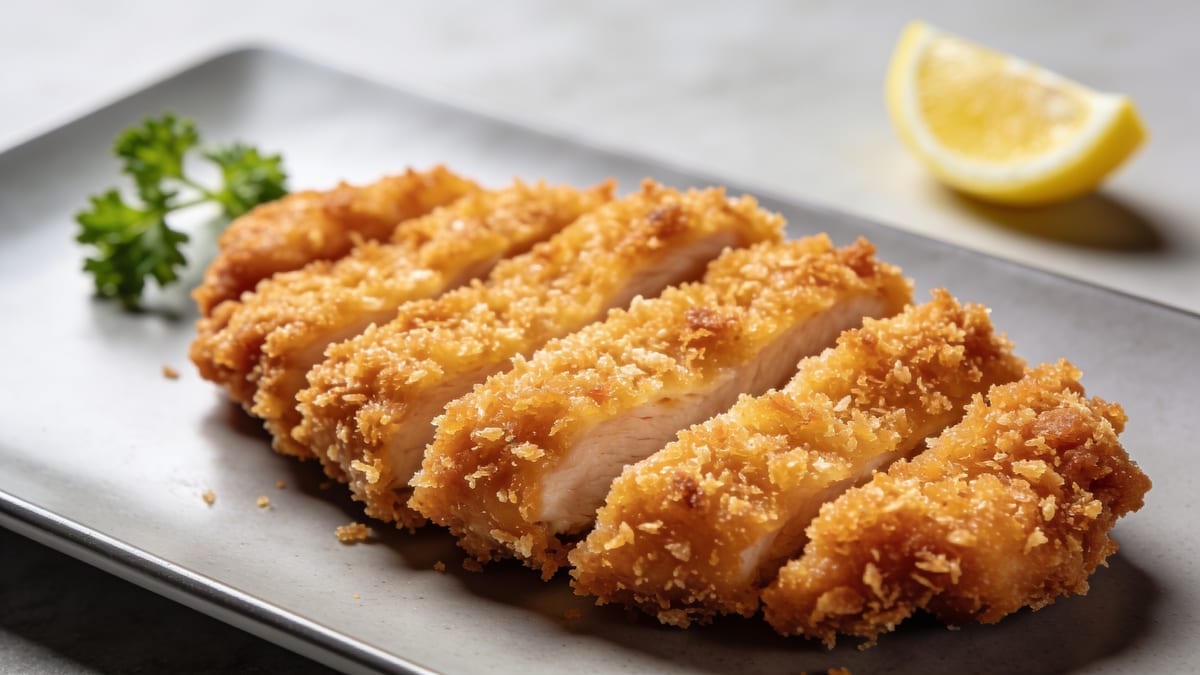
Schneide zwei große Hähnchenbrüste schmetterlingsartig zu vier gleichmäßigen Schnitzeln, klopfe sie auf etwa 1,5 cm und würze sie mit Salz und Pfeffer. Wende jedes zuerst in Mehl, dann in verquirltem Ei und schließlich in einer dicken Schicht Panko, wobei du die Krümel fest andrückst, damit sie haften. Erhitze etwa 3 cm neutrales Öl in einem schweren Topf auf 170°C (340°F) und frittiere die Schnitzel zu zweit 3 bis 4 Minuten pro Seite, bis sie tief goldbraun und innen 74°C (165°F) heiß sind, und lass sie dann auf einem Kuchengitter abtropfen. Verquirle Ketchup, Worcestershiresauce, Austernsauce und etwas Zucker zu einer schnellen Tonkatsu-Sauce, schneide das Katsu quer in Streifen und serviere es auf Rundkornreis mit fein geschnittenem Kohl und reichlich Sauce.
- Klopfe die Schnitzel gleichmäßig dünn, damit das Hähnchen durchgart, bevor das Panko zu dunkel wird.
- Halte das Öl bei 170–175°C (340–350°F): Kühleres Öl macht die Kruste fettig, heißeres verbrennt das Panko, bevor das Fleisch gar ist.
- Lass die Schnitzel auf einem Kuchengitter abtropfen und ruhen, nicht auf Küchenpapier, damit die Kruste rundum knusprig bleibt.
Equipment
- Fleischklopfer oder Nudelholz
- Drei flache Schalen zum Panieren
- Schwerer Topf oder Schmortopf
- Kuchengitter zum Abkühlen
- Grillzange oder Kochstäbchen
- Einstichthermometer
Zutaten
Hähnchen und Panade
- 600 g ausgelöste, hautlose Hähnchenbrüste, horizontal zu 4 dünnen Schnitzeln halbiert
- 5 g grobes Salz, zum Würzen
- frisch gemahlener schwarzer Pfeffer
- 60 g Weizenmehl (Type 405)
- große Eier, verquirlt
- 100 g Panko-Paniermehl, im japanischen Stil
- 750 ml neutrales Öl, zum Frittieren, Raps-, Pflanzen- oder Reiskleieöl
Schnelle Tonkatsu-Sauce
- 45 ml Ketchup
- 30 ml Worcestershiresauce
- 15 ml Austernsauce
- 4 g Kristallzucker
- Dijonsenf oder japanischer Karashi-Senf, optional
Zum Servieren
- gekochter japanischer Rundkornreis, warm
- 200 g Weißkohl, sehr fein geschnitten
- geröstete weiße Sesamsamen, optional als Garnitur
Zubereitung
- SCHRITT01
Lege jede Hähnchenbrust flach hin und schneide sie horizontal in zwei dünne Schnitzel. Decke sie mit Frischhaltefolie ab und klopfe die dickeren Stellen mit einem Fleischklopfer oder Nudelholz, bis jedes Schnitzel gleichmäßig 1,5 cm (etwa 1/2 inch) dick ist. Tupfe sie trocken, würze sie dann von beiden Seiten mit Salz und Pfeffer und lass sie ruhen, während du alles vorbereitest.
- SCHRITT02
Verquirle Ketchup, Worcestershiresauce, Austernsauce, Zucker und – falls verwendet – Senf in einer kleinen Schüssel glatt. Probiere und passe an: etwas mehr Worcestershiresauce für Würze oder Zucker für Süße. Stelle sie beiseite, damit sich die Aromen verbinden.
- SCHRITT03
Stelle drei flache Schalen bereit: Mehl in der ersten, verquirlte Eier in der zweiten, Panko in der dritten. Wende ein Schnitzel im Mehl und klopfe den Überschuss ab, tauche es vollständig ins Ei und drücke es dann ins Panko, sodass die Krümel auf beiden Seiten haften. Lege es auf einen Teller und wiederhole das mit dem Rest.
- SCHRITT04
Gieße etwa 3 cm (1.25 inches) Öl in einen schweren Topf und erhitze es bei mittlerer Hitze auf 170°C (340°F) laut Thermometer. Falls du keins hast: Ein hineingegebener Panko-Krümel sollte gleichmäßig brutzeln und innerhalb von ein paar Sekunden aufsteigen.
- SCHRITT05
Lasse zwei Schnitzel von dir weg ins Öl gleiten und frittiere sie 3 bis 4 Minuten pro Seite, bis sie tief goldbraun und in der Mitte auf 74°C (165°F) gegart sind. Halte das Öl zwischen 170 und 175°C, reguliere die Hitze zwischen den Chargen und frittiere die restlichen Schnitzel.
- SCHRITT06
Setze die frittierten Schnitzel auf ein Kuchengitter über einem Blech und lass sie 3 bis 5 Minuten ruhen. Auf dem Gitter kann der Dampf von allen Seiten entweichen, sodass die Kruste knusprig bleibt, statt auf einem Teller weich zu dämpfen.
- SCHRITT07
Schneide jedes Schnitzel quer in 1,5 cm breite Streifen und behalte dabei die Form bei. Serviere es auf warmem Reis mit einem Häufchen geschnittenem Kohl, träufle oder gieße die Tonkatsu-Sauce daneben und vollende mit Sesamsamen.
Make ahead
Paniere die Schnitzel bis zu einen Tag im Voraus und lagere sie offen auf einem Gitter im Kühlschrank; die Oberfläche trocknet etwas ab und frittiert noch knuspriger. Du kannst panierte rohe Schnitzel auch in einer einzelnen Lage einfrieren und sie dann gefroren frittieren, wobei du ein paar Minuten hinzufügst und das Öl näher an 165°C (330°F) hältst. Die Tonkatsu-Sauce lässt sich mehrere Tage im Voraus anrühren.
Storage
Bewahre übrig gebliebene Schnitzel in einem luftdichten Behälter bis zu 3 Tage im Kühlschrank auf. Erwärme sie im 190°C (375°F) heißen Ofen oder in der Heißluftfritteuse 6 bis 8 Minuten, um das Panko wieder knusprig zu machen; meide die Mikrowelle, die die Kruste weich macht. Die Tonkatsu-Sauce hält sich gekühlt bis zu 2 Wochen.
Variations
Katsu aus dem Ofen oder der Heißluftfritteuse
Für eine leichtere Variante röste das Panko in einer trockenen Pfanne goldbraun an, bevor du panierst, besprühe die Schnitzel dann mit Öl und frittiere sie in der Heißluftfritteuse bei 200°C (400°F) etwa 12 Minuten, einmal gewendet, oder backe sie auf einem Gitter bei 220°C (425°F) 18 bis 20 Minuten.
Chicken Katsu Curry
Mache daraus ein Katsu-Curry, indem du das aufgeschnittene Schnitzel auf Reis servierst und eine Kelle japanische Currysauce rund um den Boden gießt statt darüber, damit die Kruste knusprig bleibt.
Glutenfrei
Ersetze Mehl und Panko durch glutenfreie Varianten und verwende eine Worcestershiresauce auf Tamari-Basis sowie eine als glutenfrei gekennzeichnete Austern- oder Tonkatsu-Sauce, damit der ganze Teller glutenfrei bleibt.
Serve with
Nutrition per serving
Nutrition values are estimates based on the metric measurements. Adjust as needed.
Häufige Fragen
Welches Hähnchenteil eignet sich am besten für Chicken Katsu?
Ausgelöste, hautlose Hähnchenbrust ist traditionell und ergibt das saubere, gleichmäßige Schnitzel, das die meisten mit Chicken Katsu verbinden. Klopfe sie gleichmäßig dünn, damit sie gleichmäßig frittiert. Wenn du saftigeres Fleisch bevorzugst, eignen sich auch ausgelöste Oberschenkel gut; schneide sie einfach flach und rechne mit einer etwas weniger ordentlichen Form.
Warum ist mein Chicken Katsu weich oder fettig geworden?
Fast immer ein Problem mit der Öltemperatur. Sinkt das Öl unter etwa 165°C (330°F), saugt das Panko Fett auf, bevor es fest wird, also verwende ein Thermometer und frittiere in kleinen Chargen. Auch das Abtropfen des fertigen Chicken Katsu auf einem Kuchengitter statt auf Küchenpapier hält die Unterseite knusprig.
Kann ich Chicken Katsu ohne Frittieren zubereiten?
Ja. Röste das Panko zuerst in einer trockenen Pfanne goldbraun an, damit es im Ofen bräunt, und frittiere die panierten Schnitzel dann in der Heißluftfritteuse bei 200°C (400°F) etwa 12 Minuten oder backe sie bei 220°C (425°F) 18 bis 20 Minuten. Die Textur ist eine Spur weniger reichhaltig als bei frittiertem Chicken Katsu, aber immer noch knusprig.
Welche Sauce passt zu Chicken Katsu?
Der Klassiker ist Tonkatsu-Sauce, eine dicke, würzig-süße braune Sauce. Die schnelle Version hier wird aus Ketchup, Worcestershiresauce, Austernsauce und Zucker verquirlt und ist in einer Minute fertig. Auch ein Klecks japanischer Senf oder etwas Karashi dazu ist üblich.
Woran erkenne ich, dass das Chicken Katsu durchgegart ist?
Prüfe die Mitte mit einem Einstichthermometer; sie sollte 74°C (165°F) erreichen. Selbst 1,5 cm dicke Schnitzel schaffen das in etwa 3 bis 4 Minuten pro Seite. Das Hähnchen gleichmäßig dick zu klopfen ist der zuverlässige Weg, damit das Katsu durchgart, bevor die Kruste zu dunkel wird.
Cooked this? Rate it.
Real ratings from real cooks. We only show a score once enough of you have weighed in — no fabricated stars.