Chinkali — georgische Suppenteigtaschen
Georgiens Bergknödel: ein gefältelter Teigknoten, der gewürztes Hackfleisch umhüllt und – der eigentliche Sinn – einen Schluck heiße Brühe, die sich beim Kochen bildet. Man isst sie mit der Hand, hält sie am Knoten fest, beißt ein kleines Fenster hinein, um die Suppe zu schlürfen, und verschlingt dann den Rest. Der kleine Teigknoten (kudi) bleibt auf dem Teller liegen, um zu zählen, wie viele man gegessen hat.
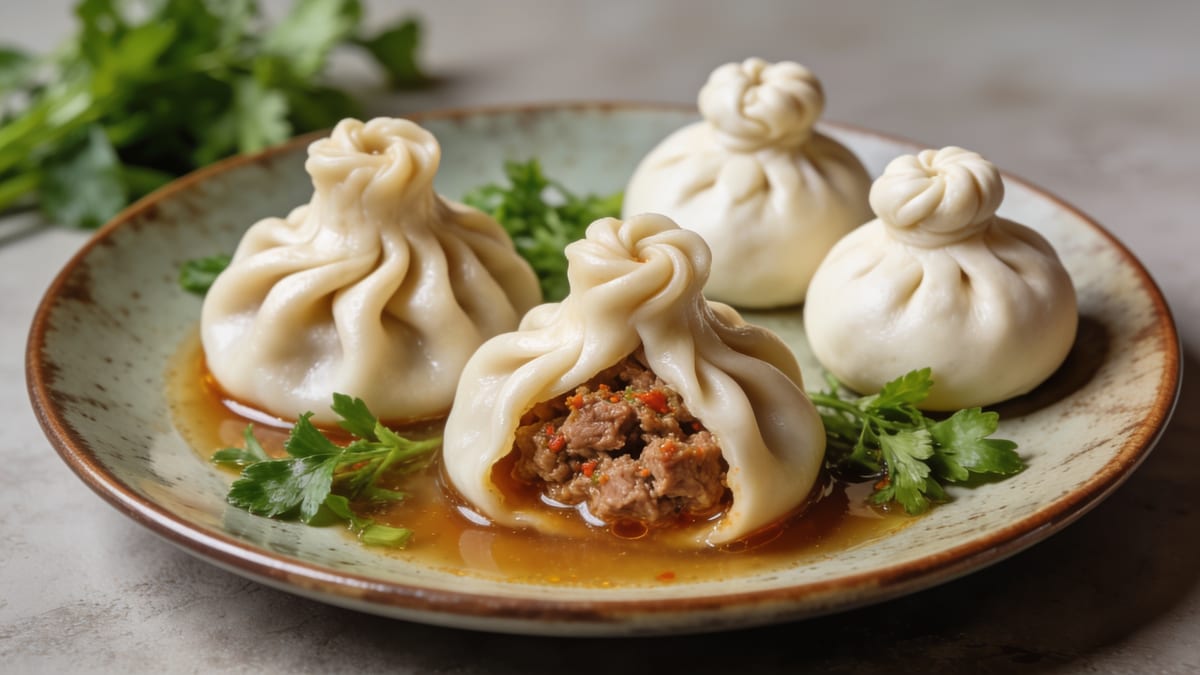
Bereite einen festen Teig aus Mehl, Wasser und Salz zu und lass ihn ruhen. Vermische Rinder- und Schweinehack mit geriebener Zwiebel, Knoblauch, viel schwarzem Pfeffer, Salz und einer guten Menge kaltem Wasser (oder Brühe), sodass die Füllung locker und saftig ist. Rolle dünne Kreise aus, gib Füllung hinein und fältele den Rand zu einem festen Beutel mit einem Knoten. Koche sie in Salzwasser, bis sie oben schwimmen und der Teig zart ist, etwa 8 Minuten. Iss sie mit der Hand und schlürfe die Brühe im Inneren.
- Gib reichlich kaltes Wasser an das Fleisch – diese Flüssigkeit wird zur charakteristischen Brühe im Inneren.
- Rolle die Teigkreise am Rand dünn aus, lass die Mitte aber etwas dicker, damit sie die Suppe hält.
- Fältele fest und verschließe gut, damit keine Brühe entweicht; ein stabiler Knoten ist dein Griff.
Equipment
- Großer Topf
- Nudelholz
- Rührschüsseln
- Schaumlöffel
Zutaten
Teig
- 400 g Weizenmehl (Type 405)
- 200 ml kaltes Wasser
- 1 TL Salz
Füllung
- 300 g Rinderhackfleisch
- 200 g Schweinehackfleisch, oder nur Rind
- 1 große Zwiebel, sehr fein gerieben
- 2 Knoblauchzehen, fein gehackt
- 150 ml kaltes Wasser oder Rinderbrühe
- 1½ TL Salz, 1 TL schwarzer Pfeffer
- ½ TL gemahlener Kümmel oder Kreuzkümmel, optional
- Kleine Handvoll Koriander, gehackt, optional
Zubereitung
- SCHRITT01
Vermische Mehl und Salz, gib nach und nach das kalte Wasser dazu und knete 8–10 Minuten zu einem festen, glatten Teig. Abgedeckt mindestens 30 Minuten ruhen lassen.
- SCHRITT02
Vermenge das Hackfleisch, die geriebene Zwiebel, den Knoblauch, Salz, Pfeffer und die Gewürze. Schlage nach und nach das kalte Wasser oder die Brühe ein, bis die Füllung locker, nass und fast schlonzig ist – diese Flüssigkeit ergibt die Suppe im Inneren.
- SCHRITT03
Rolle den Teig dünn aus und steche Kreise von etwa 10–12 cm Durchmesser aus (oder rolle einzelne Kugeln aus), wobei du die Ränder dünner als die Mitte lässt, damit der Boden die Brühe halten kann.
- SCHRITT04
Gib einen gehäuften Löffel Füllung in die Mitte jedes Kreises. Raffe den Rand mit den Fingern rundherum zu Falten, drücke dann die geraffte Spitze zusammen und drehe sie zu einem festen Knoten. Strebe viele Falten an – je mehr, desto stolzer die Khinkali.
- SCHRITT05
Salze einen großen Topf Wasser und bringe es zum sanften Kochen. Rühre einen Strudel und lass die Khinkali einige auf einmal hineingleiten. Koche sie, bis sie oben schwimmen und der Teig zart ist, 7–9 Minuten. Hebe sie heraus, bestäube sie mit grobem schwarzem Pfeffer und iss sie mit der Hand – beiße ein Fenster hinein, schlürfe die Brühe und iss dann den Rest, den Knoten lässt du liegen.
Make ahead
Bereite eine große Menge zu und friere sie roh ein – das Gefrierfach ist der beste Freund des Khinkali-Machers. Forme sie, friere sie auf einem bemehlten Tablett fest und gib sie dann in einen Beutel. Koche sie direkt aus dem Gefrierfach, wann immer du sie möchtest.
Storage
Am besten frisch. Ungekochte Khinkali lassen sich hervorragend einfrieren – friere sie auf einem Tablett vor, gib sie dann in einen Beutel und koche sie gefroren (ein paar Minuten länger). Gekochte Reste halten 2 Tage und werden traditionell am nächsten Tag goldbraun und knusprig gebraten.
Variations
Kalakuri (Stadtstil)
Gemischtes Rind- und Schweinehack mit frischen Kräutern (Koriander) – die verbreitete Restaurantvariante.
Mtiuluri (Bergstil)
Nur Fleisch, dazu Zwiebel, Knoblauch und Pfeffer, ohne Kräuter – das Original aus dem Hochland.
Soko / vegetarisch
Fülle sie mit angebratenen Pilzen oder Kartoffel und Kräutern, für fleischlose Khinkali.
Serve with
Nutrition per serving
Nutrition values are estimates based on the metric measurements. Adjust as needed.
Häufige Fragen
Wie isst man Khinkali?
Mit der Hand, niemals mit der Gabel. Halte den geknoteten Kopf, drehe den Knödel um, beiße ein kleines Fenster in die Seite und schlürfe die heiße Brühe heraus, iss dann den Rest. Lass den zähen Knoten (Kudi) auf dem Teller liegen – die Georgier zählen sie, um zu sehen, wer am meisten gegessen hat.
Warum ist Suppe im Inneren?
Die Brühe wird nicht hinzugefügt – sie bildet sich, während die Khinkali kochen. Weil reichlich kaltes Wasser oder Brühe in die rohe Fleischfüllung eingeschlagen wird, tritt diese Flüssigkeit aus und dampft im verschlossenen Knödel, wodurch der charakteristische Schluck Suppe entsteht. Verschließe sie gut, damit nichts ausläuft.
Sollte ich den Knoten essen?
Traditionell nein – der geraffte Teigknoten ist dick und nicht ganz durchgegart, daher bleibt er als Zählmarke dafür, wie viele man gegessen hat, auf dem Teller. Du kannst ihn essen, wenn du magst, aber die meisten Georgier tun es nicht.
Kann ich Khinkali einfrieren?
Ja, und das ist die beste Art, sie aufzubewahren. Friere die geformten rohen Knödel auf einem bemehlten Tablett fest und gib sie dann in einen Beutel. Koche sie direkt aus dem Gefrierfach und gib ein paar Minuten mehr Zeit – nicht auftauen, sonst kleben sie und reißen.
Meine Khinkali laufen aus – was ist schiefgelaufen?
Entweder war der Verschluss nicht fest oder der Teig war am Boden zu dünn ausgerollt. Fältele fest, drücke die Spitze zu einem soliden Knoten und lass die Mitte jedes Kreises etwas dicker. Auch ein sanftes (nicht sprudelndes) Kochen hilft ihnen, zusammenzuhalten.
Cooked this? Rate it.
Real ratings from real cooks. We only show a score once enough of you have weighed in — no fabricated stars.