Acarajé — buñuelos de frijol carita de Bahía
El alma de la comida callejera bahiana, con raíces al otro lado del Atlántico, en África Occidental: buñuelos de frijol carita molido y cebolla, fritos en dendê (aceite de palma rojo) hasta quedar crujientes y dorados, y luego abiertos y rellenos de vatapá, caruru, camarón seco y una salsa de pimienta ardiente. Vendido por las baianas con sus trajes de encaje blanco en las calles de Salvador, el acarajé es sagrado para el candomblé y muy querido como tentempié: crujiente, picante y profundamente afrobrasileño.
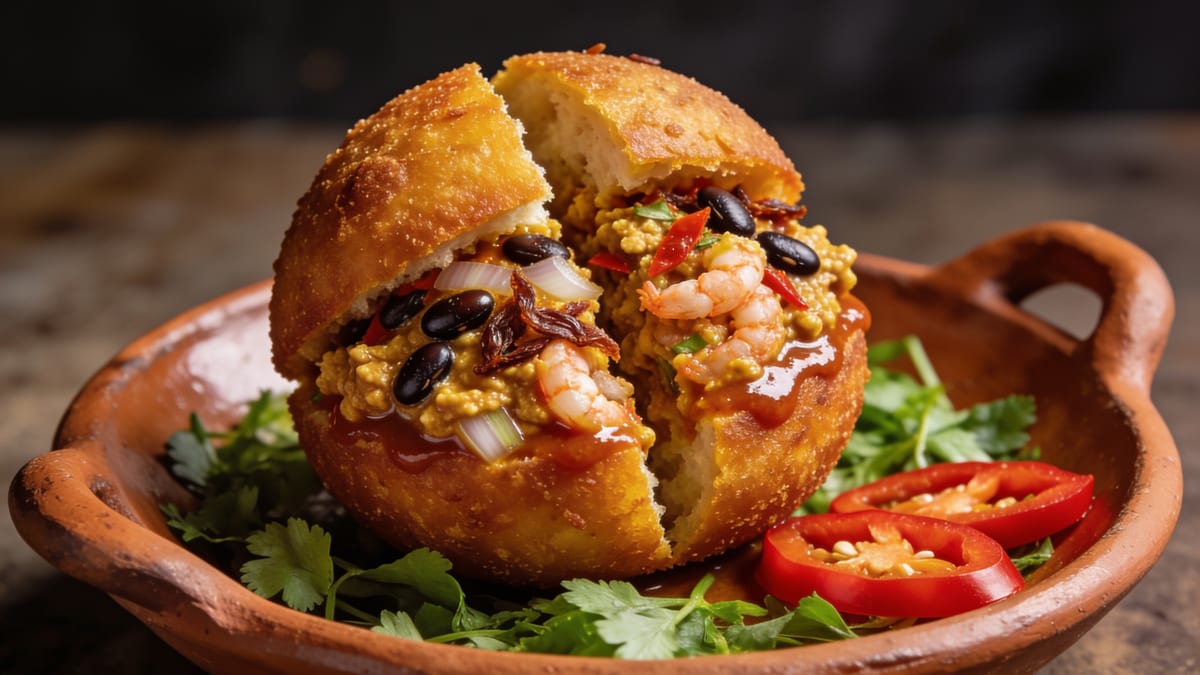
Pon a remojo frijoles carita secos, luego frótalos para retirarles la piel y muele los frijoles con cebolla hasta obtener una pasta espesa y lisa. Bate la pasta con fuerza hasta que quede ligera y esponjosa (esto la airea para que los buñuelos queden blandos por dentro). Calienta dendê (aceite de palma rojo) y fríe cucharadas grandes hasta que estén bien dorados y crujientes. Abre cada buñuelo caliente y rellénalo con vatapá, caruru, camarón seco y una cucharada de salsa de pimienta. Cómelos enseguida.
- Pon a remojo los frijoles carita y pélalos, luego muele y bate la pasta con fuerza hasta que quede esponjosa: esa aireación es lo que los hace ligeros.
- Fríe en dendê (aceite de palma rojo) para lograr el color y el sabor auténticos: es innegociable en un acarajé de verdad.
- Sírvelos calientes, abiertos y rellenos de vatapá, camarón seco y salsa de pimienta.
Equipment
- Batidora o procesador de alimentos
- Sartén honda para freír
- Bol
Ingredientes
Buñuelos
- 500 g frijoles carita secos, remojados toda la noche
- 1 cebolla, picada
- 1 cucharadita de sal
- Dendê (aceite de palma rojo), para freír
Para rellenar
- Vatapá (puré de pan, camarón, coco y dendê)
- Caruru (quimbombó/okra), opcional
- Camarón seco; ensalada fresca de tomate y cebolla
- Pimenta (salsa de pimienta picante), al gusto
Elaboración
- PASO01
Escurre los frijoles carita remojados y frótalos entre las manos (o tritúralos brevemente y enjuágalos) para aflojar las pieles y que floten y se separen. Desecha las pieles para obtener un buñuelo más liso y ligero.
- PASO02
Muele los frijoles pelados con la cebolla picada y la sal hasta obtener una pasta espesa y lisa, usando la menor cantidad de agua posible.
- PASO03
Bate la pasta enérgicamente con una cuchara (o unas varillas) durante varios minutos hasta que se aclare y quede aireada: esta aireación es lo que hace que el acarajé quede blando y suba por dentro en lugar de quedar denso.
- PASO04
Calienta abundante dendê (aceite de palma rojo) en una sartén honda. Coge cucharadas grandes con forma ovalada de la masa y fríelas hasta que estén bien doradas y crujientes por todos lados, dándoles la vuelta. Escúrrelas.
- PASO05
En caliente, abre cada buñuelo por la mitad como un bolsillo y rellénalo con vatapá (y caruru, si lo usas), camarón seco, un poco de ensalada de tomate y cebolla y una cucharada de salsa de pimienta. Cómelos de inmediato.
Make ahead
Prepara los rellenos —el vatapá y el caruru— con antelación (el vatapá se conserva e incluso mejora). Pon a remojo y pela los frijoles y muele la pasta unas horas antes, guardándola en frío. Fríe los buñuelos recién hechos justo antes de servir, ya que no se conservan una vez cocinados.
Storage
El acarajé es comida callejera pensada para comerse caliente y recién hecho: el contraste entre la corteza crujiente y el interior esponjoso se pierde en cuanto se enfría o se recalienta. La pasta de frijol se puede preparar unas horas antes y guardarla en frío. El vatapá se conserva 3 días en la nevera y a menudo se hace con antelación.
Variations
Abará
La misma pasta de frijol pero cocida al vapor en hojas de plátano en lugar de frita: el primo más tierno del acarajé.
Vegetariano
Rellénalo con vatapá y ensalada y prescinde del camarón seco (ten en cuenta que el vatapá suele llevar camarón: prepara una versión vegetariana).
Solo el buñuelo
Come los buñuelos calientes sin más, con salsa de pimienta, sin todo el conjunto de rellenos.
Serve with
Nutrition per serving
Nutrition values are estimates based on the metric measurements. Adjust as needed.
Preguntas frecuentes
¿Qué es el acarajé?
El acarajé es una comida callejera bahiana (del nordeste de Brasil) hecha con una pasta de frijol carita y cebolla, frita en dendê (aceite de palma rojo) y luego abierta y rellena de preparaciones sabrosas como vatapá, caruru, camarón seco y salsa de pimienta. Traído por los africanos occidentales esclavizados (está emparentado con el akara de África Occidental), es a la vez un tentempié cotidiano y un alimento sagrado en la religión del candomblé.
¿Qué es el dendê y puedo sustituirlo?
El dendê es aceite de palma rojo, de un color naranja intenso y un sabor terroso característico, central en la cocina bahiana. Es esencial para un acarajé auténtico, tanto para freír como en el vatapá. No hay un sustituto real para su sabor y su color; otro aceite neutro freirá los buñuelos, pero no aportará ese sabor característico. Búscalo en tiendas de productos brasileños o africanos.
¿Por qué hay que batir la pasta de frijol?
Batir la pasta de frijol carita molido con energía incorpora aire, lo que hace que los buñuelos suban y queden ligeros y esponjosos por dentro mientras crujen por fuera. Saltarse o escatimar este paso da buñuelos densos y pesados. Tradicionalmente se bate a mano con una cuchara de madera hasta que se aclara visiblemente en color y textura.
¿Tengo que quitarles la piel a los frijoles?
Tradicionalmente sí: frotar los frijoles carita para retirarles la piel tras el remojo da un buñuelo más liso, pálido y ligero. Da algo de trabajo, pero las pieles pueden dejar la pasta más basta y ligeramente amarga. Algunas versiones caseras más rápidas se lo saltan; el resultado queda un poco más denso y oscuro, pero igual de rico.
¿Cuál es la diferencia entre el acarajé y el abará?
Parten de la misma pasta de frijol carita sazonada. El acarajé se fríe en dendê hasta quedar crujiente; el abará se envuelve en hojas de plátano y se cuece al vapor, lo que da una textura blanda, húmeda y como de pudin. Ambos son especialidades bahianas que a menudo venden juntas las baianas, y los dos pueden servirse con los mismos rellenos.
Cooked this? Rate it.
Real ratings from real cooks. We only show a score once enough of you have weighed in — no fabricated stars.