Bánh cuốn — rollitos de arroz al vapor vietnamitas
Un desayuno vietnamita delicado: láminas finísimas de masa de arroz al vapor enrolladas en torno a un relleno sabroso de cerdo picado y hongo oreja de madera, servidas con chalotas fritas crujientes, láminas de embutido de cerdo vietnamita (chả lụa), hierbas frescas y un cuenco de nước chấm. El bánh cuốn es ligero, sedoso y resbaladizo —conseguir que las láminas al vapor queden finas y tiernas es todo un arte— y el contraste entre los rollitos suaves, las chalotas crujientes y la salsa ácida para mojar resulta irresistible.
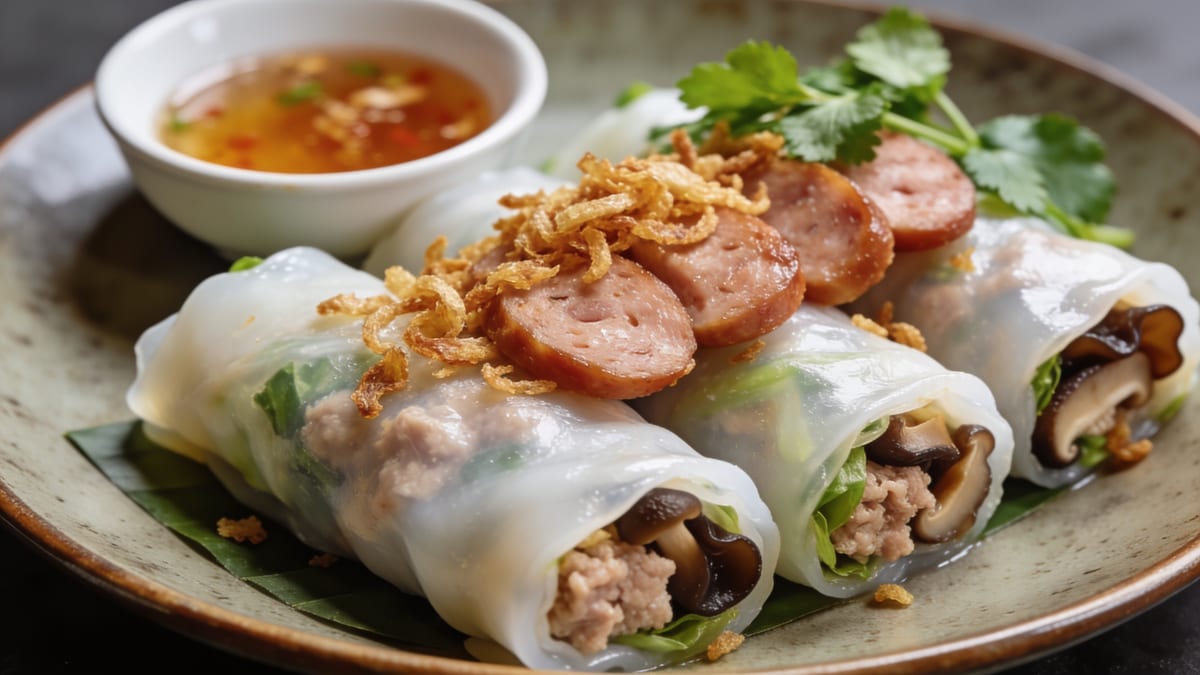
Prepara una masa fina con harina de arroz y almidón de tapioca, agua y un poco de aceite, y déjala reposar. Cocina el cerdo picado con el hongo oreja de madera y la chalota hasta obtener un relleno sabroso. Vierte con un cucharón una capa fina de masa en una sartén antiadherente caliente y ligeramente engrasada (o en una vaporera cubierta con un paño), tapa y cuece al vapor un momento, hasta que la lámina cuaje y quede translúcida. Pásala a una superficie engrasada, añade una línea de relleno y enróllala. Sirve los rollitos suaves coronados con chalotas fritas crujientes, con láminas de chả lụa, hierbas, brotes de soja y nước chấm para mojar.
- Una masa fina de arroz y tapioca (reposada) es lo que hace que las láminas queden sedosas y tiernas, no gomosas.
- Cuece la masa al vapor hasta formar una lámina fina (una sartén antiadherente con tapa es el método casero sencillo) y enróllala en caliente.
- Las chalotas fritas crujientes, el chả lụa, las hierbas y el nước chấm son acompañamientos esenciales, no opcionales.
Equipment
- Sartén antiadherente con tapa (o vaporera con paño)
- Cucharón
- Bandeja o superficie engrasada
Ingredientes
Masa
- 200 g harina de arroz
- 40 g almidón de tapioca
- 600 ml agua
- 1 cucharada de aceite; una pizca de sal
Relleno
- 250 g carne de cerdo picada
- 2 cucharadas de hongo oreja de madera, hidratado y picado
- 2 chalotas, picadas finas; 1 cucharada de salsa de pescado; pimienta
Para servir
- Chalotas fritas crujientes
- Chả lụa (embutido de cerdo vietnamita), en láminas
- Hierbas, brotes de soja (escaldados), pepino
- Nước chấm (salsa de pescado, lima, azúcar, agua, ajo y guindilla)
Elaboración
- PASO01
Bate la harina de arroz, el almidón de tapioca, la sal, el aceite y el agua hasta obtener una masa fina y lisa, y déjala reposar al menos 30 minutos (el reposo da láminas tiernas).
- PASO02
Sofríe la chalota picada y luego el cerdo con el hongo oreja de madera, la salsa de pescado y la pimienta hasta que esté cocido y sabroso. Reserva.
- PASO03
Calienta una sartén antiadherente a fuego medio y úntala con un poco de aceite. Remueve la masa y vierte con el cucharón una capa fina en la sartén, moviéndola para que cubra el fondo. Tapa y cuece al vapor de 30 a 60 segundos, hasta que la lámina cuaje, quede translúcida y esté justo hecha (sin zonas húmedas).
- PASO04
Desliza o vuelca la delicada lámina sobre una superficie ligeramente engrasada. Coloca una línea de relleno de cerdo a lo largo de un borde y enróllala formando un cilindro suave. Repite, untando la sartén con aceite entre lámina y lámina.
- PASO05
Coloca los rollitos en un plato, reparte por encima abundantes chalotas fritas crujientes y sirve con láminas de chả lụa, hierbas, brotes de soja escaldados y pepino, y un cuenco de nước chấm para mojar.
Make ahead
Prepara la masa (le viene bien reposar), cocina el relleno, fríe las chalotas y ten listas las hierbas y el nước chấm con antelación. Cuece al vapor y enrolla el bánh cuốn al momento de servir, ya que las láminas están mejor templadas y suaves. Las chalotas fritas y el chả lụa se pueden comprar o preparar con antelación.
Storage
Es mejor recién hecho y templado, cuando los rollitos están suaves y sedosos: se endurecen y se secan al enfriarse. La masa y el relleno se conservan un día en el frigorífico; cuece las láminas al vapor al momento. Los rollitos sobrantes se pueden recalentar con cuidado al vapor. Guarda las chalotas fritas crujientes en un bote hermético.
Variations
Bánh cuốn trứng
Casca un huevo sobre la masa mientras se cuece al vapor para obtener una lámina con huevo (una especialidad de Lạng Sơn).
Sencillo (bánh cuốn chay)
Sirve los rollitos sin relleno de carne, apoyándote en las chalotas fritas, las hierbas y el nước chấm.
Método fácil
Si hacer las láminas finas al vapor te intimida, una sartén crepera antiadherente con tapa es el método casero más agradecido.
Serve with
Nutrition per serving
Nutrition values are estimates based on the metric measurements. Adjust as needed.
Preguntas frecuentes
¿Qué es el bánh cuốn?
El bánh cuốn es un plato vietnamita de finas y delicadas láminas de masa de arroz al vapor enrolladas en torno a un relleno sabroso de cerdo picado y hongo oreja de madera, coronadas con chalotas fritas crujientes y servidas con hierbas, embutido de cerdo en láminas (chả lụa) y nước chấm. Es un desayuno y una comida ligera muy populares, apreciados por su textura sedosa y resbaladiza.
¿Cómo hago las láminas al vapor en casa?
Tradicionalmente la masa fina se cuece al vapor sobre un paño tensado encima de una olla, algo que requiere práctica. El método casero sencillo consiste en cocinar una capa fina de masa en una sartén antiadherente caliente y ligeramente engrasada con tapa (para que se cueza al vapor), hasta que quede justo cuajada y translúcida, y luego retirarla para rellenar y enrollar. Una sartén crepera antiadherente es la herramienta más agradecida.
¿Por qué se añade almidón de tapioca a la masa?
Un poco de almidón de tapioca mezclado con la harina de arroz aporta a las láminas esa ligera mordida característica y una textura sedosa, translúcida y resbaladiza; la harina de arroz sola puede quedar más frágil o gomosa. Dejar reposar la masa fina antes de cocinarla también ayuda a obtener láminas tiernas y flexibles. La proporción exacta varía según cada cocinero.
¿Qué es el chả lụa?
El chả lụa (giò lụa) es un embutido de cerdo vietnamita cocido al vapor: un rollo de cerdo terso, pálido y suave, que suele comprarse ya hecho y cortarse en láminas. Es el acompañamiento clásico del bánh cuốn, servido junto a los rollitos. Si no lo encuentras, los rollitos siguen estando deliciosos solo con las chalotas fritas, las hierbas y la salsa para mojar.
¿Cuál es la diferencia entre el bánh cuốn y el cheung fun?
Son primos: ambos son rollos de harina de arroz al vapor. Las láminas del bánh cuốn vietnamita son muy finas y delicadas, rellenas de cerdo y hongo oreja de madera y servidas con nước chấm y chalotas fritas. El cheung fun chino (rollos de fideos de arroz) suele ser más grueso, relleno de gamba, ternera o char siu, y se sirve con una salsa de soja dulce. Distintos rellenos, salsas y texturas.
Cooked this? Rate it.
Real ratings from real cooks. We only show a score once enough of you have weighed in — no fabricated stars.