Bibimbap — bol de riz coréen
Le bol de riz mélangé emblématique de la Corée : du riz chaud couronné d'un arc-en-ciel de légumes assaisonnés individuellement (namul), d'un peu de bœuf mariné, d'un œuf au plat et d'une cuillerée de sauce au gochujang — le tout mélangé à table en un glorieux méli-mélo savoureux et épicé.
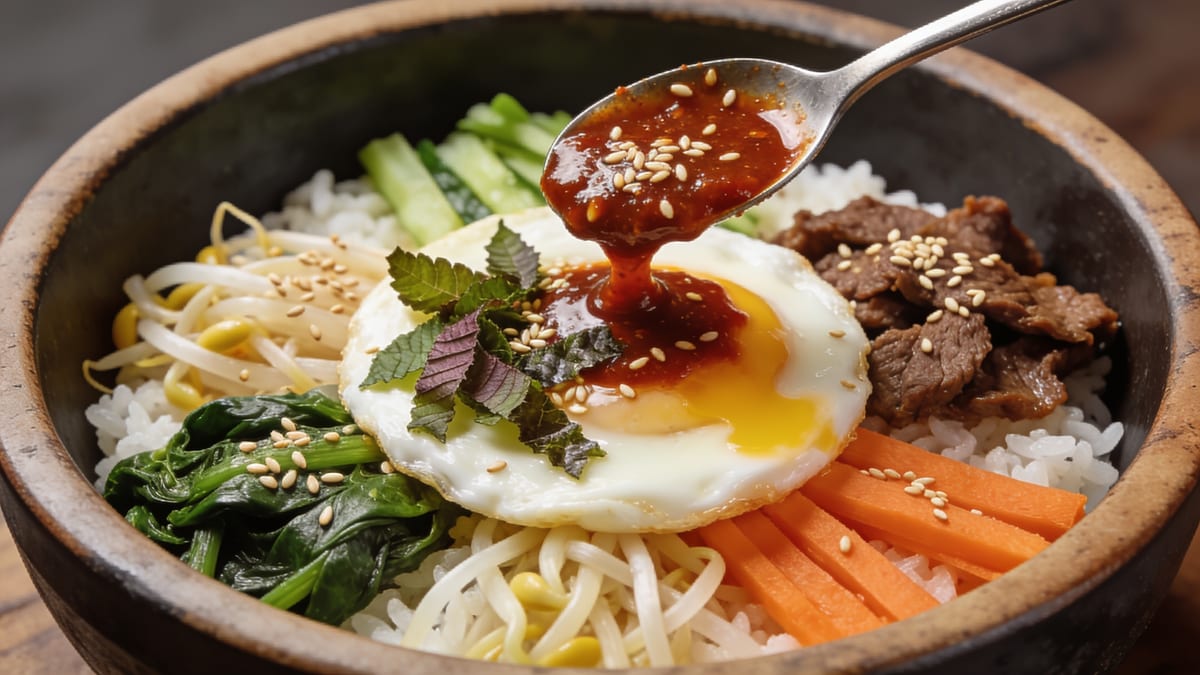
Assaisonnez chaque légume séparément (namul) : épinards blanchis au sésame, carotte sautée, champignons, pousses de soja, etc. Faites rapidement mariner puis saisir de fines tranches de bœuf. Préparez une sauce bibimbap avec du gochujang, de l'huile de sésame, du sucre et du vinaigre. Disposez le tout sur du riz chaud avec un œuf au plat, et mélangez bien avant de déguster.
- Chaque légume est assaisonné à part — cette variété de saveurs distinctes fait tout l'intérêt du bibimbap.
- Un œuf au plat au jaune coulant et une bonne cuillerée de sauce au gochujang lient l'ensemble.
- Pour un dolsot bibimbap, servez dans un bol en pierre brûlant afin que la couche de riz du fond devienne croustillante.
Equipment
- Plusieurs petits bols (pour les namul)
- Poêle
- Bols (ou bols en pierre dolsot)
Ingrédients
Base du bol
- 400 g riz rond cuit, encore chaud
- 2 œufs au plat
Namul (légumes assaisonnés)
- 150 g d'épinards, blanchis, pressés, mélangés avec huile de sésame, ail et sel
- 1 carotte, taillée en julienne et légèrement sautée
- 100 g de pousses de soja, blanchies et assaisonnées
- 100 g de champignons shiitaké, émincés et sautés à la sauce soja
- ½ concombre ou courgette, taillé en julienne et sauté rapidement
Bœuf et sauce
- 150 g faux-filet de bœuf, finement émincé
- 15 ml sauce soja
- 5 ml huile de sésame
- 5 g sucre
- 1 gousse d'ail, hachée
- 45 g gochujang
- 10 ml huile de sésame (pour la sauce)
- 10 ml vinaigre de riz
- 10 g sucre (pour la sauce)
- Graines de sésame grillées, pour la finition
Préparation
- ÉTAPE01
Assaisonnez chaque légume séparément : blanchissez et pressez les épinards, puis mélangez-les avec l'huile de sésame, l'ail et le sel ; faites sauter la carotte, les champignons et le concombre chacun de leur côté avec une pincée de sel ; blanchissez et assaisonnez les pousses de soja. Gardez-les en tas séparés — des saveurs bien distinctes, c'est tout l'intérêt.
- ÉTAPE02
Mélangez les tranches de bœuf avec la sauce soja, l'huile de sésame, le sucre et l'ail. Saisissez à feu vif dans une poêle bien chaude 2 minutes, jusqu'à ce que la viande soit juste cuite et légèrement caramélisée.
- ÉTAPE03
Délayez le gochujang avec l'huile de sésame, le vinaigre et le sucre (et un filet d'eau) jusqu'à obtenir une sauce brillante et nappante.
- ÉTAPE04
Faites cuire les œufs au plat en gardant les jaunes coulants — ils enrichiront tout le bol au moment du mélange.
- ÉTAPE05
Déposez un dôme de riz chaud dans chaque bol. Disposez les namul et le bœuf en sections séparées par-dessus, comme les rayons d'une roue. Placez l'œuf au plat au centre et ajoutez une cuillerée de sauce au gochujang. Parsemez de graines de sésame.
- ÉTAPE06
À table, mélangez soigneusement le tout à la cuillère — riz, légumes, bœuf, œuf et sauce — jusqu'à obtenir un ensemble homogène et bien enrobé. Ce mélange (bibim), c'est le plat lui-même. Dégustez immédiatement.
Make ahead
Les namul peuvent tous être préparés à l'avance et réfrigérés (ils font aussi office d'accompagnements coréens). Une fois prêts, le bibimbap s'assemble en quelques minutes — cuisez le riz, saisissez le bœuf, faites frire l'œuf, dressez.
Storage
Conservez les éléments séparément jusqu'à 3 jours — les légumes assaisonnés se gardent très bien en banchan. Dressez au dernier moment avec du riz chaud et un œuf tout juste frit.
Variations
Dolsot bibimbap
Servez dans un bol en pierre brûlant frotté d'huile de sésame : la couche de riz du fond croustille en nurungji doré pendant que vous mélangez.
Végétarien/végétalien
Supprimez le bœuf (ajoutez plus de champignons ou du tofu assaisonné) et l'œuf pour une version végétalienne. Les namul portent le bol à eux seuls.
Hoe-deopbap
Une version côtière garnie de poisson cru frais à la place du bœuf.
Serve with
Nutrition per serving
Nutrition values are estimates based on the metric measurements. Adjust as needed.
Questions fréquentes
Pourquoi assaisonner chaque légume séparément ?
C'est l'essence même du bibimbap — chaque namul a son propre assaisonnement (épinards au sésame et à l'ail, champignons à la sauce soja, pousses de soja simplement salées), si bien que chaque bouchée avant le mélange a un goût différent. Tout assaisonner de la même façon ferait perdre l'intérêt du plat.
De quoi est faite la sauce ?
La sauce bibimbap (yangnyeom) est du gochujang détendu avec de l'huile de sésame, un peu de vinaigre de riz, du sucre et parfois de l'ail et de l'eau — nappante, sucrée-épicée et brillante. Ajustez la quantité selon votre tolérance au piquant ; on la mélange à l'ensemble à la fin.
Qu'est-ce que le dolsot bibimbap ?
Une version servie dans un bol en pierre brûlant (dolsot) badigeonné d'huile de sésame. Pendant que vous mélangez, le riz au contact de la pierre chaude forme une croûte dorée à la fois moelleuse et croustillante (nurungji) — le meilleur du plat. Il faut un vrai bol en pierre ; une poêle en fonte peut s'en approcher.
Le bœuf est-il obligatoire ?
Non — le bibimbap est merveilleusement flexible et souvent centré sur les légumes. Remplacez le bœuf par du tofu assaisonné ou des champignons supplémentaires ; supprimez aussi l'œuf pour une version végétalienne. C'est la variété des namul qui fait le plat.
Peut-on le préparer à l'avance ?
Oui — les namul sont en fait des banchan (accompagnements coréens) et se conservent plusieurs jours au réfrigérateur. Préparez-les à l'avance, et le bibimbap sera prêt le temps de frire un œuf et de réchauffer le riz.
Cooked this? Rate it.
Real ratings from real cooks. We only show a score once enough of you have weighed in — no fabricated stars.