Kimbap — rouleaux de riz et algue coréens
Le rouleau adoré des pique-niques et des lunchbox de Corée : du riz assaisonné et une rangée colorée de garnitures — œuf, légumes, radis mariné, souvent bœuf ou jambon — roulés serré dans une feuille de gim (algue), badigeonnés d'huile de sésame et coupés en rondelles. Contrairement au sushi, le riz est assaisonné à l'huile de sésame et au sel (et non au vinaigre), ce qui le rend savoureux, facile à transporter et infiniment personnalisable.
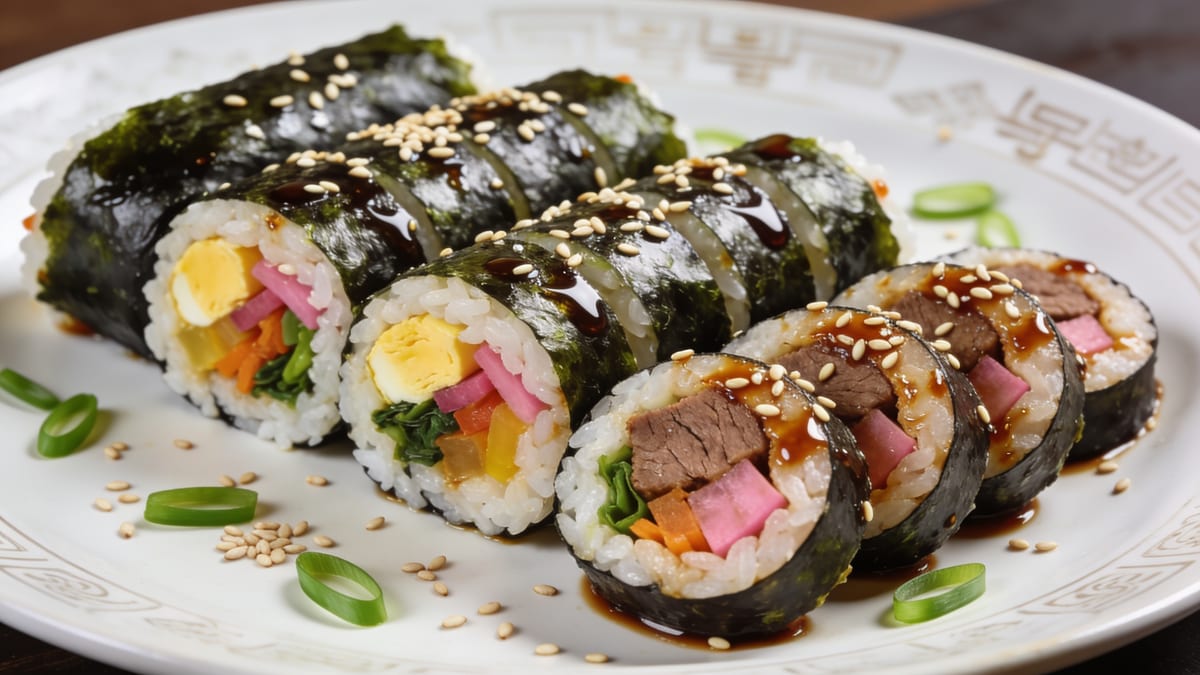
Faites cuire du riz à grain court et, encore chaud, assaisonnez-le d'huile de sésame et de sel (pas de vinaigre). Préparez une rangée de garnitures : des lanières d'œuf frit, de la carotte et des épinards sautés, du radis jaune mariné (danmuji), et une protéine comme du bœuf bulgogi ou du jambon. Posez une feuille de gim sur un tapis de bambou, étalez le riz sur la plus grande partie, alignez les garnitures et roulez bien serré. Badigeonnez d'huile de sésame, parsemez de graines de sésame, et coupez en rondelles avec un couteau bien aiguisé et huilé.
- Assaisonnez le riz à l'huile de sésame et au sel — le riz du kimbap est savoureux, pas vinaigré comme celui du sushi.
- Préparez et assaisonnez chaque garniture séparément, puis composez une rangée bien nette pour des tranches propres et colorées.
- Roulez bien serré avec un tapis de bambou, et huilez le couteau pour qu'il coupe des rondelles nettes sans déchirer.
Equipment
- Tapis à rouler en bambou (gimbal)
- Couteau bien aiguisé
- Poêle
Ingrédients
Riz et feuilles
- 500 g riz à grain court cuit
- 15 ml huile de sésame, plus un peu pour badigeonner
- 1 c. à café de sel ; graines de sésame grillées
- 4 sheets gim (algue) pour kimbap
Garnitures
- 2 œufs, en fine omelette tranchée
- 1 carotte, taillée en julienne et sautée
- 100 g épinards, blanchis et assaisonnés
- Radis jaune mariné (danmuji), en lanières
- 150 g bœuf bulgogi ou jambon, ou surimi
Préparation
- ÉTAPE01
Pendant que le riz cuit est encore chaud, incorporez l'huile de sésame et le sel jusqu'à ce qu'il soit brillant et bien assaisonné. Laissez-le refroidir jusqu'à ce qu'il soit à peine tiède.
- ÉTAPE02
Faites cuire une fine omelette et coupez-la en lanières. Faites sauter la carotte en julienne ; blanchissez et assaisonnez les épinards ; préparez le radis mariné et votre protéine. Gardez chaque garniture dans son propre tas.
- ÉTAPE03
Posez une feuille de gim, face brillante dessous, sur le tapis de bambou. Étalez une couche régulière de riz sur environ deux tiers, en laissant le bord opposé nu. Alignez les garnitures en une rangée bien nette sur le riz.
- ÉTAPE04
À l'aide du tapis, roulez le kimbap bien serré en l'éloignant de vous, en repliant les garnitures, et scellez le bord nu (quelques grains de riz aident à le faire tenir). Pressez pour raffermir.
- ÉTAPE05
Badigeonnez le rouleau d'huile de sésame et parsemez de graines de sésame. Avec un couteau bien aiguisé et légèrement huilé, coupez en rondelles de 2 cm, en essuyant la lame entre chaque coupe. Servez.
Make ahead
Préparez toutes les garnitures à l'avance et assaisonnez le riz, puis roulez juste avant de servir. Le kimbap est fait pour être transporté, donc le rouler le matin pour un pique-nique ou une lunchbox de midi est idéal — gardez-le simplement à température ambiante fraîche, pas au réfrigérateur.
Storage
À déguster de préférence le jour même, à température ambiante — ne le réfrigérez pas, car le froid durcit le riz. Gardez-le au frais et consommez-le dans les quelques heures (c'est un mets de pique-nique/lunchbox). Les tranches restantes peuvent être poêlées dans de l'œuf le lendemain (gimbap-jeon).
Variations
Kimbap au chamchi (thon)
Garnissez de thon lié à la mayonnaise — extrêmement populaire.
Végétarien
Sautez la viande et misez sur l'œuf, les légumes, le radis mariné et du tofu ou de la bardane assaisonnés.
Nu / mayak
Roulez le riz à l'extérieur, ou faites de tout petits kimbap « mayak » (addictifs) servis avec une sauce moutarde-soja.
Serve with
Nutrition per serving
Nutrition values are estimates based on the metric measurements. Adjust as needed.
Questions fréquentes
Le kimbap est-il la même chose que le sushi ?
Non — bien que ce soient tous deux des rouleaux de riz et d'algue, le riz fait toute la différence. Le riz du kimbap est assaisonné à l'huile de sésame et au sel, ce qui lui donne une saveur savoureuse et de noisette, tandis que le riz à sushi est assaisonné au vinaigre, au sucre et au sel. Les garnitures du kimbap sont généralement bien cuites ou marinées, et il se mange comme un repas à emporter plutôt qu'avec du poisson cru.
Comment éviter que le kimbap ne s'effrite au moment de le couper ?
Roulez-le bien serré avec le tapis de bambou et pressez pour le raffermir, scellez le bord d'algue nu avec quelques grains de riz, et utilisez un couteau bien aiguisé légèrement enduit d'huile de sésame, en l'essuyant entre chaque coupe. Une lame propre et huilée et un rouleau bien serré donnent des rondelles nettes.
Puis-je préparer le kimbap à l'avance ?
Oui — il est conçu pour être transporté lors des pique-niques et dans les lunchbox. Préparez les garnitures et assaisonnez le riz à l'avance, puis roulez quelques heures avant de manger. Gardez-le à température ambiante fraîche, pas au réfrigérateur, car la réfrigération durcit le riz et le rend fade.
Quelles garnitures met-on dans le kimbap ?
Une rangée colorée est traditionnelle : des lanières d'œuf frit, de la carotte sautée, des épinards assaisonnés, du radis jaune mariné (danmuji), et une protéine comme du bœuf bulgogi, du jambon, du thon ou du surimi. C'est infiniment personnalisable — le radis mariné et le riz au sésame sont les constantes.
Pourquoi mon riz ne colle-t-il pas / pourquoi est-il trop sec ?
Utilisez un riz à grain court (collant) et assaisonnez-le et roulez-le encore chaud — le riz froid perd son adhérence et s'effrite. L'huile de sésame le garde brillant et souple. S'il se dessèche, c'est peut-être que vous avez mis trop peu d'assaisonnement ou que vous l'avez laissé trop refroidir avant de rouler.
Cooked this? Rate it.
Real ratings from real cooks. We only show a score once enough of you have weighed in — no fabricated stars.