Haemul Pajeon — koreanischer Meeresfrüchte-Frühlingszwiebel-Pfannkuchen
Koreas geliebter herzhafter Pfannkuchen: ein Teig, durchzogen von ganzen Frühlingszwiebeln und beladen mit Meeresfrüchten – Tintenfisch, Garnelen, Muscheln –, gebraten, bis die Ränder spitzenartig und knusprig sind und die Mitte zart bleibt, wobei oft ein Ei darübergegossen wird, das ihn zusammenhält. Haemul Pajeon ist Trost an Regentagen und der klassische Begleiter zu Makgeolli (Reiswein), in Stücke gerissen zum Teilen und in eine würzig-saure Soja-Essig-Sauce getunkt. Der Trick ist eine heiße, gut geölte Pfanne für knusprige Ränder.
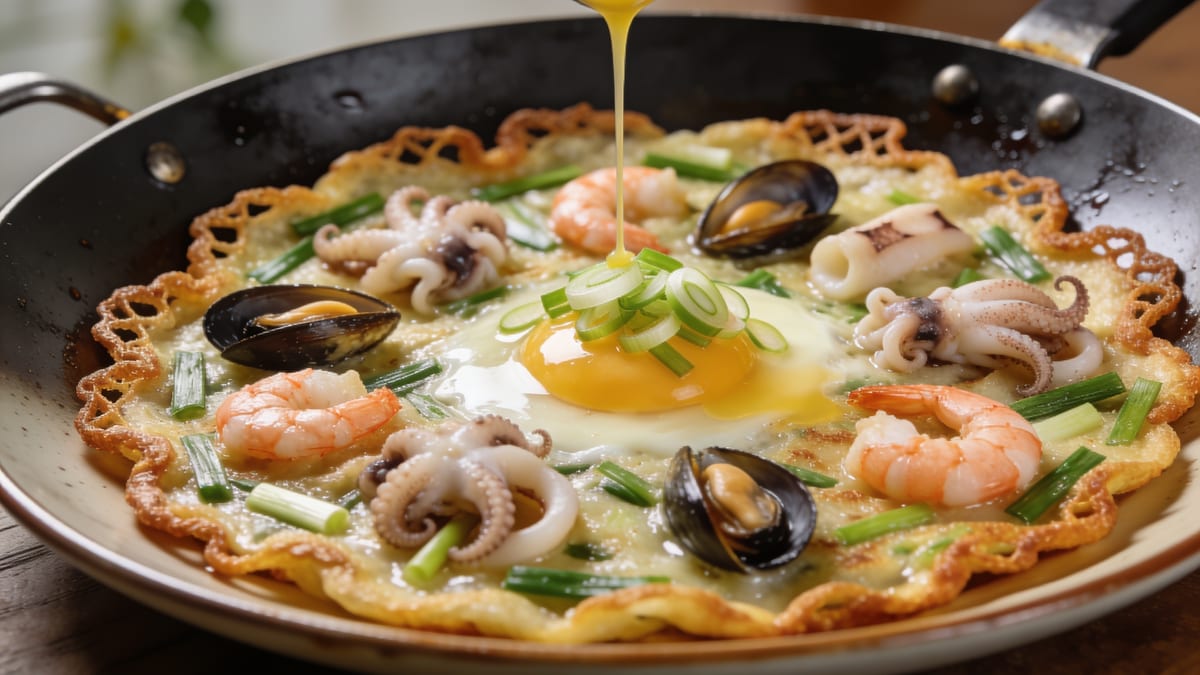
Einen dünnen Teig aus Mehl (und etwas Reismehl für die Knusprigkeit) mit kaltem Wasser und einer Prise Salz anrühren. Ein Bett aus ganzen Frühlingszwiebeln in eine heiße, gut geölte Pfanne legen, gerade so viel Teig darübergießen, dass sie zusammenhalten, und gehackte gemischte Meeresfrüchte obenauf streuen. Braten, bis die Unterseite goldbraun und knusprig ist, dann ein verquirltes Ei darübergießen, wenden und die andere Seite knusprig braten. Heiß, in Stücke geschnitten, mit einer Dip-Sauce aus Sojasauce, Essig, etwas Zucker und Chili servieren.
- Verwende eine heiße, großzügig geölte Pfanne, damit die Ränder spitzenartig und knusprig braten, nicht weich.
- Etwas Reismehl (oder Kartoffelstärke) im Teig sorgt für zusätzliche Knusprigkeit.
- Zuerst die Frühlingszwiebeln legen, mit Teig binden, mit Meeresfrüchten belegen – und den Teig nicht zu dick machen.
Equipment
- Große beschichtete Pfanne oder Gusseisenpfanne
- Schüssel
- Pfannenwender
Zutaten
Teig
- 120 g Weizenmehl
- 2 tbsp Reismehl oder Kartoffelstärke (für die Knusprigkeit)
- 180 ml kaltes Wasser
- Prise Salz; 1 Ei (zum Darübergießen)
Belag
- 1 großer Bund Frühlingszwiebeln, ganz, geputzt
- 250 g gemischte Meeresfrüchte (Tintenfisch, Garnelen, Muscheln), gehackt
- Optional: rote Chili in Scheiben; neutrales Öl zum Braten
Dip-Sauce
- 3 EL Sojasauce; 1 EL Essig
- 1 TL Zucker; Sesam; Chiliflocken
Zubereitung
- SCHRITT01
Das Mehl, das Reismehl, das Salz und das kalte Wasser zu einem dünnen, glatten Teig verquirlen (kalt halten). Die Zutaten für die Dip-Sauce in einer kleinen Schüssel verrühren.
- SCHRITT02
Eine großzügige Schicht Öl in einer großen Pfanne heiß werden lassen. Die ganzen Frühlingszwiebeln in einer einzigen Lage über die Pfanne legen.
- SCHRITT03
Gerade so viel Teig über die Frühlingszwiebeln gießen, dass sie zu einem Pfannkuchen zusammengebunden werden, dann die gehackten Meeresfrüchte (und die Chili) gleichmäßig darüber streuen und leicht andrücken.
- SCHRITT04
Braten, bis die Unterseite goldbraun und knusprig ist. Ein verquirltes Ei darübergießen, dann den Pfannkuchen vorsichtig wenden und die andere Seite knusprig braten, bis die Meeresfrüchte gar sind; dabei etwas mehr Öl am Rand entlang zugeben.
- SCHRITT05
Auf ein Brett gleiten lassen, in Stücke schneiden und heiß mit der Soja-Essig-Dip-Sauce servieren – und einer Schale Makgeolli, wenn du es richtig machst.
Make ahead
Den Teig und die Dip-Sauce zubereiten und die Frühlingszwiebeln und Meeresfrüchte vorbereiten. Den Pajeon frisch zum Servieren braten, denn die knusprigen Ränder sind der ganze Sinn. Er ist in Minuten fertig, sobald alles vorbereitet ist – ein großartiges schnelles Gericht für Gäste.
Storage
Am besten heiß und knusprig aus der Pfanne. Reste halten sich einen Tag und werden in einer heißen Pfanne oder im Ofen wieder knusprig (nicht in der Mikrowelle, die sie weich macht). Vorbereiteter Teig und gehackte Meeresfrüchte halten sich getrennt ein paar Stunden im Kühlschrank; die Dip-Sauce hält mehrere Tage.
Variations
Pajeon (nur Frühlingszwiebeln)
Lass die Meeresfrüchte weg für einen einfachen Frühlingszwiebel-Pfannkuchen (Pa-Jeon).
Kimchijeon
Verwende gehacktes Kimchi (und dessen Saft) im Teig für einen würzig-scharfen Kimchi-Pfannkuchen.
Dongnae Pajeon
Die berühmte Variante nach Busan-Art, oft reichhaltiger mit mehr Meeresfrüchten und einer teilweise mit Ei gebundenen Oberseite.
Serve with
Nutrition per serving
Nutrition values are estimates based on the metric measurements. Adjust as needed.
Häufige Fragen
Wie mache ich Pajeon knusprig?
Drei Dinge: eine heiße, großzügig geölte Pfanne (Pajeon wird in mehr Öl gebraten als ein westlicher Pfannkuchen), ein recht dünner Teig und etwas Reismehl oder Kartoffelstärke im Weizenmehl für zusätzliche Knusprigkeit. Mach den Teig nicht zu dick und spare nicht am Öl, und lass jede Seite ungestört braten, bis sie richtig goldbraun und knusprig ist, bevor du wendest.
Welche Meeresfrüchte soll ich verwenden?
Eine Mischung ist am besten – typischerweise Tintenfisch, Garnelen und Miesmuscheln (oder Venusmuscheln), in kleine Stücke gehackt, damit sie schnell durchgaren und der Pfannkuchen zusammenhält. Verwende beliebige frische oder gefrorene gemischte Meeresfrüchte; hack sie nur klein und tupfe sie trocken. Für eine Variante ohne Meeresfrüchte lässt du sie weg für einen einfachen Frühlingszwiebel-Pajeon oder nimmst Kimchi.
Warum ein Ei darübergießen?
Ein verquirltes Ei über den Pfannkuchen zu gießen (besonders vor dem Wenden) hilft, alles zu binden, verleiht Fülle und ergibt eine leicht gestockte, goldene Oberseite – üblich in der herzhafteren Busan-(Dongnae-)Art. Es ist optional; manche machen Pajeon ohne. Wenn du es tust, wende vorsichtig, damit das Ei an der heißen Pfanne stockt und knusprig wird.
Was ist der Unterschied zwischen Pajeon und Jeon?
Jeon ist die breite koreanische Kategorie der in der Pfanne gebratenen, mit Teig überzogenen herzhaften Pfannkuchen und Küchlein. Pajeon („Pa“ = Frühlingszwiebel) ist speziell der Frühlingszwiebel-Pfannkuchen, und Haemul Pajeon fügt Meeresfrüchte (Haemul) hinzu. Andere Jeon sind Kimchijeon (Kimchi), Gamjajeon (Kartoffel) und Bindaetteok (Mungbohne). Ihnen gemein ist die Idee des Pfannenbratens und Tunkens in Sauce.
Was trinkt man zu Haemul Pajeon?
Makgeolli – Koreas leicht perlender, milchiger Reiswein – ist die traditionelle und geliebte Kombination, besonders an einem Regentag (es gibt eine kulturelle Verbindung zwischen Regenwetter und dem Essen von Pajeon mit Makgeolli). Soju oder Bier passen auch. Der herzhafte, knusprige Pfannkuchen und der leicht süße, würzig-saure Makgeolli sind ein klassisches Paar.
Cooked this? Rate it.
Real ratings from real cooks. We only show a score once enough of you have weighed in — no fabricated stars.