Cacio e pepe — pasta romana con pecorino y pimienta
Tres ingredientes, cuatro minutos y cada variable al filo de la navaja. Tonnarelli, pecorino romano y una cantidad obscena de pimienta negra recién molida.
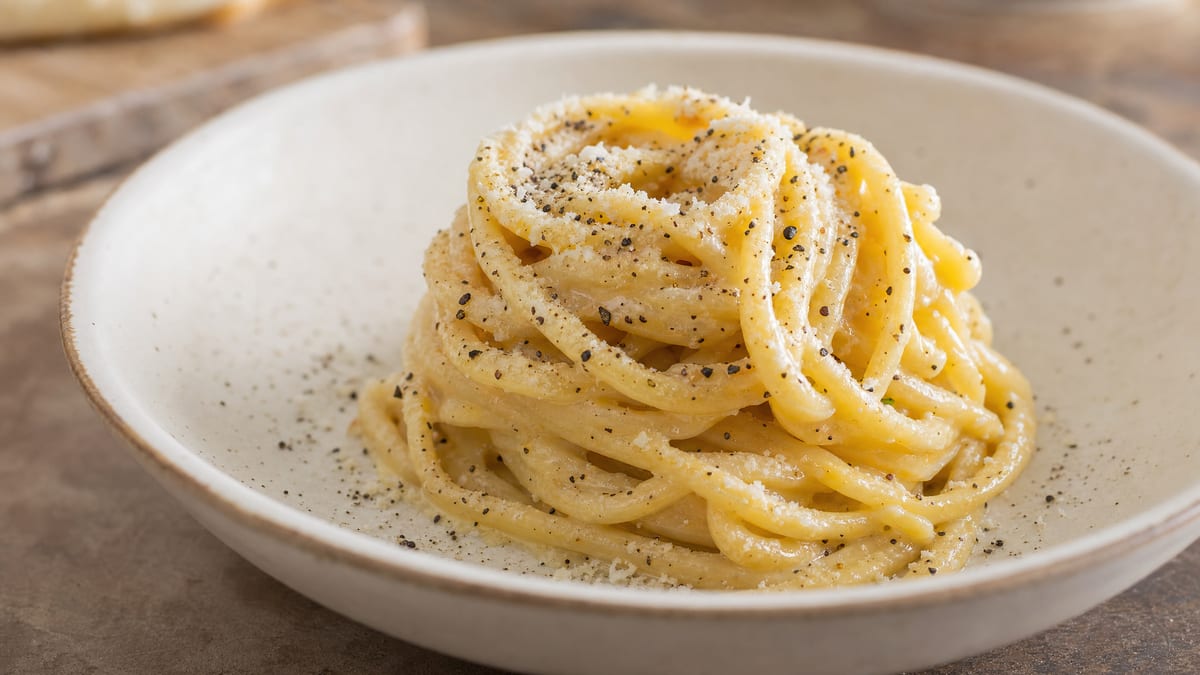
Tuesta pimienta negra machacada en una sartén en seco, añade un cucharón del agua almidonada de la pasta y, fuera del fuego, incorpora pecorino finamente rallado batiendo. Saltea con la pasta caliente y más pecorino hasta obtener una crema brillante. Sin nata, sin mantequilla, sin aceite.
- Ralla el pecorino con el rallador MÁS fino que tengas: el rallado grueso se apelmaza y se corta.
- Saca la pasta un minuto entero antes del punto al dente. Se termina en la sartén.
- El agua de la pasta tiene que estar turbia: sálala un poco menos de lo normal y reutilízala de la misma olla.
Equipment
- Sartén de fondo grueso (lo bastante amplia para 2 raciones de pasta)
- Microplane o rallador de caja fino
- Molinillo de pimienta ajustado a molienda gruesa
- Araña para pasta o pinzas
Ingredientes
Pasta
- 200 g tonnarelli o espaguetis, mejor trefilados al bronce
- Sal marina gruesa, para el agua de la pasta (unos 10 g por litro)
Salsa
- 100 g pecorino romano DOP, rallado muy fino, y algo más para terminar
- 3 g pimienta negra en grano, machacada gruesa en el mortero
Elaboración
- PASO01
Lleva 2 litros de agua a ebullición fuerte. Sálala menos de lo que harías para una marinara: unos 10 g (2 cucharaditas) de sal por litro. Echa la pasta.
- PASO02
Mientras se cuece la pasta, pon una sartén amplia a fuego medio. Añade la pimienta machacada, en seco, sin aceite. Tuéstala 30 segundos hasta que suelte aroma; tu cocina debería oler a pimienta. Retira del fuego.
- PASO03
Cuando a la pasta le quede un minuto (pruébala: aún debe tener el centro duro), pásala a la sartén con las pinzas, arrastrando bastante agua almidonada de la cocción.
- PASO04
Añade un cucharón pequeño (~80 ml) del agua de la pasta a la sartén. Saltea con energía a fuego bajo durante 30 segundos: quieres que el agua emulsione con la pimienta en una película brillante.
- PASO05
Retira la sartén del fuego. Espera 30 segundos: la sartén no puede estar ardiendo o el queso se cortará. Añade la mitad del pecorino sin dejar de mezclar. Agrega un chorrito más de agua de la pasta si se ve seca. Añade el resto del pecorino. Remueve hasta que la salsa esté cremosa y se agarre a cada hebra.
- PASO06
Enrolla la pasta en boles calientes, muele más pimienta negra por encima y sirve de inmediato. El cacio e pepe no espera a nadie.
Make ahead
Nada. El cacio e pepe es la antítesis de la preparación anticipada: cada segundo que pasa tras el emplatado, la salsa se espesa y se agarrota.
Storage
Cómelo ahora. No es un plato de sobras: la salsa se corta al recalentarla. Si no queda más remedio, saltea las sobras con un chorrito de aceite de oliva y finge que es otra cosa.
Variations
Pasta alla gricia
Añade 80 g de guanciale en dados, dorado hasta quedar crujiente antes de la pimienta. Usa la grasa fundida en lugar de parte del agua de la pasta.
Con burrata
Rompe una bola de burrata de 100 g por encima después de emplatar. No es clásico, pero está buenísimo.
Toque de ralladura de limón
Ralla con el Microplane la piel de medio limón sobre los platos. Corta la untuosidad; los puristas gritarán, pero funciona.
Serve with
Nutrition per serving
Nutrition values are estimates based on the metric measurements. Adjust as needed.
Preguntas frecuentes
¿Por qué se me apelmaza el queso?
Dos razones: la sartén estaba demasiado caliente cuando añadiste el queso, o el queso estaba rallado demasiado grueso. La sartén debe estar fuera del fuego y apenas templada; el queso, hecho polvo con un Microplane.
¿Puedo usar parmesano?
Funcionará, pero es otro plato. El pecorino romano es de leche de oveja: más punzante, más salado y más agresivo. El parmigiano da un cacio e pepe más suave y menos romano; llámalo cacio e pepe alla parmigiana.
¿Por qué sin mantequilla?
El cacio e pepe romano clásico no lleva mantequilla. Muchos restaurantes la usan como seguro contra los grumos, y funciona, pero el plato pierde parte de su nitidez afilada. Aprende primero el original; haz trampa con mantequilla después, si hace falta.
¿Puedo aumentar las cantidades?
Hasta 4 raciones en una sartén, sí. Más allá, la salsa se vuelve difícil de controlar: haz dos tandas.
¿Qué formato de pasta es el mejor?
El tonnarelli (espagueti cuadrado romano) es el tradicional. Los espaguetis trefilados al bronce o los rigatoni también funcionan: cuanto más rugosa la superficie, mejor se agarra la salsa.
Cooked this? Rate it.
Real ratings from real cooks. We only show a score once enough of you have weighed in — no fabricated stars.