Lasaña a la boloñesa
La verdadera lasaña boloñesa: capas de pasta fresca al huevo (idealmente láminas verdes de espinaca), un ragù de cocción larga, bechamel sedosa y parmesano, horneada hasta que los bordes quedan crujientes y el centro, fundente. Una institución de los domingos en Emilia-Romaña.
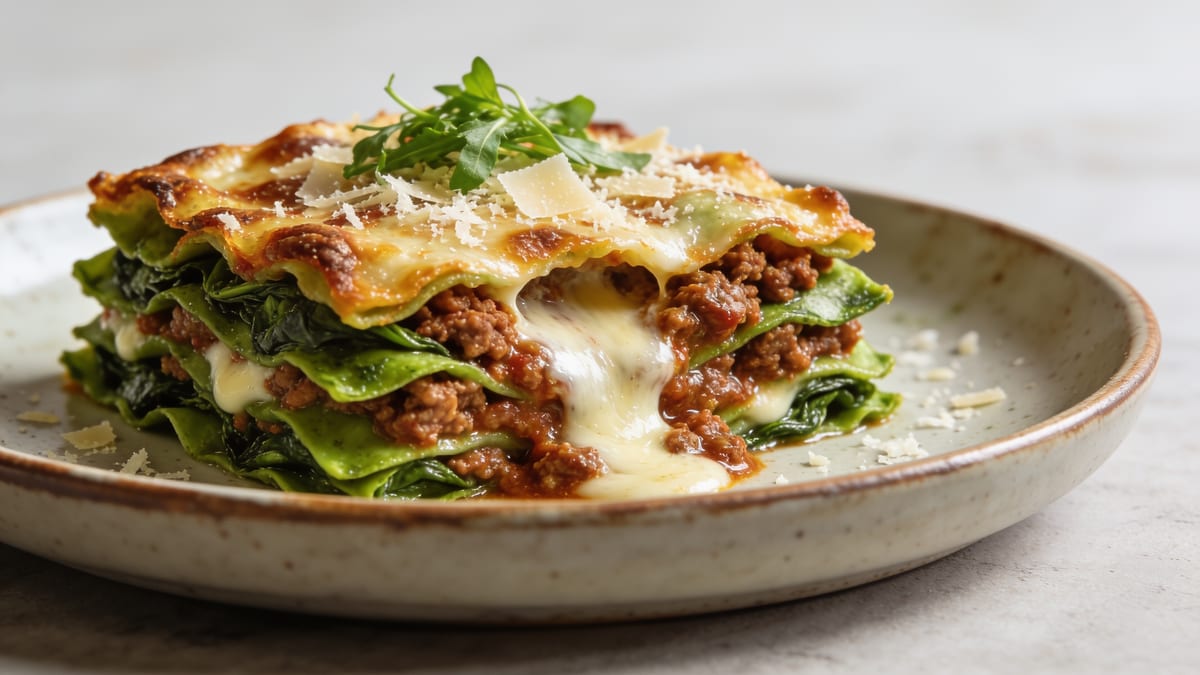
Cuece a fuego lento un buen ragù boloñés (soffritto, ternera y cerdo, un poco de tomate, leche y vino) durante 2–3 horas, hasta que esté denso y sabroso. Prepara una bechamel. Alterna capas de pasta, ragù, bechamel y parmesano —repite hasta sumar 6 o más capas— y termina con bechamel y queso. Hornea a 180°C / 360°F durante 35–40 minutos, hasta que burbujee y se dore, y deja reposar antes de cortar.
- El ragù debe cocinarse mucho tiempo y a fuego suave —no es una salsa de tomate rápida—; la leche y un chorro de vino son lo que lo hace boloñés.
- La pasta fresca al huevo bien fina (sfoglia), idealmente verde de espinaca, es la tradicional y muy superior a las láminas secas gruesas.
- Ragù Y bechamel entre todas las capas: eso es lo que la hace cremosa en vez de seca.
Equipment
- Olla grande y pesada (para el ragù)
- Cazo (bechamel)
- Fuente de horno honda (~3 L)
Ingredientes
Ragù boloñés
- 30 ml aceite de oliva
- 1 cebolla, 1 zanahoria y 1 rama de apio, todo en dados finos (soffritto)
- 300 g carne picada de ternera
- 200 g carne picada de cerdo
- 120 ml vino blanco seco
- 240 ml leche entera
- 400 g tomate triturado
- 30 g concentrado de tomate
- Sal, pimienta y una pizca de nuez moscada
Bechamel y montaje
- 80 g mantequilla
- 80 g harina de trigo
- 1 L leche templada
- 300 g láminas de lasaña fresca (idealmente de espinaca)
- 150 g parmesano rallado (Parmigiano-Reggiano)
Elaboración
- PASO01
Pocha el soffritto en el aceite de oliva durante 10 minutos. Añade la ternera y el cerdo y dóralos bien, desmenuzándolos. Vierte el vino y deja que se evapore.
- PASO02
Añade la leche y una pizca de nuez moscada; cuece hasta que se absorba casi por completo. Incorpora el tomate y el concentrado. Cuece a fuego muy suave, con la olla semitapada, 2–3 horas, hasta que esté denso y sabroso. Sazona.
- PASO03
Funde la mantequilla, incorpora la harina batiendo y cocina 1 minuto. Añade la leche templada poco a poco, sin dejar de batir, hasta que espese y quede lisa. Sazona con sal y nuez moscada.
- PASO04
Calienta el horno a 180°C / 360°F. Unta el fondo de la fuente con un poco de ragù. Alterna: pasta, ragù, bechamel, parmesano, y repite hasta lograr 6 o más capas finas. Termina con bechamel y una capa generosa de parmesano.
- PASO05
Hornea 35–40 minutos, hasta que burbujee, se dore y los bordes queden crujientes. Si la superficie se dora demasiado rápido, cúbrela con papel de aluminio sin apretar.
- PASO06
Deja reposar al menos 15–20 minutos antes de cortar: recién salida del horno se desmorona; reposada, se corta en cuadrados limpios y con las capas bien definidas.
Make ahead
Tanto el ragù como la lasaña entera montada son ideales para preparar con antelación. Móntala la víspera y hornéala directamente de la nevera (añade 15 minutos), o congélala. Los sabores se asientan de un día para otro.
Storage
5 días en la nevera y excelente recalentada; muchos la prefieren al día siguiente. Se congela 3 meses, ya montada o ya horneada.
Variations
Láminas de espinaca (verdi)
Usa láminas de pasta verde de espinaca: la versión boloñesa clásica, la lasagne verdi alla bolognese.
Vegetariana
Sustituye el ragù de carne por un ragù de setas y lentejas o por una capa de verduras asadas.
Extra de queso
Añade dados de fontina o mozzarella entre las capas para un horneado más rico y fundente (menos clásico, buenísimo).
Serve with
Nutrition per serving
Nutrition values are estimates based on the metric measurements. Adjust as needed.
Preguntas frecuentes
¿El ragù boloñés es solo una salsa de tomate con carne?
No: el auténtico ragù alla bolognese es sobre todo carne con apenas un poco de tomate, enriquecido con leche y vino blanco, y cocido durante horas. Es sabroso y profundo más que fresco y atomatado, y eso es lo que hace especial a la lasaña.
¿Láminas de pasta fresca o seca?
La pasta fresca al huevo (sfoglia), estirada bien fina, es la tradicional y da un resultado mucho más delicado, idealmente con las láminas verdes de espinaca de Emilia-Romaña. Las láminas secas de las que no se precuecen sirven en un apuro, pero son más gruesas y menos refinadas.
¿Por qué bechamel y no ricotta?
La tradición boloñesa usa bechamel (besciamella), no ricotta; eso es la versión italoamericana. La bechamel entre todas las capas mantiene la lasaña cremosa y cohesionada, en vez de seca o granulosa.
¿Por qué hay que dejarla reposar antes de cortar?
Si la cortas recién salida del horno, las capas resbalan y la porción se derrumba. Un reposo de 15–20 minutos deja que todo se asiente y consigues cuadrados limpios, casi arquitectónicos.
¿Puedo hacerla con antelación?
Sí: es uno de los mejores platos de horno para preparar con antelación. Móntala y refrigérala hasta un día (hornéala directamente de la nevera, añadiendo tiempo), o congélala. El ragù, sobre todo, mejora con un día de reposo.
Cooked this? Rate it.
Real ratings from real cooks. We only show a score once enough of you have weighed in — no fabricated stars.