Tahdig — arroz crujiente persa
La joya de la mesa persa: arroz basmati precocido que se cuece al vapor bajo la tapa hasta que el fondo forma una costra dorada, teñida de azafrán y crujiente hasta romperse en esquirlas. Se vuelca como una tarta, y el codiciado tahdig se disputa en todas las comidas iraníes.
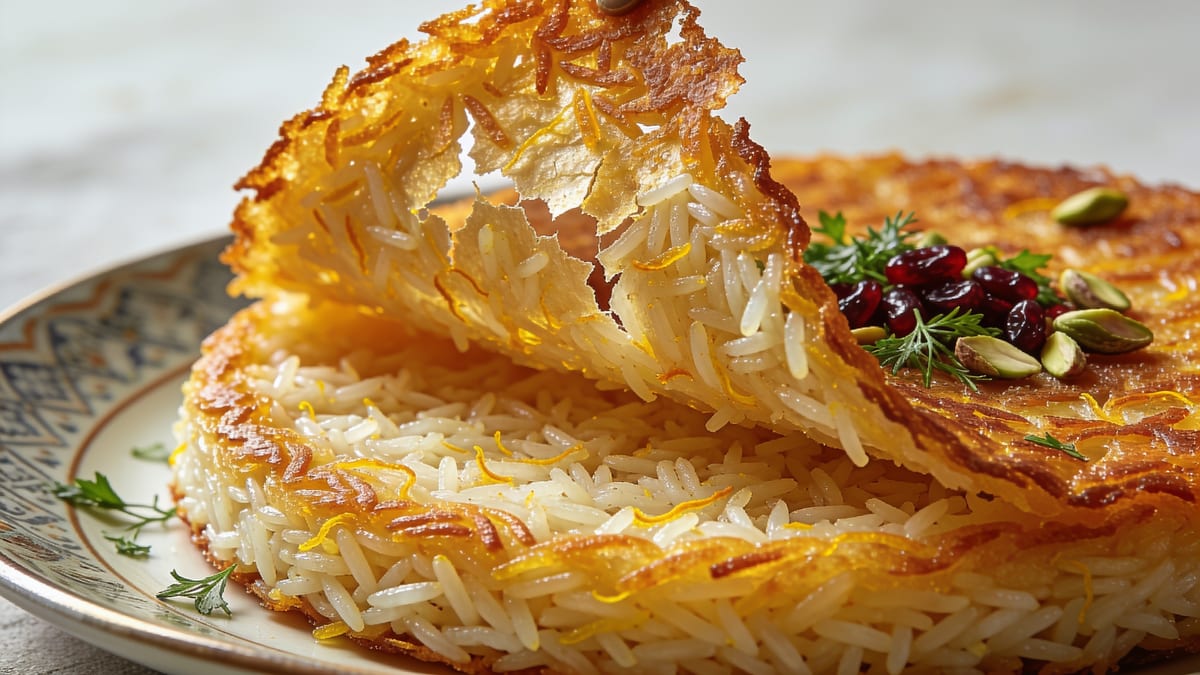
Remoja y precuece el basmati en agua bien salada hasta que quede al dente, y escúrrelo. Coloca en la olla una base con sabor (aceite o mantequilla, a veces yogur y azafrán, o láminas finas de patata o pan), amontona el arroz encima en forma de pirámide, haz agujeros para el vapor, envuelve la tapa en un paño y cuece al vapor a fuego bajo 45–50 minutos (dam) hasta que el fondo forme una costra de dorado intenso. Vuelca sobre un plato para revelar el tahdig.
- Precuece y luego cuece al vapor (el método «chelow» en dos fases): eso es lo que consigue granos sueltos y esponjosos y un fondo crujiente.
- Envuelve la tapa en un paño (o usa un damkoni) para atrapar el vapor y evitar que la condensación caiga sobre el arroz.
- Fuego bajo y paciencia. Con prisa la costra se quema; con fuego demasiado bajo nunca cuaja. Escucha y huele: aroma tostado, no acre.
Equipment
- Olla antiadherente con tapa que ajuste bien (perdona más a la hora de volcar)
- Paño de cocina limpio
- Colador fino
- Plato más grande que la olla
Ingredientes
Arroz
- 400 g arroz basmati
- 30 g sal, para el agua de la precocción
- 2.5 L agua
Base y acabado del tahdig
- 60 ml aceite neutro o mantequilla derretida
- 60 g yogur natural, opcional, para una costra más rica
- 1 pizca generosa de hebras de azafrán, molidas e infusionadas en 3 cucharadas de agua caliente
- 1 patata en láminas finas (opcional, para el tahdig de patata)
- 20 g mantequilla, para terminar
Elaboración
- PASO01
Lava el basmati hasta que el agua salga clara y déjalo en remojo en agua fría con sal al menos 30 minutos (y hasta unas horas). Es la clave para conseguir granos largos y sueltos.
- PASO02
Lleva los 2,5 L de agua con las 2 cucharadas de sal a ebullición fuerte. Escurre el arroz y añádelo. Hierve 6–8 minutos, hasta que los granos estén blandos por fuera pero aún firmes en el centro (al dente). Escúrrelo en un colador fino y enjuágalo brevemente.
- PASO03
En una olla antiadherente, calienta el aceite (y una cucharada del agua de azafrán). Si la usas, mezcla una taza del arroz precocido con el yogur y el azafrán y extiéndela por el fondo, o coloca láminas finas de patata en una sola capa. Esta capa se convertirá en la costra.
- PASO04
Apila con suavidad el resto del arroz encima formando una pirámide (sin compactarlo). Haz 4–5 agujeros hasta el fondo con el mango de una cuchara para que escape el vapor.
- PASO05
Rocía por encima el resto del agua de azafrán y reparte la mantequilla en trocitos. Envuelve la tapa en un paño limpio y tapa bien. Cocina a fuego medio 8–10 minutos para que arranque la costra, baja después el fuego al mínimo y cuece al vapor 40–45 minutos. No levantes la tapa.
- PASO06
Deja reposar la olla fuera del fuego sobre un paño húmedo y frío 5 minutos (ayuda a despegar la costra). Pasa un cuchillo por el borde, coloca un plato grande sobre la olla y vuélcala con decisión. El tahdig dorado debería quedar encima como una tarta. Si se pega, despega los trozos y colócalos por encima: sabe exactamente igual.
Make ahead
Remoja el arroz e infusiona el azafrán con antelación. La cocción apenas requiere atención una vez está al vapor, pero el tahdig es un plato de servir al momento: la costra crujiente no espera a nadie.
Storage
Mejor recién hecho: la costra se ablanda con el tiempo. El arroz sobrante aguanta 3 días; la costra no volverá a quedar crujiente, pero sigue estando buena. Recalienta con suavidad con un chorrito de agua.
Variations
Tahdig de patata
Forra la olla con una sola capa de láminas finas de patata: la versión más agradecida y querida. Las patatas se convierten en monedas doradas y crujientes.
Tahdig de pan (nan tahdig)
Forra la olla con pan plano (lavash) para conseguir una costra de pan crujiente y sabrosa bajo el arroz.
Tahdig de yogur y azafrán
Mezcla la capa inferior de arroz con yogur y azafrán para la costra más rica y dorada: la versión de celebración.
Serve with
Nutrition per serving
Nutrition values are estimates based on the metric measurements. Adjust as needed.
Preguntas frecuentes
¿Qué arroz debo usar?
Basmati de grano largo, y de buena calidad. El basmati envejecido da los granos más largos y sueltos. Otros arroces no darán la textura esponjosa del «chelow» ni una costra fiable. Lávalo y remójalo: los dos pasos importan.
¿Por qué precocer y luego cocer al vapor?
Este método en dos fases (chelow) es el corazón del arroz persa. La precocción en abundante agua salada cuece los granos al dente y los sazona; la cocción al vapor (dam) los termina hasta dejarlos esponjosos y sueltos mientras se forma el tahdig crujiente en el fondo. Una sola fase no basta.
La costra se me pegó a la olla. ¿Qué salió mal?
Normalmente faltó grasa en el fondo, el fuego estaba demasiado alto (se quemó y se agarró) o volcaste demasiado pronto. Mientras aprendes, usa una olla antiadherente, aceite suficiente y fuego bajo con paciencia, y deja reposar la olla sobre un paño húmedo antes de volcar. Aunque se rompa, despega los trozos: está igual de deliciosa.
¿Por qué envolver la tapa en un paño?
El paño (o una tapa con damkoni ajustado) absorbe la condensación para que el agua no gotee de vuelta sobre el arroz y lo empape. Atrapar vapor seco es lo que esponja el arroz de arriba mientras el fondo se vuelve crujiente.
¿Cómo sé que el tahdig está listo?
Fíate de tu nariz y de tus oídos: notarás un aroma tostado, parecido al de las palomitas (no a quemado), y puede que oigas un crepitar suave pasados más de 40 minutos. La costra debe estar de un dorado intenso. Es la parte más delicada: hacen falta unos cuantos intentos para aprender a leer tu propio fuego.
Cooked this? Rate it.
Real ratings from real cooks. We only show a score once enough of you have weighed in — no fabricated stars.