Kimchi-jjigae — ragoût coréen au kimchi
Le ragoût coréen du quotidien qui transforme un bocal de kimchi bien fermenté en dîner : un kimchi acidulé et épicé mijoté avec de la poitrine de porc et du tofu en un bouillon rouge, profond et réconfortant. Le secret, c'est un kimchi aigre et mûr — plus il est fermenté, meilleur est le ragoût. Servi bouillonnant avec un bol de riz, c'est le goût d'une cuisine familiale coréenne.
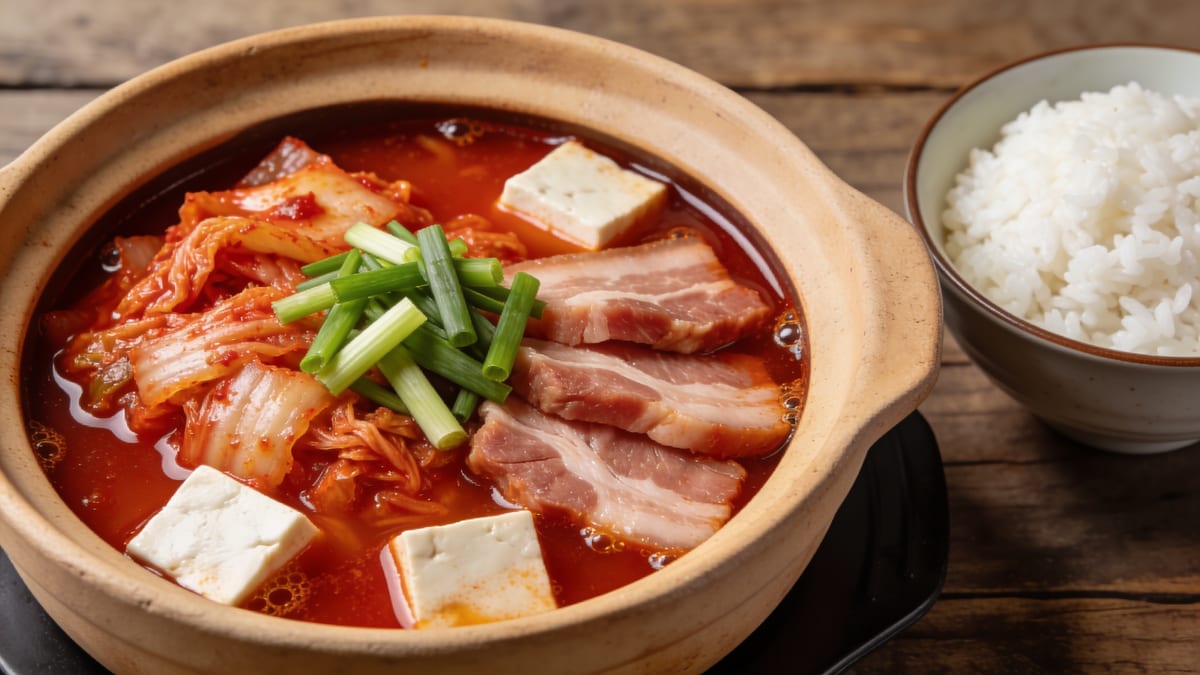
Faites revenir la poitrine de porc coupée en morceaux avec le kimchi aigre et bien fermenté jusqu'à ce que le kimchi s'attendrisse et prenne une couleur plus soutenue. Ajoutez un peu de gochugaru et de gochujang, puis versez de l'eau ou du bouillon (et la saumure du kimchi) et laissez mijoter jusqu'à ce que ce soit riche, 20 minutes. Ajoutez des cubes de tofu et de l'oignon nouveau émincé en fin de cuisson, assaisonnez de sauce soja et d'une pincée de sucre pour équilibrer, et servez bouillonnant avec du riz.
- Utilisez un kimchi aigre, bien fermenté (déjà âgé) — il donne un ragoût bien plus profond et savoureux qu'un kimchi frais.
- Faites d'abord revenir le kimchi et le porc pour développer la saveur avant d'ajouter le liquide.
- Ajoutez la saumure du kimchi pour plus d'acidité, et équilibrez avec un peu de sucre.
Equipment
- Marmite ou pot en pierre (ttukbaegi)
Ingrédients
Ragoût
- 300 g kimchi bien fermenté (aigre), coupé en morceaux
- 200 g poitrine de porc tranchée
- 10 g gochugaru (flocons de piment coréen)
- 15 g gochujang, facultatif
- 500 ml eau ou bouillon, plus la saumure du kimchi
- 1 c. à café de sucre ; sauce soja selon le goût
Pour finir
- 200 g tofu mi-ferme, coupé en cubes
- 2 oignons nouveaux émincés
- 1 c. à café d'huile de sésame
Préparation
- ÉTAPE01
Dans une marmite, faites revenir la poitrine de porc tranchée jusqu'à ce qu'elle rende un peu de graisse, puis ajoutez le kimchi coupé et faites-les revenir ensemble jusqu'à ce que le kimchi s'attendrisse et prenne un rouge plus soutenu, environ 5 minutes.
- ÉTAPE02
Incorporez le gochugaru (et le gochujang, le cas échéant) et faites cuire 1 minute pour réveiller le piment.
- ÉTAPE03
Versez l'eau ou le bouillon et un trait de saumure du kimchi. Portez à frémissement et laissez cuire 20 minutes, jusqu'à ce que le bouillon soit riche et le porc tendre.
- ÉTAPE04
Ajoutez le tofu en cubes et la majeure partie de l'oignon nouveau, puis laissez mijoter doucement 5 minutes de plus. Assaisonnez de sauce soja et d'une pincée de sucre pour équilibrer l'acidité.
- ÉTAPE05
Terminez d'un filet d'huile de sésame et du reste d'oignon nouveau. Servez bouillonnant avec un bol de riz vapeur.
Make ahead
Un plat facile à préparer à l'avance, encore meilleur le lendemain. Préparez la base du ragoût à l'avance ; ajoutez le tofu frais et l'oignon nouveau au moment de réchauffer pour servir. Une excellente façon d'écouler un bocal de kimchi trop fermenté.
Storage
Se conserve 3 jours au réfrigérateur et se réchauffe à merveille — le kimchi-jjigae, comme le kimchi qu'il contient, gagne en profondeur avec le temps. Réchauffez à feu doux. Il se congèle correctement (la texture du tofu change légèrement).
Variations
Kimchi-jjigae au thon (chamchi)
Remplacez le porc par du thon en conserve pour une version rapide et très appréciée.
Végétarien
Supprimez le porc, utilisez un bouillon d'algue kombu et de champignons, et ajoutez davantage de tofu et de champignons.
Au spam
Ajoutez du spam ou de la saucisse en tranches pour un ragoût généreux et rétro.
Serve with
Nutrition per serving
Nutrition values are estimates based on the metric measurements. Adjust as needed.
Questions fréquentes
Quel kimchi choisir pour le kimchi-jjigae ?
Un kimchi aigre et bien fermenté (déjà âgé) — celui qui est devenu acidulé et légèrement pétillant au fond du réfrigérateur. Son acidité plus marquée donne un ragoût bien plus riche et savoureux. Un kimchi frais et croquant donne un jjigae plus fade ; ce plat est le refuge idéal d'un kimchi trop fermenté.
Quel morceau de porc utiliser ?
La poitrine de porc est classique — sa graisse enrichit le bouillon en fondant. L'échine convient aussi. Pour un ragoût plus léger, mettez moins de porc, ou essayez plutôt la version au thon en conserve (chamchi), très appréciée.
Comment développer la saveur ?
Faites d'abord revenir le porc et le kimchi ensemble, avant d'ajouter le moindre liquide — cela caramélise le kimchi et fait fondre la graisse du porc, pour une base profonde. Ajouter la saumure du kimchi et une pointe de gochujang/gochugaru renforce la colonne vertébrale acidulée et épicée.
Le kimchi-jjigae est-il très épicé ?
Modérément — le piquant vient du kimchi, du gochugaru et du gochujang facultatif, et vous le maîtrisez. Ce plat mise davantage sur la saveur profonde et aigre-salée du kimchi que sur le feu pur. Équilibrez l'acidité d'une pincée de sucre et ajustez le piment à votre goût.
Faut-il un pot en pierre (ttukbaegi) ?
Non, n'importe quelle marmite fait l'affaire. Un ttukbaegi conserve la chaleur et apporte le ragoût encore bouillonnant à table, ce qui est traditionnel et agréable, mais une casserole ordinaire donne exactement le même ragoût. Servez-le le plus chaud possible avec du riz.
Cooked this? Rate it.
Real ratings from real cooks. We only show a score once enough of you have weighed in — no fabricated stars.