ブンボーフエ
古都フエ生まれの、フォーの激辛ないとこ。牛肉と豚肉の深いスープにレモングラスが香り、アナトーと唐辛子で赤く染まり、発酵エビ味噌ひとさじが料理に魂を吹き込みます。太い丸型の米麺、柔らかな牛すね肉、山盛りの生ハーブとともに供される——フォーよりも力強く、辛く、複雑な一杯です。
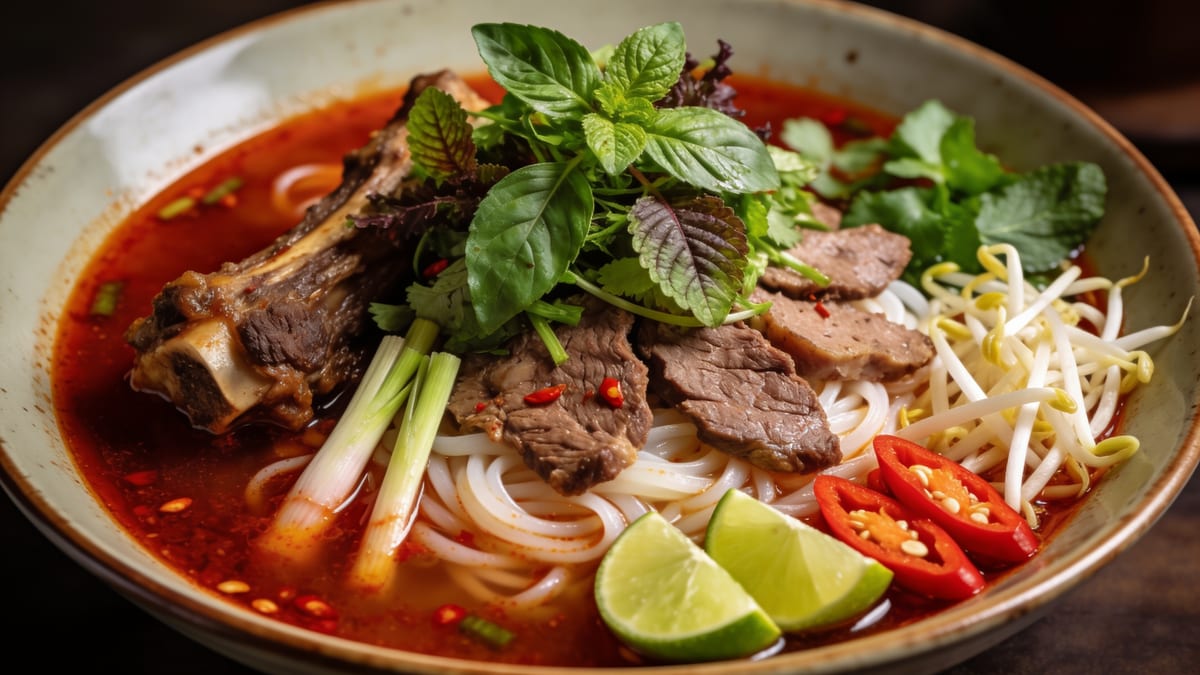
牛すね肉と豚足を、たたいたレモングラス、玉ねぎ、しょうがとともに数時間煮込み、アクを取りながら澄んだ深いスープを作ります。アナトーの種を油で色出しし、唐辛子・レモングラス・エビ味噌を合わせたものを混ぜ入れます。スープをナンプラー、少量の砂糖、発酵エビ味噌(マムルオック)で調味します。太い丸型のブン麺を茹で、スライスした牛肉をのせ、熱いスープを注ぎます。ライム、唐辛子、たっぷりのハーブともやしを添えて。
- レモングラスと発酵エビ味噌(マムルオック)が決め手の風味です——エビ味噌は省かないこと。
- アナトー(アチョーテ)油が、辛さを足さずにスープ特有の赤い色を生みます。
- 平たいフォーの麺ではなく、太い丸型の米麺(ブンボー)を使います——それも料理のアイデンティティの一部です。
Equipment
- 大きめの寸胴鍋
- 小さめのフライパン(アナトー油用)
- 目の細かいアク取り
材料
スープ
- 1 kg 牛すね肉またはブリスケット
- 500 g 豚足(または豚骨)
- レモングラス 4本(たたいたもの)
- 玉ねぎ 1個としょうが 親指大1かけ(焦がしたもの)
- 30 ml ナンプラー, お好みで
- 20 g 氷砂糖
- 塩(お好みで)
唐辛子レモングラスの調味だれ
- 30 ml アナトー(アチョーテ)の種, 油用
- 45 ml 無味無臭の油
- エシャロット 3個とにんにく 3片(みじん切り)
- レモングラス 2本(細かくみじん切り)
- 20 g 発酵エビ味噌(マムルオック)
- 唐辛子フレーク/唐辛子ペースト(お好みで)
添えるもの
- 600 g 太い丸型の米麺(ブンボー)
- スライスした牛肉、豚肉、お好みで角切りの豚血ゼリー
- もやし、バナナの花の千切り、キャベツ
- タイバジル、しそ(ペリラ)、コリアンダー、ライム、スライスした唐辛子
作り方
- ステップ01
牛肉と豚肉を下茹でして臭みを取り、新しい水でたたいたレモングラス、焦がした玉ねぎとしょうがとともに煮込みます。こまめにアクを取り、肉が柔らかくなるまで2〜3時間、弱火で煮ます。
- ステップ02
アナトーの種を油に入れて弱火で、油が深い赤色になるまで温め、種を濾し取ります。同じ油でエシャロット、にんにく、みじん切りのレモングラスを香りが立つまで炒めます。
- ステップ03
エビ味噌を熱いスープおたま一杯分で溶き、濾しながら鍋に戻します。香り立つレモングラス油、ナンプラー、氷砂糖、唐辛子をお好みで加えます。15分煮込みます——力強く、旨味があり、辛く、少しクセのある味わいになるはずです。
- ステップ04
太い丸型のブン麺をちょうど柔らかくなるまで茹で、水気を切って深めの丼に分けます。火の通った牛肉と豚肉をスライスします。
- ステップ05
麺の上にスライスした肉をのせ、熱い赤いスープを注ぎます。もやし、バナナの花、ハーブ、ライムを山盛りにした皿を添え、めいめいが好みで足せるようにします。
Make ahead
スープこそが作り置きの主役——1〜2日前に作って温め直せば、風味はよくなるばかりです。アナトー・レモングラス油も前もって作れます。麺を茹でハーブの皿を用意するのは、出す直前に。
Storage
スープは冷蔵で4日、冷凍で3か月もち——一晩おくと風味が深まります。スープ、麺、ハーブは別々に保存し、麺は食べる直前に茹でて盛り付けると、のびません。
Variations
辛さ控えめ
唐辛子ペーストを控え、別添えにして、めいめいが好みで辛さを足せるようにします。
手早く作る
良質な牛だしに牛すね肉 1kgを加えて90分煮込み、風味の大半はレモングラス・エビ味噌の調味だれでまかないます。
豚血ゼリーなし
ベトナム国外の多くのバージョンは、角切りの豚血ゼリーをただ省きます——それでも本格的でおいしい一杯です。
Serve with
Nutrition per serving
Nutrition values are estimates based on the metric measurements. Adjust as needed.
よくある質問
ブンボーフエはフォーとどう違うのですか?
どちらもベトナムの牛肉麺のスープですが、ブンボーフエはベトナム中部(フエ)のもので、より力強い一杯です。レモングラスとエビ味噌が効いた、より辛くアナトーで赤く染めたスープを、太い丸型の麺とともにいただきます。北部生まれのフォーはもっと穏やかで澄んでおり、平たい麺と八角が主役のスープが特徴です。
マムルオックとは何ですか、代用できますか?
マムルオックはベトナムの発酵エビ味噌で、スープに独特の旨味とクセのある奥行きを与えます。本格的なブンボーフエには欠かせません。手に入らなければ、別の発酵エビ味噌(タイのカピなど)を少量使うのが最も近い代用です——控えめに使いましょう。
どんな麺を使えばいいですか?
「ブンボー」と表示された、太い丸型の米麺(ときに「バインカン」ほどの太さ)——他所で使われる細いビーフンや、フォーの平たい麺とはかなり違います。そのもちもちした太さも、料理のアイデンティティの一部です。
アナトーは何のためですか?
アナトー(アチョーテ)の種を熱い油に浸すと深い赤オレンジ色が出て、それがスープに辛さを足さずに特徴的な見た目を与えます。辛さは唐辛子から別に来るもので、アナトーはあくまでその鮮やかな色のためです。
辛さを控えめにできますか?
はい——ブンボーフエは伝統的にかなり辛いですが、辛さは唐辛子ペーストで調節できます。鍋に加える量を減らし、唐辛子レモングラス油(サーテー)を別添えにすれば、めいめいが好みに合わせて調整できます。
Cooked this? Rate it.
Real ratings from real cooks. We only show a score once enough of you have weighed in — no fabricated stars.