カチョ・エ・ペペ
材料3つ、勝負は4分、すべての変数が紙一重。トンナレッリ、ペコリーノ・ロマーノ、そして呆れるほどたっぷりの挽きたて黒こしょう。
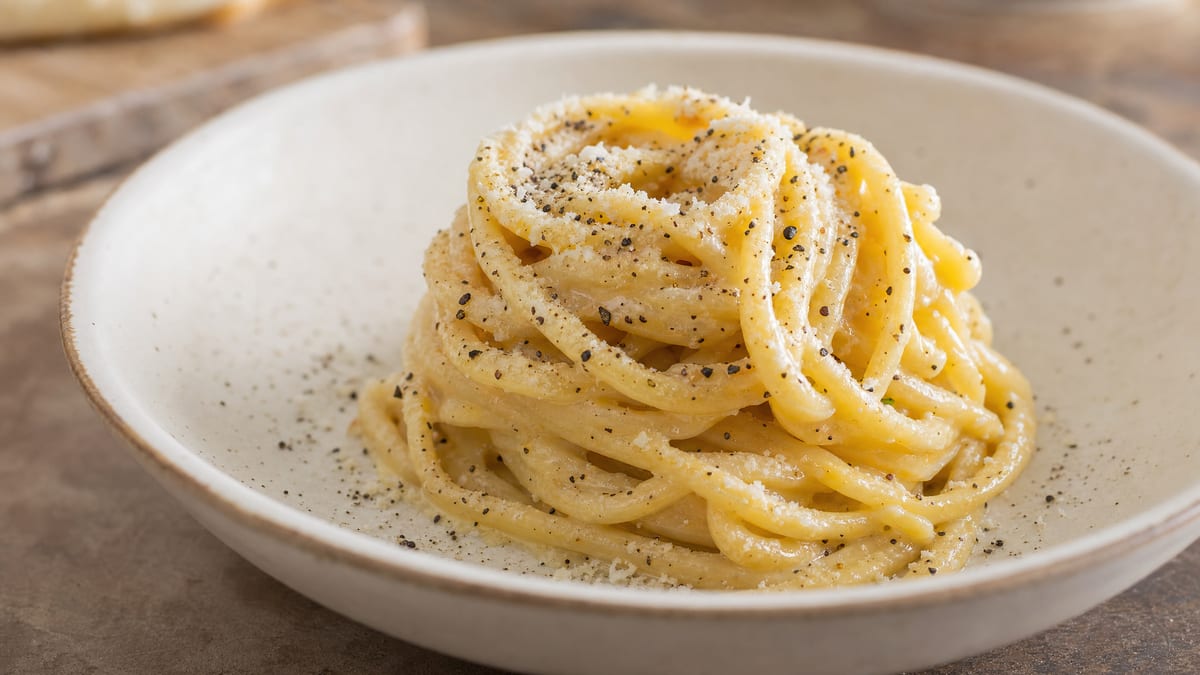
乾いたフライパンで粗く砕いた黒こしょうを乾煎りし、でんぷんの効いたパスタのゆで汁をおたま1杯加え、火から外して細かくすりおろしたペコリーノを混ぜ込みます。熱々のパスタとさらにペコリーノを加え、つやのあるクリーム状になるまであえます。生クリームなし、バターなし、オイルなし。
- ペコリーノは手持ちのいちばん目の細かいおろし器で。粗くおろすとダマになって分離します。
- パスタはアルデンテのきっちり1分前に引き上げること。仕上げはフライパンの中で。
- ゆで汁は白く濁っているのが理想。塩はやや控えめにし、同じ鍋のゆで汁を使い回します。
Equipment
- 厚手のソテーパン(パスタ2人分が入る広さ)
- マイクロプレインまたは目の細かいおろし器
- 粗挽きに設定したペッパーミル
- パスタ用の網じゃくしまたはトング
材料
パスタ
- 200 g トンナレッリまたはスパゲッティ, ブロンズダイス製法がおすすめ
- 粗塩(ゆで湯用、1リットルあたり約10 g)
ソース
- 100 g ペコリーノ・ロマーノDOP, ごく細かくすりおろす、仕上げ用に追加も
- 3 g 黒こしょう(ホール), すり鉢で粗く砕く
作り方
- ステップ01
水2リットルをぐらぐらと沸騰させます。塩はトマトソースのときより控えめに、1リットルあたり約10 g(小さじ2)。パスタを投入します。
- ステップ02
パスタをゆでている間に、広口のソテーパンを中火にかけます。砕いたこしょうを、油なしでそのまま入れます。香りが立つまで30秒煎ります。台所いっぱいにこしょうの香りが広がったら、火から下ろします。
- ステップ03
ゆで上がりの1分前になったら(味見をして。まだ芯が固く残っているはずです)、トングでパスタをソテーパンへ移します。でんぷんたっぷりのゆで汁をたっぷり引き連れながら。
- ステップ04
小さめのおたま1杯(約80 ml)のゆで汁をパンに加えます。弱火にかけて30秒、勢いよくあおります。ゆで汁とこしょうが乳化して、つやのある膜になるのが目標です。
- ステップ05
パンを火から外します。30秒待ちます。パンが熱すぎるとチーズが固まって分離するのです。絶えずあえながら、ペコリーノの半量を加えます。乾いて見えたらゆで汁をひと垂らし。残りのペコリーノを加え、ソースがクリーミーになって麺の一本一本に絡むまであえます。
- ステップ06
温めた皿にくるりと巻いて盛り、上から黒こしょうをさらに挽きかけ、すぐに供します。カチョ・エ・ペペは誰も待ってはくれません。
Make ahead
なし。カチョ・エ・ペペは作り置きの対極にある料理です。盛り付けた瞬間から1秒ごとに、ソースは固く締まっていきます。
Storage
今すぐ食べてください。作り置きに向く料理ではありません。温め直すとソースが分離します。どうしても残ったら、オリーブオイル少々で炒め直し、別の料理だと思って食べましょう。
Variations
パスタ・アッラ・グリーチャ
角切りにしたグアンチャーレ80 gを、こしょうの前にカリカリに炒めておきます。出た脂をゆで汁の一部の代わりに使います。
ブッラータのせ
盛り付けたあとに、100 gのブッラータをちぎってのせます。クラシックではありませんが、抜群においしい。
レモンの皮で仕上げ
レモン半個分の皮を、皿の上からマイクロプレインで削りかけます。濃厚さを切ってくれます。純粋主義者は怒るでしょうが、これが効くのです。
Serve with
Nutrition per serving
Nutrition values are estimates based on the metric measurements. Adjust as needed.
よくある質問
チーズがダマになるのはなぜですか?
原因は2つ。チーズを加えたときにパンが熱すぎたか、チーズのすりおろしが粗すぎたかです。パンは火から外して、ほんのり温かい程度に。チーズはマイクロプレインで粉状になるまですりおろすこと。
パルメザンでも作れますか?
作れますが、別の料理になります。ペコリーノ・ロマーノは羊乳製で、より鋭く、塩気が強く、攻めの味わいです。パルミジャーノで作るとマイルドで、ローマらしさの薄いカチョ・エ・ペペに。いわば「カチョ・エ・ペペ・アッラ・パルミジャーナ」ですね。
なぜバターを入れないのですか?
古典的なローマのカチョ・エ・ペペにバターは入りません。多くのレストランがダマ防止の保険として使っていて、実際うまくいくのですが、この料理特有の鋭い切れ味がいくらか失われます。まずは原型を身につけて、どうしてもというときにバターでずるをしましょう。
量を増やして作れますか?
1つのパンで4人分までなら可能です。それを超えるとソースのコントロールが難しくなるので、2回に分けて作ってください。
パスタはどの形がベストですか?
トンナレッリ(断面が四角いローマのスパゲッティ)が伝統です。ブロンズダイス製法のスパゲッティやリガトーニでも。表面がざらついているほど、ソースがよく絡みます。
Cooked this? Rate it.
Real ratings from real cooks. We only show a score once enough of you have weighed in — no fabricated stars.