麻婆豆腐
しびれて、辛くて、香り高い——麻と辣が精緻なバランスで並び立つ一皿。豆板醤と豚ひき肉、煎った花椒の深い赤色のあんに、絹ごし豆腐を泳がせます。材料をそろえてから食卓まで20分。
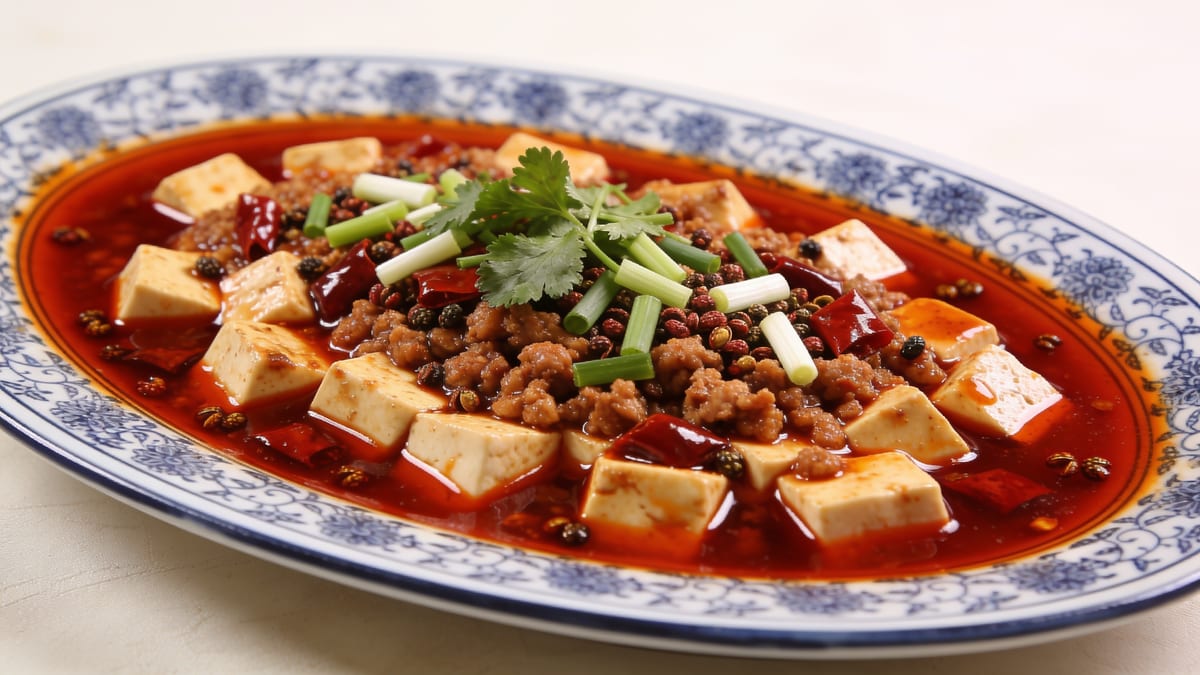
豚ひき肉を油で炒めます。郫県豆板醤と豆豉を加え、香りが立って油が赤く染まるまで炒めます。ストック、醤油、砂糖を加えます。角切りの絹ごし豆腐を滑り込ませ、3分静かに煮ます。水溶きコーンスターチを2段階で加えてとろみを付けます。仕上げに、煎って挽いた花椒と小ねぎの青い部分を散らします。
- 郫県豆板醤(熟成させた四川の唐辛子豆板醤)がこの料理の魂——代用は利きません。
- 最後の最後に加える、煎ってから挽いた花椒が、麻(しびれる刺激)を鮮やかに保ちます。
- 水溶きコーンスターチは必ず2段階で——1回目でとろみを付け、2回目でまとめます。深い赤色でつややかに仕上がります。
Equipment
- 中華鍋または広口のソテーパン
- スパイスグラインダーまたはすり鉢(花椒用)
- 中華ヘラ
材料
豚肉ベース
- 20 ml クセのない植物油
- 120 g 豚ひき肉
- 30 g 郫県豆板醤, 細かく刻む
- 10 g 豆豉(発酵黒豆), 洗って刻む
- にんにく 2片、みじん切り
- しょうが 親指大1かけ、みじん切り
あん
- 300 ml チキンストック, または水
- 10 ml 生抽(中国のうすくち醤油)
- 5 g 砂糖
- 5 g 四川唐辛子フレーク(二荊条), お好みで、色をより深く
- 500 g 絹ごし豆腐, 2 cm角に切り、塩水で30秒下茹でする
とろみ付けと仕上げ
- 15 g コーンスターチ, 水45 ml/大さじ3で溶く
- 5 g 花椒(ホール), 乾煎りして挽く
- 小ねぎの青い部分 3本分、小口切り
- 5 ml 焙煎ごま油, お好みで
作り方
- ステップ01
小さなフライパンを油をひかずに中火にかけ、花椒を90秒、鍋を揺すりながら、香りが立って皮がわずかに色づくまで煎ります。細かい粉に挽きます。取り置きます。
- ステップ02
小鍋に薄めの塩水を入れ、静かに沸くか沸かないかまで温めます。角切りの豆腐を滑り込ませて30秒置きます——わずかに締まり、ほんのり下味がつきます。そっと湯を切ります。
- ステップ03
中華鍋に油を入れて中強火で熱します。豚肉を加え、細かくほぐしながら炒めます。ピンク色がちょうど消えるまで——約2分。
- ステップ04
豚肉を鍋の端に寄せます。空いたスペースに刻んだ豆板醤と豆豉を加えます。油が深い赤色に染まって香りが立つまで、油の中で60秒炒めます——ここが最も重要な工程です。
- ステップ05
にんにくとしょうがを加えます。香りが立つまで30秒炒めます。鍋の中身を全体に混ぜ合わせます。
- ステップ06
ストック、生抽、砂糖、(お好みで)唐辛子フレークを注ぎ入れます。煮立てます。
- ステップ07
下茹でした豆腐をそっと滑り込ませます——崩さないこと。ヘラは豆腐ではなく、ソースのほうを動かすように使います。味が染みるよう3分煮ます。
- ステップ08
水溶きコーンスターチを混ぜ直します。半量を回し入れ、鍋を静かに揺すります。つやが出るまで30秒煮ます。残りの半量を回し入れ、揺すって、さらに30秒。スプーンにとろりと厚くまとわりつく濃度が目安です。
- ステップ09
火から下ろします。煎って挽いた花椒と小ねぎの青い部分を全体に散らします。ごま油を回しかけます。深めの器に移します。熱々のご飯とともに——ご飯の上にかけるのではなく、必ず別添えで。
Make ahead
花椒は最大1週間前に煎って挽いておき、密閉容器で保存できます。料理そのものは食べる直前に作ってください。
Storage
冷蔵で2日間。それを過ぎると豆腐の食感が落ちます。温め直しは弱火でそっと——強火だとあんが分離します。
Variations
ベジタリアン麻婆
豚肉は使いません。代わりに細かく刻んだ生しいたけ80 gを、油大さじ2でしっかり焼き色がつくまで炒めます。うまみの深さは本物です。
牛肉麻婆
豚肉を牛ひき肉に置き換えます。やや力強く、四川の古典からはやや離れます。ほどほどにどうぞ。
辛くない麻婆(インポッシブルモード)
豆板醤を大さじ1に減らし、唐辛子フレークを省き、花椒を半量に。厳密にはもはや麻婆豆腐ではありませんが、その面影を残した、子どもにも食べやすい豆腐の煮込みになります。
Serve with
Nutrition per serving
Nutrition values are estimates based on the metric measurements. Adjust as needed.
よくある質問
豆板醤の代用品はありますか?
本当の意味での代用品はありません。郫県豆板醤は、法的に保護された熟成タイプの四川産豆板醤——「郫县豆瓣酱」と表記されたものを選んでください。韓国のコチュジャンは唐辛子こそあれ、発酵豆の深みがありません。どうしても手に入らなければ、赤味噌大さじ2+チリペースト大さじ1を混ぜて——悲しい親戚くらいにはなります。
麻と辣の違いは何ですか?
麻(マー/麻)は花椒による舌のしびれ——柑橘を思わせるビリビリした刺激です。辣(ラー/辣)は唐辛子による灼けるような辛さ。麻婆豆腐は麻辣——両方が、バランスよく共存します。花椒がなければ、それはただの辛い豆腐です。
なぜ豆腐を下茹でするのですか?
軽く下茹ですることで豆腐の内側に下味がつき、大豆っぽい風味がほどよく抜け、あんの中で崩れない程度に締まります。省くと角切りが崩れます。
木綿豆腐でも作れますか?
作れますが、麻婆の食感は絹ごしであってこそ——あんの中にプルプルのカスタードが沈んでいるような口当たりです。木綿豆腐でも十分美味しい一皿にはなりますが、それは麻婆ではありません。
なぜコーンスターチを2回に分けるのですか?
1回目でソースの本体にとろみがつきます。2回目は豆腐から出てくる水分を抱き込み、皿の上でもあんが一体感を保つためのもの。レストランでは無意識にやっている手順で、つややかに仕上がるか水っぽくなるかの分かれ目です。
Cooked this? Rate it.
Real ratings from real cooks. We only show a score once enough of you have weighed in — no fabricated stars.