Salsa BBQ coreana
A glossy, sweet-savory sauce in the bulgogi tradition: soy sauce and dark brown sugar deepened with gochujang, garlic, ginger, and grated Asian pear, then finished with toasted sesame oil. A short simmer tames the raw bite of the garlic and lets the pear's enzymes and sugars melt into the base, while a quick cornstarch slurry turns it thick enough to cling to ribs, wings, or a bowl of rice. It keeps for two weeks and doubles as a glaze, dip, or stir-in.
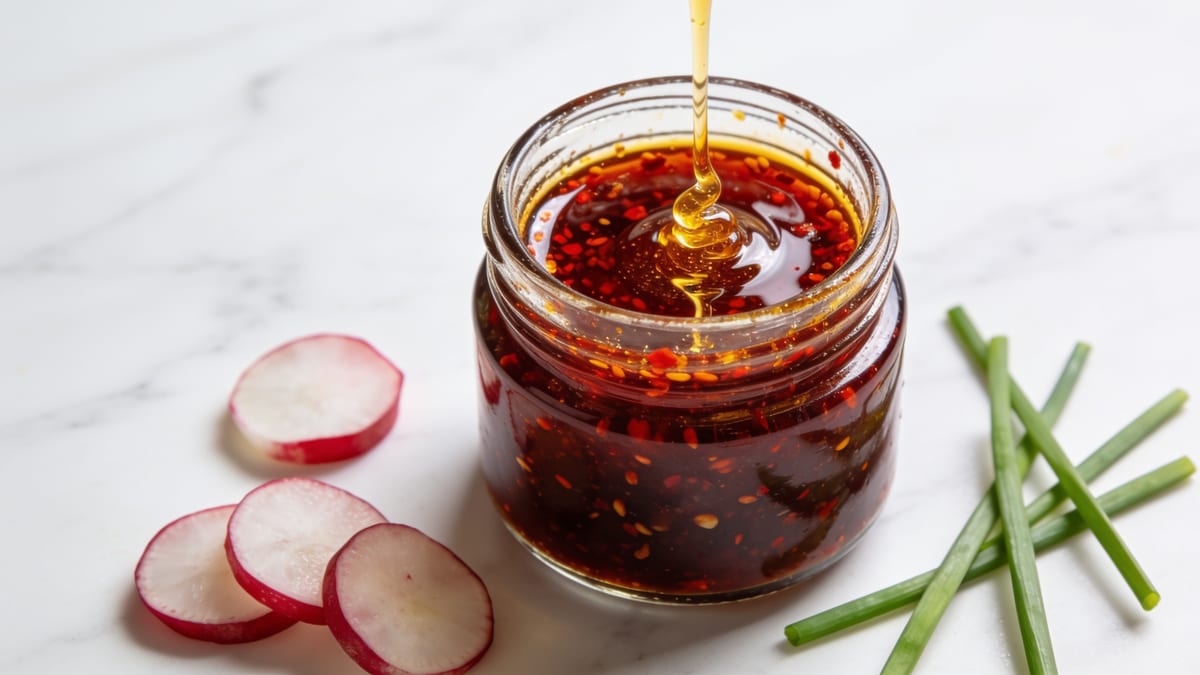
Grate half an Asian pear, 4 garlic cloves, and a tablespoon of ginger straight into a medium saucepan, then whisk in 160 ml soy sauce, 120 ml water, 100 g packed dark brown sugar, 60 g honey, 40 g gochujang, 30 ml rice vinegar, and 1/2 tsp black pepper. Bring to a gentle simmer over medium heat, whisking until the sugar dissolves, then simmer softly for about 10 minutes so the garlic mellows and the flavors fuse. Stream in a slurry of 1 tbsp cornstarch and 2 tbsp cold water, simmer 1-2 minutes until glossy and spoon-coating, then pull the pan off the heat and stir in 1 tbsp toasted sesame oil, a tablespoon of sesame seeds, and a sliced scallion. Cool 5 minutes, taste, and adjust with vinegar or honey before jarring.
- Add the sesame oil off the heat — simmering it dulls the toasty aroma that defines the sauce.
- Keep the simmer gentle; a hard boil scorches the sugar against the pan and turns the sauce bitter.
- The sauce thickens noticeably as it cools, so stop the slurry stage while it still looks slightly loose.
Equipment
- Medium saucepan
- Whisk
- Microplane or box grater
- Measuring cups and spoons
- Small bowl (for the slurry)
- Glass jar with lid (for storage)
Ingredientes
Sauce base
- 160 ml soy sauce, use low-sodium if you plan to reduce further
- 120 ml water
- 100 g dark brown sugar
- 60 g honey
- 40 g gochujang (Korean chile paste), adds heat and body
- 30 ml unseasoned rice vinegar
- 100 g Asian pear, peeled and finely grated, about half a pear; ripe Bosc pear works too
- garlic cloves, finely grated
- 15 g fresh ginger, finely grated
- 1 g freshly ground black pepper
To thicken and finish
- 8 g cornstarch
- 30 ml cold water, for the slurry
- 15 ml toasted sesame oil, stirred in off the heat
- 9 g toasted sesame seeds
- scallion, thinly sliced, optional
Elaboración
- PASO01
Peel the Asian pear and grate 100 g (1/2 cup) on the fine holes of a box grater, catching the pulp and juice. Grate the garlic and ginger on a microplane so they dissolve into the sauce rather than leaving raw bits.
- PASO02
In a medium saucepan, whisk together the soy sauce, water, brown sugar, honey, gochujang, rice vinegar, grated pear, garlic, ginger, and black pepper until the gochujang has no visible lumps.
- PASO03
Set the pan over medium heat and whisk occasionally until the sugar fully dissolves and small bubbles appear around the edges, about 3 minutes. Do not let it reach a rolling boil.
- PASO04
Reduce the heat to medium-low and hold a bare simmer for 10 minutes, stirring every couple of minutes and scraping the bottom so the sugars don't catch. The raw garlic edge should soften and the sauce should smell rounded and sweet-savory.
- PASO05
Stir the cornstarch into the cold water until smooth, then whisk it into the simmering sauce in a steady stream. Simmer for 1 to 2 minutes until the sauce turns glossy and coats the back of a spoon. It will still look slightly loose — it sets up more as it cools.
- PASO06
Remove the pan from the heat and stir in the toasted sesame oil, sesame seeds, and scallion if using. Adding the sesame oil now preserves its fragrance.
- PASO07
Let the sauce cool in the pan for 5 minutes, then taste. Add a splash more rice vinegar if it reads too sweet, or a drizzle of honey if too sharp. Transfer to a clean jar.
Make ahead
This sauce genuinely improves after a night in the refrigerator as the garlic, ginger, and gochujang settle into each other. Make it up to a week ahead for a party; if you are using it as a glaze, pull it from the fridge 30 minutes before grilling so it brushes on evenly.
Storage
Refrigerate in an airtight jar for up to 2 weeks; the sauce will thicken when cold, so loosen it with a teaspoon of warm water before using. For longer keeping, freeze in small containers or an ice cube tray for up to 3 months and thaw overnight in the fridge.
Variations
Gluten-free and vegan
Swap the soy sauce for tamari, use a certified gluten-free gochujang (many standard brands contain wheat), and replace the honey with brown rice syrup or maple syrup. The texture and simmer time stay exactly the same.
Extra-fiery version
Double the gochujang to 80 g (4 tbsp) and add 1 tbsp gochugaru (Korean chile flakes) with the base. Balance the added paste with an extra tablespoon of water so the sauce doesn't over-thicken.
Smoky grill-style
Add 1/2 tsp smoked paprika and 1 tsp Worcestershire-style sauce to the base for a crossover sauce that leans closer to American barbecue — excellent on pulled pork or smoked chicken.
Serve with
Nutrition per serving
Nutrition values are estimates based on the metric measurements. Adjust as needed.
Preguntas frecuentes
What is the difference between korean bbq sauce and a bulgogi marinade?
They share the same flavor backbone — soy, sugar, pear, garlic, ginger, sesame — but a marinade is thin and salty so it can penetrate raw meat, while a korean bbq sauce like this one is simmered and thickened so it clings as a finishing glaze or dip. You can thin this sauce with equal parts water and use it as a marinade, but don't use a marinade that touched raw meat as a table sauce.
Is korean bbq sauce gluten free?
Not by default. Both regular soy sauce and most gochujang brands contain wheat. To make a gluten-free korean bbq sauce, use tamari and a gochujang labeled gluten-free, and check the label on your rice vinegar for additives. Everything else in the recipe is naturally gluten free.
Can I make it without gochujang?
Yes, though you'll lose some depth. Substitute 2 tsp white or red miso plus 1 to 2 tsp gochugaru or another mild chile flake to recover the fermented savoriness and gentle heat. Plain sriracha works in a pinch but pushes the sauce toward vinegary rather than rounded.
Why is there pear in the sauce, and what can I substitute?
Grated Asian pear is a classic Korean technique: it adds a clean, floral sweetness and its enzymes are traditionally used to tenderize meat in marinades. If you can't find one, a ripe Bosc pear, half a grated Fuji apple, or 3 tablespoons of unsweetened apple juice all work — reduce the honey slightly if your fruit is very sweet.
How long does homemade korean bbq sauce last?
Kept in a clean, airtight jar in the refrigerator, it lasts about 2 weeks thanks to the sugar, salt, and vinegar. Always spoon out what you need instead of dipping used utensils into the jar. It also freezes well for up to 3 months; the texture recovers fully after a gentle rewarm.
Cooked this? Rate it.
Real ratings from real cooks. We only show a score once enough of you have weighed in — no fabricated stars.