Sopa de miso — sopa japonesa de dashi y miso
El alma de la mesa japonesa: un caldo dashi transparente batido con pasta de miso y salpicado con tofu sedoso, alga wakame y cebolleta. Lista en 10 minutos, es la sopa de todos los días que acompaña casi cualquier comida japonesa, y la regla de oro es no dejar que hierva nunca una vez añadido el miso, para que el aroma y los cultivos beneficiosos para el intestino se mantengan vivos.
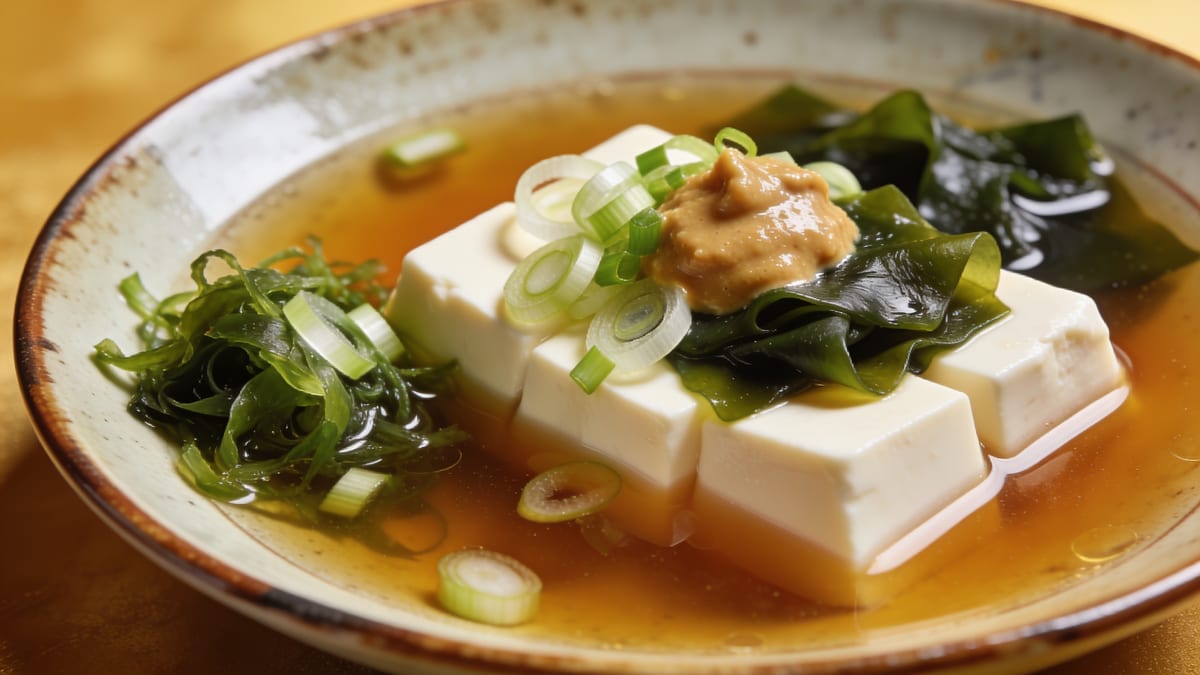
Prepara (o reconstituye) el dashi, el caldo japonés de kombu y bonito. Llévalo a fuego lento suave, añade cubos de tofu sedoso y wakame rehidratada, y calienta bien. Retira la olla de un hervor fuerte, luego disuelve la pasta de miso en un cucharón del caldo caliente hasta que quede lisa e incorpórala de nuevo. Calienta con suavidad pero no dejes que hierva. Termina con cebolleta en rodajas y sirve enseguida.
- Un dashi de verdad (kombu + bonito) es la base: da a la sopa de miso su profundidad sabrosa.
- No dejes que la sopa hierva nunca tras añadir el miso; el hervor apaga su aroma y destruye los cultivos vivos.
- Disuelve primero el miso en un poco de caldo caliente para que se reparta con suavidad, sin grumos.
Equipment
- Cazo
- Batidor pequeño o cucharón colador
Ingredientes
Dashi
- 1 L agua
- 10 g kombu (alga kelp seca)
- 10 g katsuobushi (copos de bonito), omítelo para la versión vegetariana
Sopa
- 60 g pasta de miso, al gusto
- 200 g tofu sedoso, en cubos
- 5 g wakame seca, rehidratada
- 2 cebolletas, en rodajas
Elaboración
- PASO01
Remoja el kombu en el agua 20 minutos si puedes, luego caliéntalo despacio hasta justo antes de que hierva y retira el kombu. Añade los copos de bonito, apaga el fuego, déjalos infusionar 2–3 minutos y luego cuela. (O usa dashi instantáneo.)
- PASO02
Devuelve el dashi al cazo, lleva a fuego lento suave y añade el tofu en cubos y la wakame rehidratada. Calienta bien durante un minuto; que no hierva a borbotones.
- PASO03
Retira el cazo del fuego (o mantenlo muy bajo). Pon el miso en un cucharón, sumérgelo en el caldo y bate hasta que el miso se disuelva por completo, luego incorpóralo a la sopa.
- PASO04
Vuelve a calentar la sopa hasta que humee, pero no dejes que hierva: el hervor estropea el aroma del miso y destruye sus cultivos vivos.
- PASO05
Espolvorea con cebolleta en rodajas y sirve enseguida en boles, con arroz y una comida japonesa.
Make ahead
Prepara el dashi con antelación y guárdalo en el frigorífico o congélalo: así la sopa de miso es cosa de 5 minutos. Añade el miso solo al servir, y no dejes que hierva nunca, para el sabor más fresco.
Storage
Mejor recién hecha, ya que el tofu y el aroma del miso se desvanecen. Las sobras se conservan 2 días en el frigorífico; recaliéntalas con suavidad sin dejar que hiervan. Prepara el dashi con antelación y guárdalo en el frigorífico (3 días) o congelado para tener sopa de miso al instante en cualquier momento.
Variations
Vegetariana/vegana
Usa un dashi de kombu y shiitake (sin bonito) para una sopa de miso totalmente vegetal.
Miso rojo o blanco
El miso blanco (shiro) es suave y dulce; el miso rojo (aka) es más intenso y salado. Usa uno o una mezcla (awase) al gusto.
Con extras
Añade almejas, setas enoki, daikon o tofu frito (aburaage) para una sopa más contundente.
Serve with
Nutrition per serving
Nutrition values are estimates based on the metric measurements. Adjust as needed.
Preguntas frecuentes
¿Por qué no debo dejar que hierva la sopa de miso?
Hervirla tras añadir el miso disipa su delicado aroma, puede dejar un sabor plano o áspero y destruye los cultivos vivos beneficiosos del miso sin pasteurizar. Disuelve el miso en el caldo caliente fuera del hervor y calienta solo hasta que humee, nunca a borbotones.
¿Qué es el dashi y lo necesito?
El dashi es el caldo japonés, hecho lo más habitual con kombu (alga kelp) y katsuobushi (copos de bonito), y es la base sabrosa de la sopa de miso. Puedes prepararlo al momento en minutos o usar gránulos de dashi instantáneo. El agua sola da una sopa notablemente más sosa.
¿Qué tipo de miso debo usar?
El miso blanco (shiro) es suave, dulce y muy versátil; el miso rojo (aka) es más fuerte, salado e intenso. Una mezcla (awase) es habitual. Empieza con alrededor de una cucharada por cada taza de dashi y ajusta al gusto: los distintos misos varían en salinidad.
¿Cómo la hago vegetariana o vegana?
Prescinde del bonito y prepara el dashi con kombu más setas shiitake secas, que dan un caldo vegetal sabroso y rico en umami. Comprueba que tu miso no lleve bonito (algunos contienen dashi). El tofu y la wakame ya son de origen vegetal.
¿Por qué hay que disolver el miso aparte?
La pasta de miso forma grumos si se echa directamente en el líquido caliente. Batirla primero en un cucharón de caldo caliente permite que se reparta con suavidad, de modo que la sopa quede homogénea y sedosa en lugar de grumosa. Un batidor pequeño o un cucharón colador fino lo hacen fácil.
Cooked this? Rate it.
Real ratings from real cooks. We only show a score once enough of you have weighed in — no fabricated stars.