Chả Giò — nems vietnamiens (rouleaux frits)
Les rouleaux de printemps frits croustillants du Vietnam : une farce savoureuse de porc, crevette, champignon noir et vermicelles de soja enroulée dans de la galette de riz et frite jusqu'à en être dorée et cassante. Servis avec des herbes et de la salade pour envelopper et un bol de nước chấm pour tremper, les chả giò (nem rán dans le nord) sont les rouleaux de fête que l'on retrouve à chaque banquet vietnamien — croustillants dehors, juteux dedans.
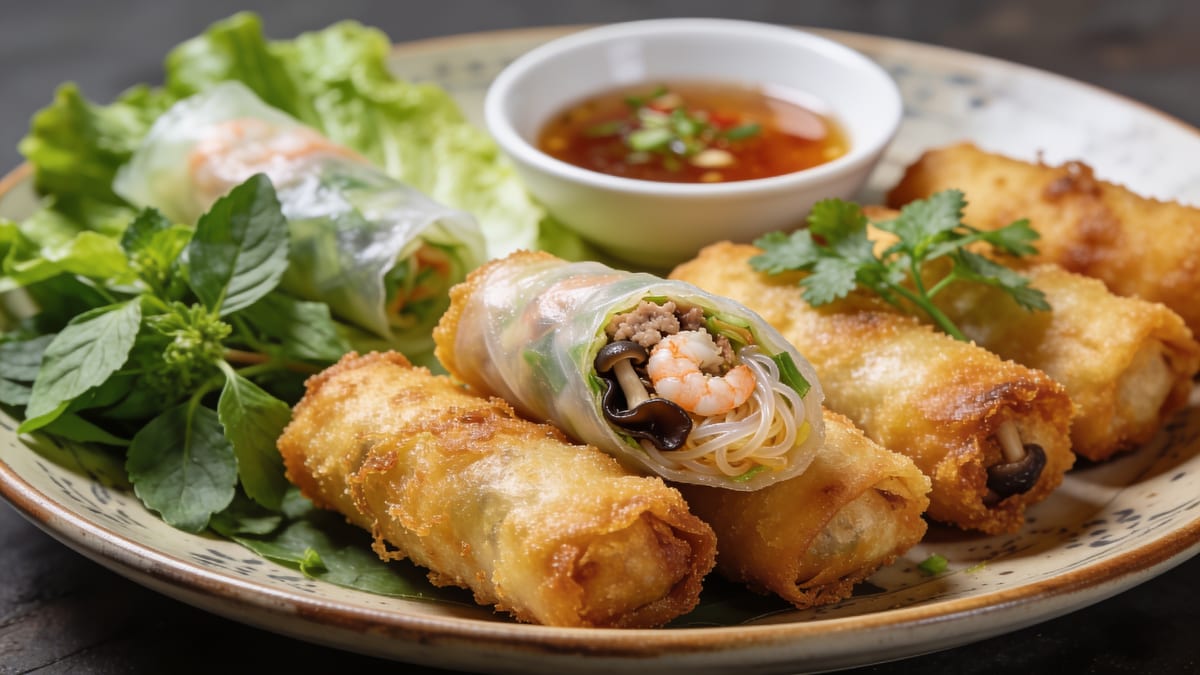
Mélangez une farce de porc haché, crevette hachée, vermicelles de soja trempés, champignon noir réhydraté, carotte râpée, échalote et œuf, assaisonnée de sauce de poisson et de poivre. Trempez brièvement une galette de riz pour l'assouplir, ajoutez une cuillerée de farce, rabattez les côtés et roulez bien serré. Faites frire dans une huile moyennement chaude — doucement d'abord, puis plus chaude — jusqu'à ce que les rouleaux soient bien dorés et croustillants. Servez avec de la salade, des herbes et du nước chấm pour tremper.
- Ne surchargez pas et n'enroulez pas de façon lâche — des rouleaux serrés et fins frisent croustillants et n'éclatent pas.
- Faites frire d'abord à température modérée pour que l'intérieur cuise, puis montez le feu pour croustiller et colorer.
- Enveloppez chaque rouleau chaud dans de la salade et des herbes et trempez-le dans le nước chấm — c'est ainsi qu'on les mange.
Equipment
- Grand saladier
- Poêle/wok profond pour frire
- Plateau tapissé de papier
Ingrédients
Farce
- 300 g porc haché
- 150 g crevettes crues, hachées
- 50 g vermicelles de soja (bean thread), trempés et coupés
- 2 c. à soupe de champignon noir, trempé et haché
- 1 carotte râpée ; 2 échalotes ; 1 œuf ; 1 c. à soupe de sauce de poisson ; poivre
Pour envelopper et frire
- Galettes de riz (bánh tráng)
- Huile neutre, pour la friture
Pour servir
- Salade, menthe, périlla, coriandre
- Nước chấm (sauce de poisson, citron vert, sucre, eau, ail, piment)
Préparation
- ÉTAPE01
Mélangez le porc, la crevette, les vermicelles de soja égouttés, le champignon noir, la carotte, l'échalote hachée, l'œuf, la sauce de poisson et le poivre. Mélangez bien ; faites-en frire un tout petit peu pour goûter et rectifiez l'assaisonnement.
- ÉTAPE02
Trempez brièvement une galette de riz dans de l'eau tiède (ou badigeonnez-la) jusqu'à ce qu'elle soit tout juste souple — elle continue de s'assouplir pendant que vous travaillez, alors ne la trempez pas trop.
- ÉTAPE03
Déposez une cuillerée à soupe de farce près d'un bord, rabattez les côtés par-dessus et roulez bien serré en un fin cylindre. Ne surchargez pas. Recommencez avec le reste.
- ÉTAPE04
Chauffez l'huile à feu moyen et faites frire les rouleaux, sans les serrer, jusqu'à ce qu'ils se raffermissent et que la farce cuise, en les retournant. Montez ensuite le feu pour croustiller et intensifier la couleur jusqu'au brun doré. Égouttez sur du papier.
- ÉTAPE05
Servez chaud avec un plateau de salade et d'herbes et un bol de nước chấm. Pour déguster, enveloppez un rouleau dans une feuille de salade avec des herbes et trempez-le dans la sauce.
Make ahead
Roulez-les à l'avance et congelez-les crus en une seule couche, puis mettez-les en sachet — faites-les frire congelés pour un résultat des plus croustillants, ce qui en fait un met de fête parfait. La farce peut être mélangée la veille. Préparez les herbes et le nước chấm au dernier moment.
Storage
Meilleurs frais et croustillants. Les rouleaux frits se conservent un jour ; refaites-les croustiller au four chaud ou à l'air fryer (pas au micro-ondes, qui les ramollit). Les rouleaux crus déjà roulés se congèlent à merveille — faites-les frire encore congelés, ce qui les rend encore plus croustillants.
Variations
Au crabe (chả giò cua)
Ajoutez ou mettez en avant de la chair de crabe pour une version plus riche, un classique du sud.
Nem rán du nord
Le nom et le style du nord, souvent avec une galette et un équilibre de farce légèrement différents.
Végétarienne
Garnissez de tofu, taro, jicama, carotte, champignon et vermicelles de soja ; assaisonnez de sauce soja/sauce de poisson végétarienne.
Serve with
Nutrition per serving
Nutrition values are estimates based on the metric measurements. Adjust as needed.
Questions fréquentes
Quelles galettes utiliser pour les chả giò ?
De la galette de riz vietnamienne (bánh tráng), assouplie brièvement avant de rouler. Certains cuisiniers utilisent une galette de riz plus fine spéciale friture, qui croustille magnifiquement, tandis que d'autres emploient les galettes rondes standard. Un peu de sucre dans l'eau de trempage ou sur la galette aide à les colorer. Les galettes de blé pour rouleaux de printemps donnent une texture différente, boursouflée.
Pourquoi mes rouleaux éclatent-ils ou sont-ils gras ?
L'éclatement signifie généralement qu'ils sont trop remplis ou enroulés trop lâchement, ou que l'huile est trop chaude trop tôt. Des rouleaux gras veulent dire que l'huile était trop froide. Roulez-les fins et serrés, faites-les frire d'abord à température modérée pour que la farce cuise, puis montez le feu pour croustiller et colorer — et ne surchargez pas la poêle.
Puis-je préparer les chả giò à l'avance ou les congeler ?
Oui — ils se congèlent à merveille crus. Roulez-les, congelez-les en une seule couche jusqu'à ce qu'ils soient bien durs, puis mettez-les en sachet. Faites-les frire directement congelés (sans décongeler) pour un résultat des plus croustillants, ce qui en fait un met de fête si pratique. Les rouleaux cuits sont meilleurs mangés frais, mais on peut les refaire croustiller au four chaud ou à l'air fryer.
Qu'est-ce que le nước chấm ?
La sauce à tremper vietnamienne incontournable — de la sauce de poisson équilibrée de citron vert (ou de vinaigre), de sucre, d'eau, d'ail et de piment. Elle est acidulée, sucrée, salée et un peu piquante, et l'on y trempe chaque rouleau enveloppé d'herbes. Ajustez l'équilibre selon le goût ; elle accompagne d'innombrables plats vietnamiens.
Quelle différence entre chả giò et gỏi cuốn ?
Les chả giò sont les rouleaux de printemps frits — croustillants, dorés et servis chauds. Les gỏi cuốn sont des rouleaux d'été frais (non frits), avec de la galette de riz enroulée autour de crevette, porc, herbes et vermicelles, servis frais avec une sauce cacahuète ou à base de sauce de poisson. Même famille de galette de riz, texture et expérience complètement différentes.
Cooked this? Rate it.
Real ratings from real cooks. We only show a score once enough of you have weighed in — no fabricated stars.