ゴルメサブジ
イランで愛される国民的シチュー。パセリ、パクチー、フェヌグリーク、チャイブなどのハーブをじっくり煮込んだ、深く暗い緑色の鍋に、やわらかい羊肉、赤いんげん豆、そして乾燥ペルシャライム(リムー・アマニ)の紛れもない酸っぱい香りが加わります。ゴルメサブジは、何百万人ものイラン人にとって「我が家」の味——秘訣は、山のようなハーブを暗い色になって香り立つまで辛抱強く炒め、それから長く、やさしく煮込むことです。ふっくらしたサフランライスの上にかけて供します。
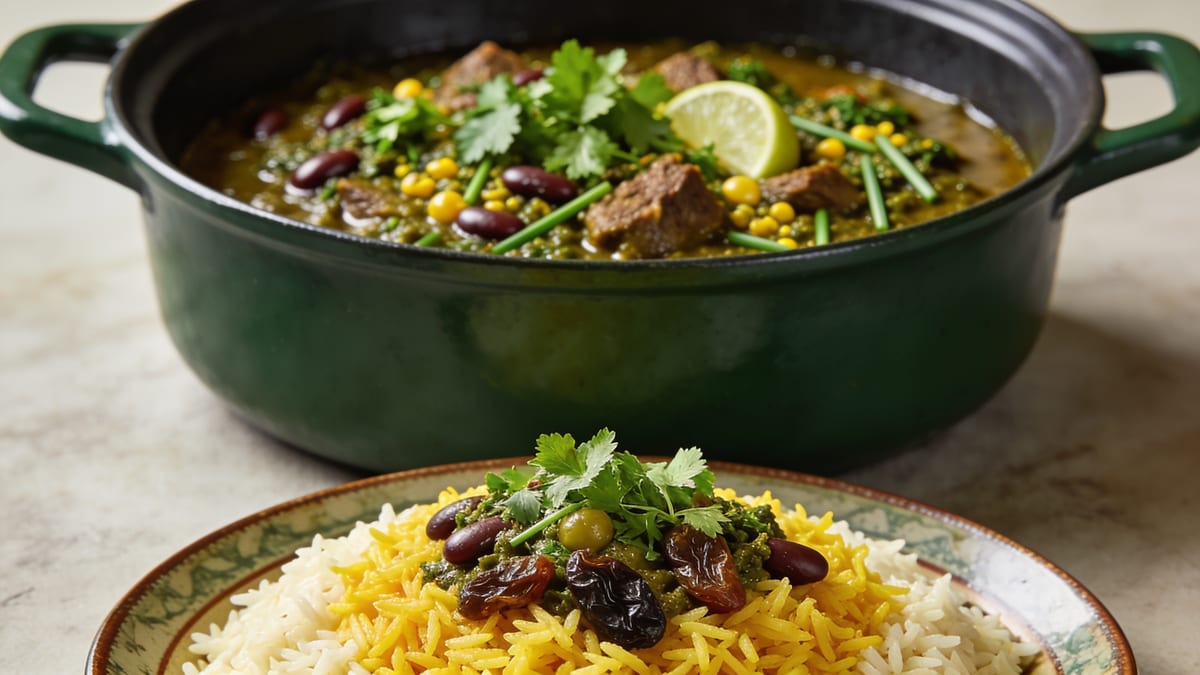
大量のみじん切りにしたハーブ——パセリ、パクチー、チャイブ/リーキ、少量の乾燥フェヌグリーク——を、油で暗い緑色になり深く香り立つまで辛抱強く炒めます。これが料理の魂なので、急がないこと。羊肉を玉ねぎとターメリックとともに焼き色をつけ、ハーブと合わせ、水、浸水させた赤いんげん豆、穴を開けた乾燥ライム数個を加えます。羊肉がやわらかくなり、シチューが暗く酸味と旨みをまとうまで、1時間半〜2時間やさしく煮込みます。酸味をととのえ、ふっくらしたペルシャライスの上にかけて供します。
- ハーブを暗い色になって香り立つまで炒めることは絶対に欠かせません——それがゴルメサブジに深みと色を与えます。
- 穴を開けた乾燥ペルシャライム(リムー・アマニ)が、特徴的な酸味とほのかな苦みのある香りを与えます。
- フェヌグリークは控えめに(苦くなることがあります)、羊肉がやわらかくなるまで長くゆっくり煮込みます。
Equipment
- 大きな厚手の鍋
- フライパン(ハーブ用)
材料
ハーブ(料理の魂)
- パセリとパクチー各大きめ1束、みじん切り
- チャイブまたはリーキの葉1束、刻む
- 2 tbsp 乾燥フェヌグリークの葉(シャンバリレ), 控えめに
シチュー
- 600 g 羊肉(または牛肉)、角切り
- 1 玉ねぎ、みじん切り、ターメリック小さじ1
- 1 can 赤いんげん豆(または浸水させた乾燥豆)
- 4 乾燥ペルシャライム(リムー・アマニ)、穴を開ける
作り方
- ステップ01
すべてのハーブをみじん切りにします。たっぷりの油で中火にかけ、頻繁にかき混ぜながら、暗い緑色になり豊かに香り立つまで、15〜20分炒めます。この工程が全体の風味を作ります——辛抱強く、焦がさないように。
- ステップ02
大きな鍋で玉ねぎを油でやわらかくし、ターメリックを加え、羊肉の角切りに全面しっかり焼き色をつけます。
- ステップ03
炒めたハーブを肉に加え、かぶるくらいの水を注ぎます。穴を開けた乾燥ライムを落とし入れます。煮立たせ、蓋をして、1時間やさしく煮込みます。
- ステップ04
赤いんげん豆を加え、羊肉がとてもやわらかくなり、シチューが暗く、とろりと香り高くなるまで、さらに45〜60分やさしく煮込みます。濃くなりすぎたら水を足します。
- ステップ05
味見をして酸味をととのえます——やわらかくなった乾燥ライムを絞ってもっと酸味を足すか、強ければ取り出します。塩で味をととのえます。ふっくらしたペルシャのサフランライス(チェロ)の上にかけて供します。
Make ahead
作り置きに最適です——風味がひと晩で深まります。ハーブをまとめて炒めて小分けに冷凍しておくこともでき(よくあるイランの時短術です)、別の日に新鮮なゴルメサブジの鍋をさっと仕立てられます。シチュー全体の冷凍もよくききます。
Storage
冷蔵で3〜4日もち、すべての良質なホレシュ(煮込み)と同じく、風味がなじむ翌日にはさらにおいしくなります。やさしく温め直します。冷凍が抜群にきくので——イラン人はしばしば炒めたハーブや、シチューをまるごと冷凍します。炊きたてのご飯を添えて供します。
Variations
牛肉または肉なし
羊肉の代わりに牛肉を使うか、豆を増やして肉なしのベジタリアン仕立てにします。
生ハーブ対冷凍ハーブ
生のハーブが最高の風味を出しますが、質の良い冷凍刻みハーブミックス「サブジ・ゴルメ」は広く使われる時短術です。
乾燥ライムパウダー
丸ごとの乾燥ライムが手に入らない場合は、乾燥ライムパウダー少々で酸味の一部が得られます(丸ごとが一番です)。
Serve with
Nutrition per serving
Nutrition values are estimates based on the metric measurements. Adjust as needed.
よくある質問
ゴルメサブジの風味は何から来るの?
何よりも二つです——ハーブと乾燥ライムです。大量のパセリ、パクチー、チャイブ/リーキと少量のフェヌグリークを、暗い色になって香り立つまで炒めます——これが深く、旨みのある、ほとんどスモーキーなベースを作ります。それから乾燥ペルシャライム(リムー・アマニ)が、独特の酸味とほのかな苦みを加えます。この二つが合わさって、この料理を紛れもないものにします。
乾燥ペルシャライム(リムー・アマニ)とは?
塩水で茹でてから天日で、固く、暗く、強く香るまで干した丸ごとのライムです。穴を開けてシチューで煮込むと、ゴルメサブジの中心となる、独特の酸っぱく、ほのかに苦い、発酵したような柑橘の風味を放ちます。中東系の店で見つかります。乾燥ライムパウダーは部分的な代用品ですが、丸ごとが一番です。
なぜハーブを炒めるの?
山のような刻んだハーブを、暗い緑色になって深く香り立つまでゆっくり炒めることが、最も重要な工程です——生の青臭いハーブを、このシチューが頼りにする豊かで、まろやかで、複雑なベースに変えます。炒めが足りないと、平坦で青臭いシチューになります。時間をかけ、焦がさないように。
ゴルメサブジが苦くなるのはなぜ?
たいていはフェヌグリーク(シャンバリレ)の入れすぎです——強力で、多すぎると苦くなるので、控えめに使います。炒めるときにハーブを焦がしたり、乾燥ライムを煮込みすぎたり(特に割れたもの)することも、苦みを加えることがあります。フェヌグリークは軽い手つきで、やさしく炒め、ライムは味を見ながら進めましょう。
ゴルメサブジには何を添える?
ふっくらしたペルシャライス(チェロ)、できれば鍋底のカリッとした黄金色のおこげ(タディグ、珍重される部分)を添えて。トルシ(ピクルス)、生ハーブの盛り合わせ(サブジ・ホルダン)、プレーンヨーグルトが定番の付け合わせです。シチューはご飯の上にたっぷりかけます。
Cooked this? Rate it.
Real ratings from real cooks. We only show a score once enough of you have weighed in — no fabricated stars.