ムルレンミョン(冷麺)
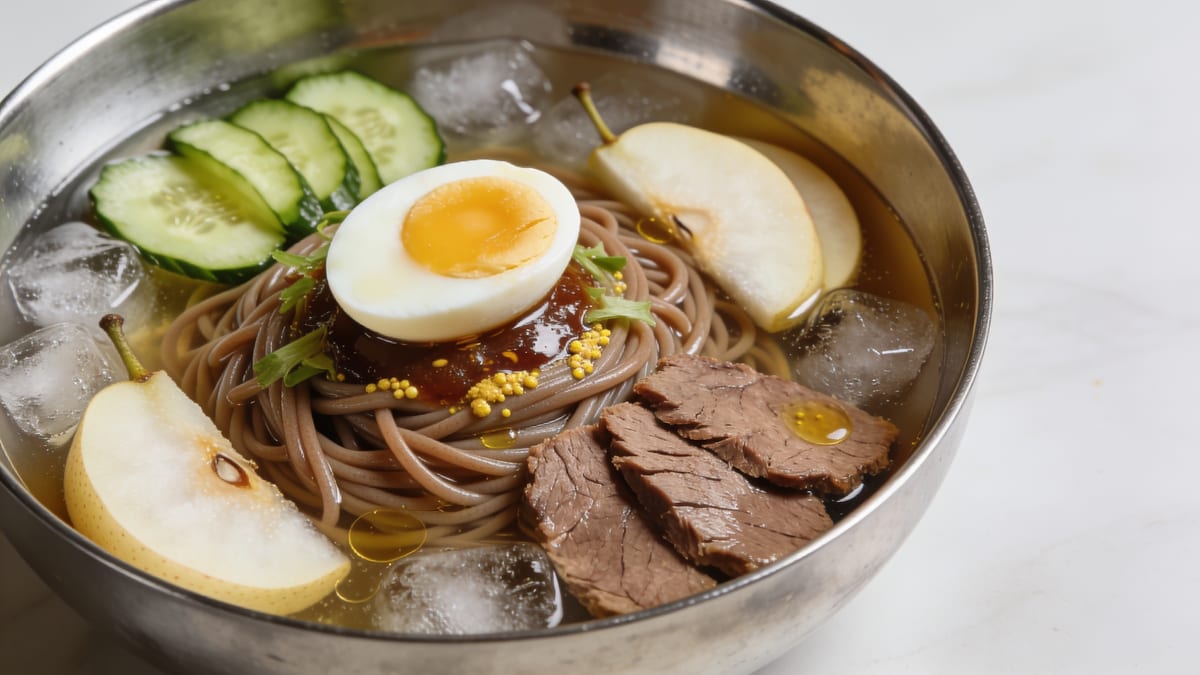
Korea's ultimate hot-weather dish: chewy buckwheat noodles in an icy, tangy-savoury beef-and-radish broth, topped with cool cucumber, Korean pear, a halved boiled egg and slices of cold beef, with vinegar and mustard oil added to taste. Mul naengmyeon is bracingly refreshing — slurped from a steel bowl sometimes filled with broth slush — and the contrast of cold, sour, savoury and the slippery-chewy noodles is unlike anything else.
Simmer beef brisket with aromatics to make a clean broth, then chill it hard — until icy and even slushy. Season the cold broth with the beef-cooking liquid, a little vinegar, sugar and salt to a tangy, savoury balance, and keep it ice-cold (some add dongchimi radish-water brine). Boil the buckwheat noodles briefly, rinse them under cold water and scrub off the starch until springy and cold, and coil them into bowls. Pour over the icy broth, top with cucumber, Korean pear, cold sliced beef and a halved boiled egg, and serve with vinegar and mustard oil to add at the table.
- The broth must be served ice-cold (even slushy) — chill it for hours, or part-freeze it.
- Rinse and scrub the cooked buckwheat noodles under cold water to remove starch and make them springy.
- Balance the broth tangy-savoury, and let diners add vinegar and mustard oil to taste.
Equipment
- Pot
- Colander/sieve
- Bowls (chilled)
材料
Broth
- 400 g beef brisket (for broth + topping)
- ½ onion, garlic, spring onion, a few peppercorns
- 2 L water
- 2 tbsp vinegar; 1 tbsp sugar; salt (to season cold)
Noodles
- 400 g naengmyeon (buckwheat) noodles
Toppings
- Cucumber, julienned; Korean (or nashi) pear, sliced
- 2 eggs, boiled and halved; the cooked beef, sliced thin
- Korean mustard oil (yeongyeoja) and extra vinegar, to serve
作り方
- ステップ01
Simmer the brisket with the onion, garlic, spring onion and peppercorns in the water for about 1–1.5 hours until tender, skimming. Lift out the beef (cool and slice thinly), strain the broth and season it lightly.
- ステップ02
Cool the broth, then refrigerate (or part-freeze) for several hours until ice-cold and even slushy. Stir in the vinegar, sugar and salt and adjust — cold dulls flavour, so season it assertively tangy-savoury.
- ステップ03
Cook the naengmyeon noodles in boiling water per the packet (they cook fast). Don't overcook.
- ステップ04
Drain and rinse the noodles thoroughly under cold running water, scrubbing with your hands to wash off the starch until they're cold and springy. Drain well and coil into chilled bowls.
- ステップ05
Pour the icy broth over the noodles. Arrange cucumber, pear, sliced cold beef and a halved egg on top. Serve with vinegar and mustard oil for everyone to add to taste — snip the noodles with scissors before eating, Korean-style.
Make ahead
Make and season the broth a day ahead — it needs hours to get properly ice-cold anyway, and the flavour settles. Slice the beef and prep the toppings ahead and keep chilled. Boil and rinse the noodles fresh just before serving for the right springy, cold texture.
Storage
Best assembled and eaten immediately while ice-cold. The broth keeps 3 days refrigerated (and is meant to be made ahead and well chilled). Cook and rinse the noodles fresh to order, as they clump and soften once dressed. Keep toppings prepped and cold.
Variations
Bibim naengmyeon
The 'mixed' version: no broth, the cold noodles tossed in a sweet-spicy gochujang sauce instead.
Dongchimi broth
Use (or blend in) dongchimi — the tangy white radish-water kimchi brine — for a traditional, extra-refreshing broth.
Hoe naengmyeon
Topped with spicy marinated raw skate or fish, a regional specialty.
Serve with
Nutrition per serving
Nutrition values are estimates based on the metric measurements. Adjust as needed.
よくある質問
What are naengmyeon noodles made of?
They're thin, chewy noodles made mostly from buckwheat, usually with some starch (like sweet potato or potato starch) for their signature springy, slightly elastic chew. They contain buckwheat and often wheat, so they're not gluten-free unless specified. You'll find dried or fresh naengmyeon at Korean groceries.
Why rinse the noodles so thoroughly?
Rinsing and scrubbing the boiled noodles under cold water washes off the surface starch (which would make them gummy and clumpy) and chills them, giving the clean, springy, slippery texture that defines naengmyeon. It also stops the cooking. Do it until the water runs clear and the noodles feel cold and bouncy, then drain well.
How do I get the broth cold enough?
Mul naengmyeon broth should be properly icy — chill it for several hours, and many cooks part-freeze it so it's slushy with ice crystals. Because cold mutes flavour, season the chilled broth more assertively (tangy with vinegar, savoury, lightly sweet) than you would a warm soup, tasting it cold. Serve in chilled bowls.
What's the difference between mul and bibim naengmyeon?
Mul naengmyeon ('mul' = water) is the cold-broth version — noodles in icy, tangy beef broth. Bibim naengmyeon ('bibim' = mixed) has no broth; the same cold noodles are tossed with a sweet-spicy gochujang sauce. Both use the same buckwheat noodles and chilled toppings; one is soupy and refreshing, the other spicy and saucy.
Why is naengmyeon eaten after Korean BBQ?
It's a classic finish to a grilled-meat meal: the cold, tangy, refreshing noodles cut through the richness of the barbecue and cleanse the palate. It's also prized in summer for cooling you down. Restaurants often offer a half-portion of naengmyeon as the meal-ending course after samgyeopsal or galbi.
Cooked this? Rate it.
Real ratings from real cooks. We only show a score once enough of you have weighed in — no fabricated stars.