シニガン
フィリピンで愛される酸っぱいスープ。豚肉(またはえび、魚、牛肉)を、タマリンドで思わず口をすぼめるほど酸味をきかせたスープで煮込み、空芯菜、大根、なす、ささげなどの野菜をたっぷり加えます。シニガンは、ほっとする味わいでうまみがあり、爽やかに酸っぱい、雨の日の国民的な大好物。アシム(酸っぱさ)の加減は各自の強いこだわりで、たっぷりの白ごはんと小皿のナンプラーを添えていただきます。
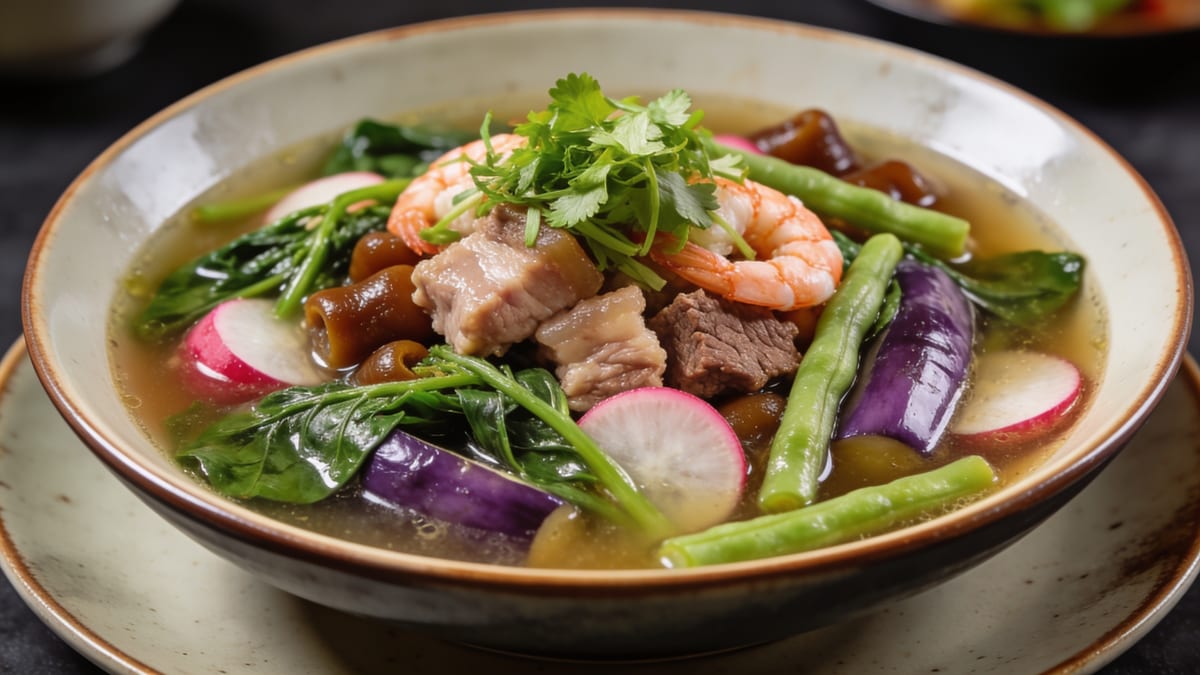
豚肉(スペアリブかバラ肉)を玉ねぎ、トマトと一緒に、やわらかくなってうまみのあるスープになるまで煮込みます。タマリンドで酸味をつけ、生のタマリンドを煮て漉すか、シニガンの素かタマリンドペーストを使って、好みの明るい酸味の加減にします。火の通りにくい野菜(大根、ささげ、なす)を加えてちょうどよいやわらかさになるまで煮て、それから葉物(空芯菜)、オクラ、唐辛子を最後に加えます。ナンプラーで味つけし、アツアツを白ごはんと一緒に出します。
- タマリンドが定番の酸味づけ。お好みで加えます。シニガンははっきり酸っぱくすべきです。
- まず豚肉をやわらかくなるまで煮てうまみのあるスープをとり、それを土台にスープを組み立てます。
- 野菜は火の通る時間に合わせて段階的に加え、葉物は最後にして、みずみずしく緑を保ちます。
Equipment
- 大きめの鍋
材料
スープと肉
- 1 kg 豚スペアリブまたはバラ肉(食べやすく切る)
- 玉ねぎ1個(4つ切り)、トマト2個(4つ切り)
- かぶるくらいの水、ナンプラー(パティス。味つけ用)
酸味づけ
- タマリンド。生(煮て漉す)、またはシニガンの素1袋/タマリンドペースト(お好みで)
野菜
- 大根1本(ラバノス。薄切り)、ささげ(シタウ)
- なす1本(薄切り)、オクラ(お好みで)
- 空芯菜(カンコン)またはほうれん草、青唐辛子(シリン・ハバ)
作り方
- ステップ01
鍋に豚肉、玉ねぎ、トマトを入れて水をかぶるくらい注ぎ、アクを取りながら、豚肉がやわらかくなっておいしいスープになるまで、45〜60分ほど煮込みます。
- ステップ02
タマリンドを加えます。生を使うなら煮て漉して鍋に入れ、シニガンの素かペーストなら混ぜ入れます。味見をして、心地よくはっきりと酸っぱくなるまで足します。
- ステップ03
大根、ささげ、なす(とオクラ)を加え、ちょうどよいやわらかさになるまで数分煮ます。くたくたになるまで煮すぎないように。
- ステップ04
葉物(カンコン/ほうれん草)と青唐辛子を丸ごと、いちばん最後に、葉物がしんなりする程度に加えます。ナンプラーで好みに味つけします。
- ステップ05
スープをアツアツで器に盛り、白ごはんと、肉や野菜をつけるためのナンプラー(唐辛子入り)の小皿を添えて出します。
Make ahead
豚肉のスープと酸味のきいた土台を前もって作っておき(味が深まります)、それから野菜、特に葉物は、出すときに温め直しながら新しく加えて、みずみずしくシャキッと保ちます。スープさえできれば、シニガンは平日でも手早く作れる一品です。
Storage
冷蔵で3日日持ちし、味がなじんでおいしくなります。やさしく温め直してください。葉物は加えたてがいちばんなので、作りおきするなら温め直すときに新しい葉物を加えられます。冷凍にはあまり向かないので(野菜がやわらかくなる)、作りたてか数日で食べきるのがおすすめです。
Variations
シニガン・ナ・ヒポン
豚肉の代わりにえびで作る、手早くできる人気のバージョン。
いろいろな酸味づけ
青いマンゴー(サンパロックの代わり)、カミアス、グアバ(シニガン・サ・バヤバス)、カラマンシーで酸味をつけて、地方ごとのアレンジに。
牛肉か魚
シニガン・ナ・バカ(牛肉)はコクがあって食べごたえがあり、魚(イスダ)は軽くて手早くできます。
Serve with
Nutrition per serving
Nutrition values are estimates based on the metric measurements. Adjust as needed.
よくある質問
シニガンの酸っぱさは何によるものですか?
タマリンド(サンパロック)が定番の酸味づけで、シニガンならではの酸味の効いた、食欲をそそるスープを生みます。生のタマリンド(煮て漉す)、タマリンドペースト、または便利な市販のシニガンの素が使えます。青いマンゴー、カミアス、グアバ、カラマンシーなど、ほかの酸味づけも地方版で使われます。酸味は明るくはっきりさせるべきで、それがこの料理の要です。
どんな肉や魚介が使えますか?
とても融通がききます。豚肉(スペアリブかバラ肉。シニガン・ナ・バボイがいちばん一般的)、えび(ヒポン)、牛肉(バカ)、魚(イスダ)、どれも合います。豚肉と牛肉はコクのあるスープのために長めに煮込む必要があり、えびと魚は早く火が通って軽いスープになります。酸味づけと野菜はどのバージョンでもほぼ同じです。
シニガンの素の袋は使えますか?
はい。市販のシニガンの素(タマリンドベース)はフィリピンの家庭でも広く使われていて、手軽に安定した酸味が出ます。お好みで加えてください。生のタマリンドを使うほうが伝統的で、すっきりした風味になりますが、素はまったく問題なく受け入れられている近道です。どちらにしても、味見をして酸味を好みに調えます。
野菜はいつ加えますか?
火の通る時間に合わせて段階的に。大根、ささげ、なすのような火の通りにくい野菜を先に入れて、ちょうどよいやわらかさになるまで煮ます。空芯菜(カンコン)や青唐辛子(丸ごと)のような火の通りやすい葉物はいちばん最後に、葉物がしんなりする程度に加えて、みずみずしく緑を保ち、くたくたにしません。どれも煮すぎないように。
シニガンには何を添えますか?
蒸した白ごはんが欠かせません。シニガンはスープとごはんの食事で、酸味のあるスープをごはんにかけたり、ごはんの合間にすすったりします。肉や野菜をつけるための、たいてい唐辛子入りのナンプラー(パティス)の小皿を用意します。食べごたえがあってほっとするフィリピンの家庭料理で、特に雨の日に愛されています。
Cooked this? Rate it.
Real ratings from real cooks. We only show a score once enough of you have weighed in — no fabricated stars.